How Often to Swap Your Water Heater’s Anode Rod
You’re worried your water heater is a ticking time bomb because you’ve never touched the anode rod. That’s the part that silently sacrifices itself to stop your tank from rusting out.
We will cover how to check it, the straightforward replacement steps, what tools you need, and the real-world timeline for different water types.
I’ve pulled more corroded rods than I can count on service calls, and the one in my own heater gets checked every two years. Routine maintenance is always cheaper than a flooded basement.
What Is an Anode Rod and Why It’s Your Heater’s Best Friend
Think of your anode rod as a lightning rod for rust. It’s a long metal stick screwed into the top of your water heater tank. Its only job is to be attacked so the inside of your expensive steel tank is not. This is called sacrificial protection.
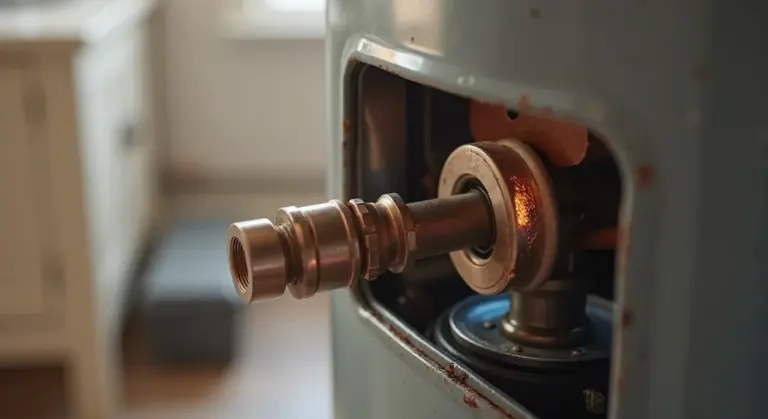
You’ll find it under a large hex head plug on the top of the tank, often near the cold water inlet. It looks like a plain metal rod or sometimes a coated wire with one or more metal “bulbs” attached to it. These bulbs are the part that gets eaten away.
Corrosive elements in your water are naturally drawn to this rod. They react with it, slowly dissolving the anode rod material instead of attacking the tank’s glass lining or steel. Once the rod is mostly gone, those elements start eating your tank, leading to leaks.
Most rods are made from magnesium, aluminum, or a combo of zinc and aluminum. Magnesium is common and works well in most areas. Aluminum is cheaper and used in many factory-installed rods. Zinc-aluminum rods are for homes with smelly water (sulfur). We’ll compare which one you might need later.
How Long Do Anode Rods Last? The Realistic Timeline
The textbook answer is 3 to 5 years. Forget that. In my house with fairly neutral well water, I got 6 years from my first rod. On a service call last month, I pulled one that was 90% gone after just 18 months. The 3-5 year rule is just a suggestion your actual timeline depends entirely on your water.
So, how often should you replace an anode rod? You inspect it every year after the heater is 3 years old. You replace it when more than 50% of the core metal is gone or the wire is exposed. Waiting for a full 5-year mark without checking is a gamble with a flooded basement.
Four main things destroy an anode rod fast. High Total Dissolved Solids (TDS) means more minerals in the water to react with. Low pH (acidic water) aggressively eats metal. High water temperature speeds up all chemical reactions. Having a water softener increases the water’s conductivity, which can make the rod sacrifice itself faster.
This all boils down to your water’s aggressiveness. Aggressive water hunts for something to corrode. Your anode rod is the designated target.
Your Water’s Chemistry: The TDS and pH Factor
Here’s the simple water science. TDS is just a measure of all the dissolved stuff in your water think calcium, magnesium, salts, and other minerals. More stuff means more potential for corrosion.
pH measures how acidic or basic your water is. A pH of 7.0 is neutral. Below 7.0 is acidic. Acidic water loves to dissolve metal, and your anode rod is the easiest metal to find.
Combine high mineral content (TDS) with low pH, and you have a perfect storm that will devour a standard anode rod in a couple of years. This is why two identical water heaters in different towns can have wildly different anode rod life.
If you see persistent green corrosion on faucets or get a rotten egg smell, get a simple test strip kit. Checking your pH and hardness gives you a huge clue about what’s happening inside your heater. It tells you if you need a special rod or more frequent inspections.
Red Flags: Signs Your Anode Rod Is Already Shot
What are the signs that an anode rod needs replacement? You don’t need to guess. Your water heater will tell you, loudly and clearly. Ignoring these signs means your tank is actively rusting.
The most common symptom is a rotten egg smell from your hot water taps. This sulfur stink comes from bacteria. These bacteria thrive in a tank when the protective anode rod is gone. If you smell sulfur from your hot water taps, your anode rod has likely failed and bacteria are thriving.
Listen to your tank. A rumbling, knocking, or popping sound means sediment has built up and is baking on the bottom of the tank. This happens because the rod is gone, allowing tank corrosion, and that rust mixes with minerals to form a concrete like sludge.
Look at your hot water. If it comes out rusty or has a brownish tint, that’s dissolved rust from your tank lining. This is a direct consequence of a depleted rod. The rod’s job was to sacrifice itself instead of your tank. Once it’s gone, the tank is next.
How to Check Your Anode Rod (The 20-Minute Inspection)
Can you check the anode rod yourself? Absolutely. It’s a straightforward job. You just need the right tools and about twenty minutes. I check mine every other year, same as changing the smoke detector batteries.
Here is your step by step guide.
- Turn off the power to your electric water heater at the breaker. For gas, turn the control knob to “Pilot.”
- Shut off the cold water supply valve on top of the heater.
- Relieve the pressure by opening a hot water faucet in your house, like in a sink.
- Locate the anode rod. It’s on the top of the tank, usually under a hex head plastic plug. On some models, it’s screwed into the hot water outlet.
- Use your tools to loosen and remove the rod. This is where muscle helps.
Now, inspect it. A healthy rod will be mostly intact; if it’s less than 1/2 inch thick or heavily corroded, replace it. If the steel core wire is exposed over much of its length, it’s done. A new one feels solid and heavy. A spent one feels light and looks like a corroded nub.
Tools & Material Checklist
- Socket wrench (often a 1-1/16″ deep socket)
- Breaker bar or long pipe for leverage
- New roll of Teflon tape
- Garden hose
- Bucket for any minor spills
Common pitfall? The rod can be incredibly tight. Use the breaker bar. If it won’t budge, don’t strip the head. Apply penetrating oil and try again later. If you have a powered anode, this inspection is just a voltage check with a multimeter.
Your Anode Rod Maintenance Schedule
Think of this as your system maintenance roadmap. A generic schedule fails because it ignores your water. You must link this to your water quality.
| Action | Timeline | Notes |
| First Inspection | 2 years after installation | This is your baseline. See how much it’s worn. |
| Typical Replacement | 3 to 5 years | For most municipal water supplies with moderate hardness. |
| Aggressive Inspection | Every year | Mandatory if you have soft water, a water softener, or known acidic water (low pH). |
If your water is soft or acidic, the rod corrodes faster. It’s that simple. My home has a softener, so I check my rod every fall. It’s cheaper than a new water heater.
Choosing and Swapping the Rod: A DIY Guide
Replacing an anode rod is a straightforward job. The hardest part is often picking the right one. The material you choose directly answers the FAQ, “How does the anode rod material impact replacement intervals?” A magnesium rod does its job aggressively, which means it protects your tank well but sacrifices itself faster. An aluminum rod lasts longer, which stretches your replacement intervals. Your water type and any smells decide the best material for your home.
Magnesium vs. Aluminum vs. Zinc: Which Rod to Buy?
You have three main choices. Your water conditions determine the winner.
- Magnesium Rods: These offer the best electrochemical protection for your steel tank. They are the most active. In soft water, they corrode the fastest, meaning you might check or replace them more often.
- Aluminum Rods: These are less active than magnesium. They corrode slower, so they typically last longer between replacements. They are a good choice for homes with soft water or where water has a slight sulfur smell.
- Zinc-Aluminum (Powered Anode) Rods: These are specifically formulated to combat rotten egg sulfur smells. The zinc helps eliminate the reaction that causes hydrogen sulfide gas.
For homes with a water softener, an aluminum or zinc-aluminum rod is often the better choice to reduce sulfur odor and provide a longer service life. The softened, mineral-free water accelerates magnesium corrosion, and the softening process can sometimes intensify sulfur smells, which zinc helps control.
Step-by-Step Replacement and The DIY Verdict
If your inspection shows a depleted rod, here is how to swap it. Gather a 1-1/16″ deep socket (standard size), a long breaker bar or ratchet, Teflon tape, and a garden hose.
- Turn off the power to the electric water heater at the breaker or the gas supply to a gas heater.
- Turn off the cold water supply valve on top of the heater.
- Connect a hose to the tank’s drain valve and run it to a floor drain or bucket. Open the drain valve and a hot water faucet in the house. You only need to drain about 3-5 gallons to drop the water level below the anode rod’s port on the top of the tank. Close the drain valve.
- Remove the plastic cap from the anode rod port. Insert your deep socket and breaker bar. The rod is installed very tight. Use steady, firm pressure to break it loose. It may grunt and squeak.
- Pull out the old rod. Wrap the threads of the new rod 3-4 times with Teflon tape.
- Thread the new rod in by hand until snug. Then, use your wrench to turn it an additional quarter-turn. Do not overtighten.
- Replace the plastic cap, turn the cold water supply back on, let the tank fill, restore power or gas, and you’re done.
DIY Difficulty Verdict: 4/10 for a standard tank in an open basement or utility room. The challenge comes from the initial stubbornness of the old rod and having enough overhead clearance for your tools.
When NOT to Try This: Do not force it if the rod is completely seized and won’t turn. You risk twisting and damaging the tank’s top fitting. Also, call a pro if your heater is tucked in a closet with zero clearance above it.
If the anode rod head snaps off, stop. You now need a professional or a specialized extraction tool. Trying to drill it out yourself can lead to metal shavings inside your tank and a costly mistake.
Code & Compliance Check: For safety, ensure any replacement rod you buy meets ANSI/NSF 61 standards, meaning the materials are certified for use in drinking water.
What Helped Me: A Note from the Basement

My own water heater taught me this lesson. I had a persistent sulfur smell in the hot water, especially in the guest bathroom shower. The house had a water softener and the original magnesium anode. I swapped it for a zinc-aluminum rod. The sulfur smell was completely gone within 48 hours. I haven’t had a whiff of it since. That quick fix also demonstrates how addressing sulfur odor in a water heater can be straightforward. In many cases, sulfur odor removal starts with choosing the right anode. Changing the anode material based on your water’s personality is the single most effective water heater maintenance tip I ever learned on the job and proved in my own home.
The Cost of Ignoring a Simple Rod
Think of your anode rod as a shield. It takes all the hits so your tank doesn’t have to. When that rod is completely gone, the electrochemical attack starts on the tank’s steel lining. It’s not a slow process. Once it starts, pinhole leaks can develop surprisingly fast.
I’ve been on service calls where a homeowner heard a drip, looked in the basement, and found a steady stream from a tank that was fine just months before. The culprit was always a sacrificed anode rod they forgot about.
You can buy a new magnesium or aluminum anode rod for between twenty and fifty dollars at any hardware store. A powered anode is more, around a hundred or so. Now, compare that to a new water heater. A standard 50-gallon unit, installed by a professional, will easily cost you twelve hundred dollars or much more.
Let’s do the real math. Spend thirty bucks on a rod every five or so years. Over fifteen years, that’s maybe ninety dollars in parts. Or, ignore it and face a sudden twelve hundred dollar replacement, plus the cost and mess of water damage. The choice is straightforward.
Replacing a $30 part every few years can prevent a $1,200+ emergency. This is the single most effective piece of water heater maintenance you can do. It’s cheaper than an annual service call and adds years to your heater’s life.
Don’t let this intimidate you. Checking and changing an anode rod is a basic task. With a simple socket wrench and about an hour, you secure your tank’s future. This one simple habit is the key to a long-lasting water heater. You have all the power to prevent a major expense. Just remember to check the rod.
Common Questions
1. How often is “too often” to replace my anode rod?
If you’re replacing a standard rod more than once every two years, your water is highly aggressive. This frequency is a red flag. You should test your water’s pH and consider switching to a longer-lasting aluminum rod or installing a powered anode to better match your conditions.
2. Is it safe for me to check the rod myself?
Yes, if you carefully follow safety steps: always turn off power (breaker for electric, pilot for gas) and water supply first. The physical inspection is safe. The main risk is forcing a seized rod and damaging the tank; if it won’t budge with reasonable force, call a professional.
3. Does having a water softener change which rod I should use?
Absolutely. Softened water accelerates corrosion on standard magnesium rods. For homes with softeners, I typically recommend an aluminum or zinc-aluminum rod. These materials corrode slower in soft water and help combat the sulfur smells softeners can sometimes cause.
4. If my rod still looks thick, but my water smells like rotten eggs, what’s wrong?
The rod may be “passivated”-a coating has formed, stopping it from working even though material remains. This is common with certain water chemistries. The fix is to replace it, often with a zinc-aluminum combo rod specifically designed to eliminate sulfur bacteria and odors.
5. How does a powered anode rod change the replacement schedule?
Powered anodes don’t sacrifice themselves, so they can last the life of the water heater (often 10+ years). You don’t replace them on a timeline; you simply check the power light or test voltage yearly. They are a great “set-it-and-forget-it” option, especially for problem water.
Making Your Anode Rod Last
Check your anode rod within the first year of owning a new water heater to set your personal replacement schedule. Once you know its condition, mark your calendar to inspect it every two to three years without fail. Understanding how long these systems typically last helps you plan ahead. Our average water heater lifespan guide offers a realistic timeline you can reference later.