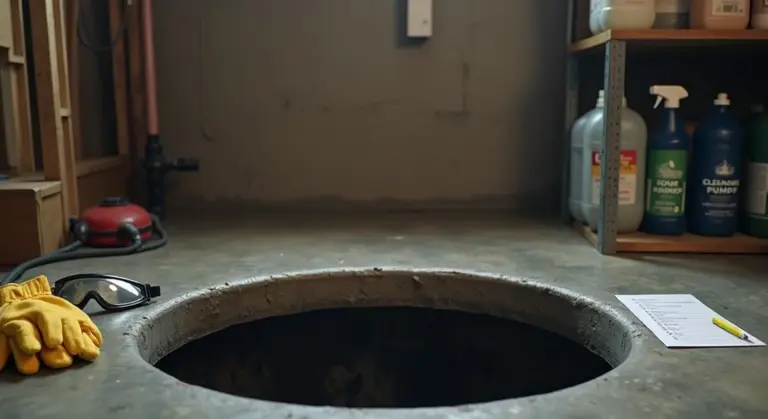
The Homeowner’s Sump Pump Inspection Guide: Keep Your Basement Dry
Worried about water in your basement? A dead sump pump is a fast track to a major mess.
This article gives you the step-by-step process I use on service calls. We will cover how to safely test your pump, clean the sump pit, inspect the float and check valve, and verify the discharge line is clear.
I’ve pulled more failed pumps than I can count. Here’s the takeaway: if you don’t test it, you don’t know if it works.
Is This Sump Pump Job for You? A Realistic DIY Verdict
Let’s be real. A sump pump job can be anything from wiping off the pump to trenching your basement floor. The work you can do depends almost entirely on your starting point. I’ve done it all, from simple clean-ups to installing a whole new backup system in my own Michigan home.
Difficulty Rating: 2 to 4 (Inspection & Cleaning) / 7 to 9 (Complex Repairs or New Install)
Here’s the breakdown of what’s in your lane versus when to wave the white flag and call a pro.
What a homeowner can safely do: The Annual Checkup. This is 90% of what prevents a flood. You can handle it.
- Unplug the pump, pull it from the pit, and clean the screen or intake.
- Test the pump by pouring water into the pit or lifting the float.
- Check the discharge pipe outside for blockages or freezing.
- Listen for odd noises and check that the check valve is working (water shouldn’t flow back into the pit).
- Replace a simple, pre-assembled check valve or discharge hose.
What requires a licensed plumber or electrician: The Big Stuff.
- Any new electrical circuit. Running a new dedicated outlet for the pump? That’s an electrician’s job. Water and DIY electrical work are a lethal mix.
- Installing a new sump pit. This means breaking concrete, proper gravel packing, and ensuring it’s at the right depth. It’s messy, heavy work that affects your foundation’s drainage.
- Major plumbing re-routing. If the discharge line needs to go through a foundation wall or be buried deep to prevent freezing, you want a pro on the trenching and code compliance.
- Diagnosing and replacing the pump motor itself. While you can swap a whole unit, if the issue is internal motor failure on a sealed unit, your job is just to buy the new pump. Let the pro handle the diagnosis if you’re unsure.
Your Tools & Material Checklist
Grab this stuff before you open the pit. A trip back upstairs with wet, dirty hands is annoying.
- Bucket (for bailing out the pit)
- Garden hose (for testing the pump outside)
- Shop wet/dry vacuum
- Screwdrivers (flathead and Phillips)
- Non-contact voltage tester (CHECK THAT POWER IS OFF)
- Wire brush or old toothbrush
- Replacement check valve (have one on hand if yours is old)
- Rags or old towels
What a Sump Pump Actually Does (And Why It’s Not a “Bad Sign”)
Its job is stupid simple. A sump pump moves water from where you don’t want it (your basement) to where you do (a storm drain or dry well away from your house). Think of it as a bouncer for groundwater. It waits in the pit (the sump), and when water shows up uninvited, it escorts it out. Sump pumps work types include submersible and pedestal models, which cover most spaces, with automatic or manual operation to fit your setup.
I hear this all the time from homebuyers: “The house has a sump pump… is that bad?” No. It is a very good sign. It means the house has a planned, managed defense against water. The bad sign is a wet basement with no pump at all. A sump pump is like a smoke detector. You hope it never goes off, but you’re a fool not to have one working and ready. Even a well-functioning pump can encounter problems over time. Watch for warning signs—unusual noises, frequent cycling, or basement dampness—as clues for diagnosis.
Water Science Snippet: The Water Table & Hydrostatic Pressure
Your house sits in the ground. Below it, there’s a level where the soil is completely saturated with water-that’s the water table. In spring or after heavy rain, this table rises. When it gets higher than your basement floor, water will push (that’s hydrostatic pressure) through any crack or porous spot in the foundation wall and floor.
The sump pit is the lowest collection point for that water. The pump kicks on, lowers the water level in the pit, which relieves that pressure against your foundation. Without it, the water has only one place to go: across your basement floor. The pump doesn’t attract water. It solves a water problem that already exists. Make sure the pumped water is drained away from the foundation, not back toward it. The goal is to carry water away from the walls and footings to keep the basement dry.
Your Step-by-Step Sump Pump Inspection Walkthrough
First things first. How do you prepare for a sump pump inspection? You need the right gear and a safe space to work. Gather a bucket (a five-gallon one is perfect), a flashlight, gloves, and maybe a wet/dry vacuum if your pit is dirty. Clear any stored items away from the pit. Always unplug the pump from its outlet before you stick your hands anywhere near the pit water or the pump itself. This is non-negotiable. In my own basement, I keep a dedicated shelf with these items so I’m never scrambling when I hear rain in the forecast.
The Visual Check: Pump, Pit, and Lid
Start with your eyes. Pull off the pit lid carefully. Shine your flashlight down there. You’re looking for three main things: debris, corrosion, and the condition of the lid.
- Debris: Look for gravel, silt, or small sticks. These can jam the pump’s impeller or clog the intake screen. Scoop out any loose material.
- Corrosion: Check the pump casing and the discharge pipe where it connects to the pump. White crusty buildup or green patina on brass fittings is a sign of corrosion that can lead to leaks or failure.
- The Lid: A proper, sealed lid is critical. It keeps out dirt, prevents moisture from evaporating into your basement air, and stops dangerous radon gas from seeping in. If your lid is a loose piece of plywood, it’s time for an upgrade.
A clean pit and a sealed lid are your first line of defense against pump failure and home health hazards.
The Operational Test
This is where you see if it actually works. Plug the pump back in. Slowly pour your bucket of water into the sump pit. Watch the water level and the float switch (that’s the plastic ball or cup attached to the pump). As the water rises, the float should lift. When it gets to its trigger point, the pump should kick on with a distinct hum and start moving water up the discharge pipe. Listen for the water to stop flowing out the pipe outside your house, then listen for the pump to click off. Pouring in a measured five gallons lets you time how long it takes to pump out, giving you a baseline for its performance. If nothing happens, the float switch might be stuck. Gently nudge it to see if it activates the pump. If the issue persists and the pump still won’t move water, our sump pump not pumping guide has more detailed troubleshooting steps.
Listening for Trouble
Your ears are powerful diagnostic tools. A normal, healthy sump pump has a steady, medium-pitch hum when running. Here’s what bad sounds mean:
- Grinding or Screeching: This usually means a worn bearing or a foreign object, like a small stone, is caught in the pump’s impeller. The pump is tearing itself apart.
- A Loud, Straining Hum (and no water flow): This often signals a clogged impeller or a failed check valve. The motor is working but can’t move water.
- Clicking On and Off Rapidly: This points to a faulty float switch that’s not traveling smoothly up and down its rod or cord.
Any noise that sounds strained, irregular, or painfully loud means you should unplug the pump immediately and investigate further.
The “Red Flag” Troubleshooting Guide
If you see or hear any of these five things during your inspection, your pump is telling you it needs help now.
- No Power, No Life: You plug it in, pour water, and nothing happens. Check the outlet with a lamp or circuit tester. If the outlet is dead, check your home’s breaker panel. If the outlet is live, the pump’s internal wiring or motor has likely failed.
- Runs Constantly, Never Shuts Off: This can be a stuck float switch, a switch adjusted too high, or a massive, continuous water inflow. It will burn out the motor quickly.
- Makes the “Bad Sounds” listed above: Grinding, screeching, or loud humming without proper pumping action indicates mechanical failure is imminent.
- Pumps but Water Drains Back Into the Pit: When the pump shuts off, you’ll hear a gurgle or see the water level rise again. This means the check valve in the discharge pipe is broken, allowing water to flow backwards and overwork the pump.
- Trips the Circuit Breaker: If the pump breaker trips as soon as it tries to start, you have a short circuit in the pump’s wiring or a seized motor drawing too much amperage.
Addressing these red flags promptly is the difference between a simple repair and a flooded basement emergency. For issues like a failed check valve or a stuck float, you can often fix it yourself. For a seized motor or electrical short, you’re likely looking at a pump replacement.
The Essential Cleaning & Maintenance Routine
A sump pump that looks clean on the outside can be clogged and failing on the inside. This routine cleaning is the single most effective thing you can do to prevent a surprise failure. Focusing on and knowing how to clean the sump pump impeller to keep it free of debris helps prevent clogs and keeps water moving smoothly. That makes the impeller a critical area to inspect during cleaning. Let’s get your hands dirty.
How do I clean the sump pump and pit?
You do this once a year, or more if you have a lot of sediment. The goal is to remove all the grit and debris that can jam the pump’s impeller or clog its intake. Here’s how.
- Disconnect the power. Unplug the pump from the outlet. If it’s hardwired, turn off the circuit breaker at your main panel. Verify the power is off by trying to turn the pump on.
- Remove the pump from the pit. You may need to disconnect it from the discharge pipe. Have a bucket or tub ready to place the dirty pump in.
- With the pump out, use a wet/dry shop vac or a bucket to remove all water and debris from the sump pit. Get it as clean and dry as you can.
- Clean the pump itself. Rinse the exterior and intake screen with a garden hose. Check the small screen or grate over the pump’s intake port and clear any pebbles, roots, or sludge.
- While the pit is empty, take a look. Ensure the gravel layer at the bottom is intact and that the pit hasn’t cracked or shifted.
- Reconnect the pump to the discharge pipe, lower it back into the pit, and plug it in. Pour a 5-gallon bucket of water into the pit to trigger the float and verify it runs and shuts off correctly.
Check Valve and Discharge Line Care
The check valve and discharge line are your pump’s exit strategy. If they fail, water flows right back into your basement.
The check valve is a one-way gate on the vertical discharge pipe just above the pump. It stops pumped water from flowing back down. Listen for a loud “thump” when the pump shuts off. That’s the valve closing. If you don’t hear it, the valve may be stuck or broken. You can take it apart to clean it, but often it’s easier to just replace the whole valve-they’re inexpensive.
Your discharge line must be completely clear and must slope continuously away from your foundation. Follow the pipe from where it exits your house to its end point.
- Remove any leaves, dirt, or rodent nests from the exterior grate or opening.
- Ensure the pipe isn’t sagging, which can create a trap for water to freeze in.
- The water should exit at least 10 feet away from your foundation. If it dumps right next to the house, it’s just recycling the problem.
Electrical Safety Check
Water and electricity are a dangerous mix. This is a visual and functional check you do every time you service the pump.
First, look at the power cord and plug. There should be no cracks, cuts, or exposed wiring. The plug should fit snugly into the outlet.
Your sump pump must be plugged into a GFCI (Ground Fault Circuit Interrupter) outlet. This is the outlet with the “Test” and “Reset” buttons. Press the “Test” button. It should click and pop out, cutting power. Press “Reset” to restore power. If the GFCI will not reset or trips immediately, you have an electrical fault-do not use the pump and call a licensed electrician.
If your pump is hardwired and you are not comfortable working in an electrical panel, this is also the point where you call a pro.
Your Sump Pump Maintenance Roadmap
Don’t try to remember all this. Put these simple tasks on your calendar. The pump in my own basement gets a visual check every month during the wet season.
| Monthly | Quick visual inspection. Verify the pump is plugged in and the area is clear. Pour water in to trigger a cycle. |
| Quarterly | Test the GFCI outlet. Listen for the check valve “thump.” Clear debris from the exterior discharge opening. |
| Annually | Full clean-out. Unplug, remove pump, clean pit and intake, inspect all components. Best done in dry weather. |
Smart Upgrades and When to Think About Replacement

Your basic sump pump is a loyal soldier, but even the best equipment needs support. Think about upgrades before you’re bailing water with a bucket.
When Should I Consider Replacing My Sump Pump?
A good rule is to start planning for a replacement after 7 to 10 years of service. Like any motor running in a damp hole, wear is inevitable. I have an 8-year-old pump in my own basement that I test monthly because I know its time is coming. If your pump is older, runs constantly during storms, or makes new grinding noises, replacement isn’t a suggestion-it’s your next project.
Don’t wait for failure. A planned replacement on a dry Saturday is always cheaper and less stressful than an emergency call during a flood.
Essential Add-Ons for Peace of Mind
The primary pump can fail. The power can go out. These aren’t “if” scenarios for most homeowners; they’re “when.” A backup system is your basement’s insurance policy.
- Battery Backup Systems: This is your first line of defense against a power outage. A dedicated deep-cycle battery and a second pump sit ready in your sump crock. When the main pump loses power, the backup takes over. Install one and sleep soundly during the next storm.
- Water-Powered Backup Pumps: These don’t need a battery. They use your home’s municipal water pressure to pump water out. They’re incredibly reliable but require strong water pressure and can increase your water bill slightly during use. They’re perfect if you worry about a battery dying.
- Sump Pump Monitors & Smart Alerts: Can Alexa turn on your sump pump? No. But a smart water alarm or monitor can tell Alexa to alert you. These devices sit on the floor or in the crock and send a shrieking alarm and a phone notification the moment they detect water. The one I use saved me from a slow leak on my water heater last year.
Code & Compliance: Where Does the Water Go?
Your discharge line must direct water away from your foundation, full stop. Local plumbing codes are very specific about this. Water dumping right next to your house will simply seep back in, making the pump work in a pointless loop. The line should extend to a storm drain, a dry well, or a downhill slope at least 10 to 20 feet from your home. Check your local regulations; they often specify the exact required distance.
Recommended Product Categories
Focus on the type of protection you need. Here’s what to look for in each category.
| Category | What It Does | Good For |
| Water-Powered Backup Pumps | Uses home water pressure to pump during a power outage. No battery to maintain. | Homes with reliable, strong municipal water pressure (above 40 PSI). |
| Battery Backup Units | Provides a second, battery-operated pump that activates during primary pump failure or power loss. | All homes, especially areas with frequent power outages. Requires yearly battery testing. |
| Vertical Float Switches | Replaces the common tether float. A rod with a floating collar turns the pump on/off. Less likely to get stuck. | Replacing problematic tether floats in cramped pits. More reliable activation. |
When to Stop DIY and Call a Professional
You can handle cleaning, testing, and checking the discharge line. Some folks can swap a pump. But know your limits. Pushing past them can flood your basement or get you hurt.
Jobs for a Professional Plumber or Technician
Call a pro for these tasks. They have the tools, parts, and training you likely don’t.
- Diagnosing complex electrical issues. If you’ve checked the outlet and breaker and the pump still has no power, the problem could be in the wiring, the float switch, or the pump motor itself. A pro can safely trace the fault with a multimeter.
- Repairing a pump inside a sealed crock or basin. Many modern sump pits have a sealed, airtight lid to stop radon gas or moisture. If your pump is under one of these, special tools and safety knowledge are needed to open it properly.
- Installing a new sump pump system from scratch. This involves digging a proper sump pit, installing the liner, and connecting the discharge plumbing. It’s heavy, messy, precision work best left to an installer.
- Major plumbing work on the discharge line. If the pipe underground is broken or frozen, repairing it often requires excavation or specialized equipment.
If you smell burning, see sparks, or the pump trips the breaker immediately, shut off power at the circuit breaker and call for help. That’s a clear electrical fault.
What If You Hear the Pump But Can’t Find It?
You hear a motor humming or water moving, but you see no sump pit. This happens. In older homes, pumps are sometimes buried under a concrete floor or hidden in a closet.
First, try to pinpoint the sound. Use a mechanic’s stethoscope or put a long screwdriver against the floor and your ear to the handle to listen for vibrations. The sound might be coming from under a utility sink, behind a washer, or in a corner under some flooring.
If you find a suspicious section of floor, look for edges. Sometimes it’s covered by a removable plywood panel or a section of tile. In my first house, the access panel was hidden under a rug in the furnace room.
If you confirm the pump is buried under a solid, poured concrete floor, your DIY inspection is over. Do not try to break through the concrete. You need a professional with concrete saws and the know-how to create a proper access point without damaging the pump or plumbing.
Doing this maintenance gives you real peace of mind. You’ll know your pump is ready for the next storm. You’ve caught small problems before they became a basement full of water. That confidence is worth the afternoon you spent checking things over.
Common Questions
What’s the first safety step before I start my inspection?
Always unplug the pump from its electrical outlet. Confirm power is off with a non-contact voltage tester before reaching into the pit. This eliminates shock risk and is the foundation of safe maintenance.
What are the clear signs my check valve needs attention?
Listen for a missing “thump” when the pump shuts off. Watch if water quickly flows back into the pit after a cycle. Either symptom means the valve is stuck or failed, requiring immediate cleaning or replacement to prevent pump overwork.
My pump didn’t turn on during testing-what’s my next move?
First, verify the outlet has power by testing it with a lamp or circuit tester. Next, check for a stuck float switch by gently lifting it. If the pump remains dead, the motor or internal wiring is likely faulty; call a professional for diagnosis.
Is there a simple schedule for sump pump maintenance?
Yes. Do a full clean-out of the pump and pit once a year. Add a mid-year check if you have sandy soil or heavy sediment. Combine this with monthly operational tests and quarterly checks of the discharge line and GFCI outlet.
How do I know when to replace the pump, not just repair it?
Plan for replacement at 7-10 years of age, or sooner if you notice frequent cycling, strange noises, or reduced pumping power. Investing in a new unit before total failure is far cheaper than dealing with a basement flood.
Keeping Your Basement Dry
The best way to prevent a flooded basement is to inspect and maintain your sump pump every single spring. Make it a habit, just like changing your smoke alarm batteries, and you will catch most problems before they cause a disaster.
Bob McArthur
Bob is a an HVAC and plumbing industry veteran. He has professionally helped homeowners resolve issues around water softeners, heaters and all things related to water systems and plumbing around their homes. His trusted advice has helped countless of his clients save time, money and effort in home water systems maintenance and he now here to help you and give you first hand actionable advice. In his spare time, Bob also reviews home water systems such as tankless heaters, water softeners etc and helps home owners make the best choice for their dwelling. He lives around the Detroit area and occasionally consults on residential and commercial projects. Feel free to reach out to him via the contact us form.