RV Water Heater Fix: Lighting the Pilot, Wiring, and Full Replacement
Your RV water heater is dead, and you need hot water now. This guide gets you back in action.
We will cover lighting the pilot light, wiring the electrical connections, and replacing the entire tank.
I’ve rebuilt more of these than I can count on my own rigs and customer RVs. Always verify power and gas supply before you assume the unit is shot.
The DIY vs. Pro Verdict: What Can You Really Handle?
Let’s get real about what you can tackle and what will bite you. I’ve seen too many “simple” RV jobs turn into expensive tow bills to the shop.
Difficulty Ratings (1-10 Scale)
- Lighting the Pilot: A 2. If you can follow a recipe, you can do this. It’s a basic procedure.
- Wiring (Replacing a thermostat or element): A 6. You’re dealing with 120V AC power. One wrong connection can fry the board or shock you.
- Full Unit Replacement: A 9. You’re integrating gas, water, and electrical systems in a tight space. Everything must be sealed and secured perfectly.
Drawing the Line: Homeowner vs. Pro
Your side of the line includes checking and manually lighting the pilot, and maybe swapping an access door or outer cover. That’s it. Everything else requires a sharp eye and specific knowledge.
The line is crossed the moment you need to disconnect a gas line, solder a water connection, or run new 120V wiring. Gas work isn’t just dangerous, it’s often illegal for uncertified people to perform. A pro will pressure test every connection. You likely won’t.
When You Must Call a Certified RV Tech
Call a pro if you smell gas at the valve itself (not just in the air), if you see any corrosion or damage to the gas valve or supply line, or if the wiring looks melted. Legally, modifying the LP gas system usually requires a licensed technician, and your insurance may not cover DIY-caused failures. A certified tech also has the tools to check gas pressure and combustion safety you simply don’t own.
Critical Tools for the Simple Jobs
Even for lighting the pilot, don’t go in empty-handed. Here’s what I keep in my kit:
- A good long-reach butane lighter or fireplace matches.
- A bright flashlight or headlamp.
- A small mirror on an extender to see into the burner chamber.
- A screwdriver set to remove the outer access panel.
How to Check and Light Your RV Water Heater Pilot
This is the most common fix. Let’s walk through it safely.
Step 1: Find Your Manual (Really, Do It)
Your exact model’s manual is the only source for its specific lighting instructions. I keep a digital folder for all my appliance manuals. If you lost it, search online using the model number from the label on the heater’s door or inside the compartment. Don’t guess.
Step 2: Check If It’s Already Lit (The Sight Glass)
Many RV water heaters have a small sight glass or a piezo igniter viewport. Shine your flashlight through it. You should see a steady, small blue flame. If you see that, your pilot is lit and your problem is likely elsewhere (like the thermostat). If you see nothing, or just a faint glow, it’s out. If your unit won’t heat despite a lit pilot, see the water heater not heating troubleshooting guide for the next checks. It covers common causes and safe testing steps.
Step 3: The Universal Safety Routine
Before you even touch the gas valve, do this every single time:
- Extinguish all open flames (cigarettes, candles, stoves).
- Turn off any appliance using propane (fridge, furnace).
- Open the RV windows and the heater’s exterior access door for ventilation.
- Smell for the distinct odor of propane. If you smell it strongly, do not light anything. Shut off the main propane tank valve and call a pro.
Step 4: Step-by-Step Manual Lighting Procedure
This covers the most common manual gas valve. If you have an electronic ignition (you hear clicking when you press a button), you should not be using this method, refer to your manual.
- Set the main gas control knob to “OFF.” Wait five full minutes for any residual gas to clear.
- Turn the knob to “PILOT.”
- Press the knob down fully. This starts the gas flow to the pilot. You will hear a slight hiss.
- While holding the knob depressed, immediately use your long-reach lighter to ignite the pilot at the end of the burner tube. You may need to use your mirror to see it.
- Keep the knob pressed down for a full 60 seconds after the pilot lights. This heats the thermocouple.
- After 60 seconds, slowly release the knob. The pilot should stay lit. If it goes out, repeat steps 3-6, holding the knob down longer.
- Once the pilot stays lit, turn the gas control knob to “ON.”
Step 5: What a Healthy Pilot Flame Looks Like
A good pilot flame is steady, mostly blue, and envelops the top third of the thermocouple. A weak, yellow, or flickering flame indicates a clogged pilot orifice or low gas pressure. If it’s yellow, turn it off. The orifice likely needs cleaning by a technician.
FAQ: How Do I Light the Pilot on My RV Water Heater?
The short answer: find your manual, follow the safety routine, and use the steps above for a manual valve. The most common reason a pilot won’t stay lit is not holding the knob down long enough for the thermocouple to heat up. Hold it for a full minute. If it still goes out, the thermocouple is probably bad and needs replacement, which is a pro job.
When the Pilot Light Won’t Behave: Common Problems & Fixes
A pilot light that refuses to cooperate is the most common headache with an RV gas water heater. Don’t worry. You can almost always find the culprit with some systematic checking.
Troubleshoot “Pilot Light Won’t Ignite”
You press the igniter and hear clicking, but you get no flame at all. The gas isn’t reaching the pilot assembly. Work through these checks in order.
- Confirm Your Gas Supply: It sounds obvious, but I’ve been on service calls where this was the only problem. Make sure your propane tank valve is open and you have gas. Check other appliances like your stove to verify gas is flowing to the RV.
- Check for a Blocked Pilot Tube: A tiny spider or debris can clog the small tube feeding gas to the pilot light. Turn the gas control valve to ‘OFF’ and disconnect the pilot gas line. Use a can of compressed air to blow through the tube. Reconnect and try again. This fix works more often than you’d think.
- Listen for the Gas Valve Solenoid: When you push the pilot knob in, you should hear a faint ‘click’ from the gas valve solenoid opening. No click often means a faulty gas control valve or an issue with the 12-volt DC power feeding it. This is a more serious repair.
- Suspect a Dead Thermocouple: If the tube is clear and you hear the solenoid click, the thermocouple itself might be completely dead and not allowing the gas valve to open at all. This leads to our next major problem.
Troubleshoot “Pilot Lights But Won’t Stay Lit”
You get a flame, but it goes out the second you release the pilot control knob. This is almost always a thermocouple issue. The thermocouple is a safety device. Its job is to generate a small electrical current from the pilot flame’s heat to prove the pilot is on. If that current is too weak, the gas valve shuts off.
First, check the thermocouple’s position. The tip must sit directly in the pilot flame for maximum heat. You can usually bend its bracket gently to adjust. The flame should engulf the top 1/2 to 3/4 of the thermocouple tip. If it’s positioned correctly and still fails, the thermocouple is likely bad and needs replacement.
Reading the Pilot Flame: Strength and Color Clues
The pilot flame itself tells you a lot about the health of your system. A good pilot light is your best friend.
- Strong Blue Flame: This is ideal. A steady, blue flame with a slight yellow tip is perfect. It shows complete combustion and good gas pressure.
- Weak, Lazy Yellow Flame: A soft, mostly yellow flame indicates a lack of oxygen or low gas pressure. It often points to a partial blockage in the pilot tube or a problem with the air intake. This weak flame won’t heat the thermocouple enough.
- Flame Lifts Off the Burner: If the flame appears to be blowing away from the thermocouple, the gas pressure might be too high, or there could be a draft issue. This prevents consistent heating of the thermocouple.
Simple Multimeter Test for a Thermocouple
You can test a thermocouple with a multimeter that reads millivolts (mV). Safety First: Turn the gas control valve to ‘OFF’ and ensure no electrical power is connected to the water heater before starting. Understanding the thermocouple function and its location on a gas water heater helps you identify where to test. In the next steps, we’ll show you how to locate it on typical units and interpret the readings.
- Disconnect the thermocouple probe from the gas valve.
- Set your multimeter to the DC millivolts (mV) setting.
- Attach the meter’s positive (red) lead to the thermocouple’s copper connector. Attach the negative (black) lead to the thermocouple’s outer sheath.
- Use a butane lighter or small torch to carefully heat the very tip of the thermocouple.
- Watch the multimeter. A good thermocouple should generate between 25 and 35 millivolts when heated. If you get a very low reading (under 15 mV) or no reading at all, the thermocouple is bad.
When to Stop and Call a Professional
Know your limits. Working with gas requires caution. Stop your DIY efforts immediately and call a licensed RV or gas technician if you notice any of the following:
- The smell of propane gas anywhere in or around the RV.
- Visible damage, corrosion, or cracks on the gas control valve or burner assembly.
- You’ve corrected the thermocouple and pilot issues, but the main burner still won’t ignite to heat the water.
- There are any signs of soot or carbon buildup inside the combustion chamber.
- You are uncomfortable or unsure about any step in the process. A service call is cheaper than an accident.
Wiring a New RV Water Heater: A Safe Connection Guide
If you’re replacing an old unit, you’re likely doing a direct swap. The new heater should have the same voltage (like 120V AC electric) and similar connection points as the old one. This makes the job mostly about transferring wires correctly and safely.
Gather These Essential Tools First
Don’t start until you have these items. Using the wrong tool can cause a short or a poor connection that fails later.
- Non-Contact Voltage Tester: This is your safety guardian. My old Sperry tester has saved me from a shock more than once.
- Wire Strippers
- Correctly Sized Wire Nuts (not the generic ones from a mixed jar)
- Electrical Tape
- Permanent Marker and Masking Tape for labels
- Small Screwdrivers (both flat-head and Phillips)
Shut Off ALL Power – No Exceptions
RV water heaters often have two power sources. You must disconnect both.
- Unplug the RV from shore power. This kills the 120V AC circuit.
- Turn off the RV’s main 12V DC power at the battery disconnect switch or by disconnecting the battery cables.
After shutting everything off, use your voltage tester to confirm no power is present at the water heater’s junction box or wires. Test it on a known live circuit first to verify the tester works. This is crucial before you start to test any components in the water heater.
Remove and Label the Old Wiring
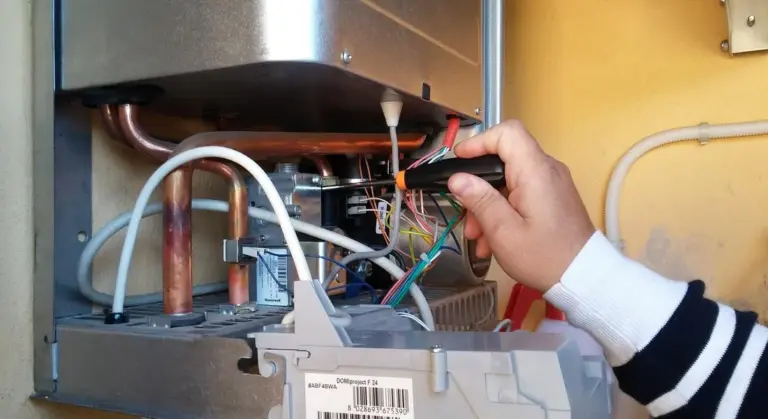
Take a clear photo of the wiring before you touch anything. Then, one wire at a time, disconnect it from the old heater.
As you disconnect each wire, immediately label it with a piece of tape. Common labels are “Line Hot (Black)”, “Neutral (White)”, “Ground (Green/Bare)”. If there are low-voltage wires for a control board or thermostat, label those too.
This labeling step is what prevents a confusing mess when you go to connect the new unit. It turns a puzzle into a simple matching game.
Connect Wires to the New Water Heater
With the old unit out, bring the new one into place. Route your labeled wires to the new connection points.
Match each labeled wire to the corresponding terminal on the new heater. The terminals should be marked (like L1, N, GND). If they aren’t, your owner’s manual is the law. Connect them securely:
- Strip about 3/4 inch of insulation from the wire if needed.
- Place the wire under the terminal screw or into the push-in connector and tighten firmly.
- For wires that need to be joined with a wire nut, twist them together clockwise, then screw on the nut. Give a gentle tug on each wire to ensure it’s secure.
A loose connection creates heat and is a fire hazard. Take an extra minute to make sure every connection is tight.
This process answers the common question, “How do I wire a new RV water heater?” You match the wires one-to-one: the power hot to the heater’s hot terminal, the neutral to neutral, and the ground to the ground screw. For a standard 120V AC electric model, it’s typically just these three wires. After wiring, a quick check of the water heater indicator light can help confirm that power is reaching the unit. For a closer look at the indicator light wiring, see the next steps.
Final Safety Check Before Powering Up
Before you restore any power, do a visual check. Ensure no bare wire is touching the metal casing or another terminal. All wire nuts are on tight, and all wires are routed away from sharp edges or the heating element area.
Only after this check do you restore power. First, reconnect the 12V DC battery power. Then, plug the RV back into shore power. Listen for the heater to begin its cycle. Check for heat at the tank after about 20 minutes.
How to Change an RV Hot Water Tank: The Full Replacement
Replacing the entire tank is the nuclear option. You only go here after you’ve ruled out everything else. Check the anode rod, the thermocouple, and the gas valve first. If the tank itself is leaking from the seams or has major corrosion holes, then it’s time for this job.
A full replacement is a major project that requires shutting down every utility connected to the heater.
Complete Shutdown: Water, Gas, and Power
You must isolate the heater completely. Missing one step here is how people get hurt or cause floods.
- Water Supply: Turn off the main water pump and/or the city water inlet valve. Open a faucet inside the RV to relieve system pressure.
- Gas Supply: Turn off the propane tank valve. Then, locate the dedicated shut-off valve for the water heater (usually on the gas line nearby) and turn it to the “off” position.
- 120V AC Power: Unplug your RV from shore power. Go to your RV’s breaker panel and turn off the circuit breaker labeled for the water heater.
- 12V DC Power: This powers the control board and ignition. Either turn off the main 12V disconnect switch or remove the specific fuse for the water heater.
Draining the Tank Completely
This step is messy but non-negotiable. You cannot disconnect water lines from a full tank.
Find the drain plug on the exterior access panel. It’s usually a plastic wing nut or a brass plug. Place a bucket directly underneath. Have some towels ready. Slowly open the drain plug. Let it flow.
To speed it up and get more sediment out, open the pressure and temperature relief valve on the tank (usually a small lever). This lets air in. You must drain the tank when the water is completely cold to prevent steam burns. If the water is still hot, wait.
Disconnecting the Lines and Harness
With the tank empty, you can start disconnecting. Work in this order:
- Water Lines: Use two wrenches-one to hold the fitting on the tank, one to turn the nut on the water line. Disconnect both the cold water inlet and hot water outlet lines. Have a small cup or towel to catch the last bit of water in the lines.
- Gas Line: Again, use two wrenches on the brass gas union fitting at the tank’s gas valve. Be careful not to twist the gas tubing itself.
- Electrical Harness: Find the main wiring plug going into the control module. Press the tab and unplug it. There may also be a separate ground wire secured under a screw.
Removing the Old Unit
Most RV water heaters are held in by a few screws around the exterior flange. Remove these. The unit should now be free. Carefully pull it straight out of its cavity.
Before you install the new one, shine a flashlight into the empty cavity and look for rodent nests, rust, or damage. I once pulled a unit and found a mouse condo built from insulation. Clean out any debris. Check for water stains that might indicate a leak from elsewhere.
Installing the New Unit
This is largely the reverse of removal, but with a focus on perfect connections.
- Set the new unit into the cavity, aligning it with the screw holes.
- Reconnect the electrical harness first. It’s easier with the unit loose.
- Reconnect the water lines. Use new rubber hose washers (included with new unit) to ensure a leak-free seal. Hand-tighten, then give it a quarter turn with a wrench. Do not over-tighten.
- Reconnect the gas line. Wrap the male threads of the gas fitting with yellow PTFE tape (rated for gas) or use a approved pipe thread sealant. Tighten with two wrenches.
- Secure the unit with its mounting screws.
You must test for gas leaks before attempting to light the pilot. Turn the propane tank on but do not light anything. Mix soapy water in a spray bottle and spray it on the gas connection you just made. Look for bubbles. If you see none, you’re good.
FAQ: How Do I Replace an RV Hot Water Tank?
This entire section is your answer. The key is systematic shutdown, a messy but thorough drain, careful disconnection, and leak-proof reconnection. The most common mistake is not checking the cavity or forgetting to turn off the 12V power, which can blow a fuse when you reconnect the harness. Take your time, use the right tools, and always test for gas leaks twice.
Choosing Your New RV Water Heater: Gas, Electric, or Combo?
You have three main paths: propane only, electric only, or a dual gas/electric combo. Your choice depends on how you camp and what you value most.
Compare Recovery Time and Energy Use
Propane and electric modes work very differently. Think of propane as a fast, intense campfire and electric as a slow, steady crockpot.
A standard 6-gallon RV propane water heater can reheat a full tank in about 20-30 minutes. Propane is the clear winner for speed, making it ideal for boondocking or when you need back-to-back showers. The trade-off is you’re burning through your onboard fuel.
An electric heating element will take about 60-90 minutes to do the same job. It’s slower, but it’s silent and doesn’t use your propane. Electric mode is perfect when you’re plugged into “shore power” at a campground, as it conserves your gas for cooking or furnace heat.
The Pros of a Gas/Electric Combo Unit
For most RV owners, a combo unit is the best choice. It gives you a plan for every situation.
- Use electric mode at a full-hookup campground to save propane.
- Switch to propane mode on the road or when dry camping to get hot water fast.
- Run both modes together to cut recovery time in half if you have a big family.
The flexibility of a combo unit means you’re rarely stuck without a way to make hot water. It’s the setup I have in my own travel trailer, and I’ve never regretted it.
Dimensional Compatibility and Swap Limits
This is the reality check. You can’t just pick any heater you like. The space for it is a fixed hole in your RV’s exterior wall.
You must match three things: the exterior dimensions, the interior depth, and the mounting hole pattern. A 10-gallon heater will not fit where a 6-gallon was. In most cases, you are looking for a direct replacement of the same model or one from the same manufacturer with identical specs. Always measure twice before ordering.
A Brief Look at Tankless Options
Tankless, or on-demand, RV water heaters are gaining popularity. They heat water instantly as it flows through a heat exchanger. How do they work?
The big pro is endless hot water; you’re limited by your fresh water and propane tanks, not a small storage tank. They also save interior space.
The cons are significant. They require a minimum water flow to activate (tricky with RV faucets), use propane very quickly when running, and are more complex and expensive. If you’re planning to install and configure propane tankless water heaters, you’ll need to account for venting and gas supply. Sizing and proper testing are essential parts of the setup. For consistent performance, tankless systems demand good water pressure and a robust propane supply.
Rough Cost Ranges for the Unit
Set your budget based on the type. These are for the appliance only, not installation parts or labor.
- Basic Propane-Only (6 gal): $300 – $500
- Dual Gas/Electric Combo (6 gal): $600 – $900
- RV Tankless Propane Unit: $800 – $1,400
You often get what you pay for in terms of durability and the quality of internal components like the burner assembly and anode rod. Don’t just buy the cheapest option if you plan on keeping the RV for years.
After the Fix: Startup, Testing, and Peace of Mind
You have a new heater or a freshly repaired one. The real job starts now. Flipping switches in the wrong order can cause damage or create a safety hazard. Follow this sequence exactly.
The Safe Startup Sequence
This order is not a suggestion. It’s the rule. Water first, leaks second, gas third, power last.
- Water First: Fully open the cold water supply valve to the heater. Open a hot water faucet inside the RV. You should hear air and water rushing into the tank and out the faucet. Let it run.
- Check for Leaks: With the system under water pressure, inspect every connection you touched. Check the inlet, outlet, drain valve, and temperature-pressure relief valve. Look for drips or seepage. A leak at a gas valve or electrical connection is an immediate shutdown and fix.
- Gas Next: Only after confirming no water leaks, open the RV’s main LP gas supply valve. If you smell gas immediately, shut the valve off. No smell means you can proceed to light the pilot.
- Power Last: Once the pilot is confirmed stable, you can restore 120V power to the heater for the electric element option. If your unit is gas-only, your job is done after the pilot test.
Purging Air from the System
Air in the lines causes sputtering and prevents proper heating. Purging is simple but critical.
Keep that hot water faucet wide open. Let it run until a steady, solid stream of water comes out with no spitting or sputtering. This can take a minute or two. You are pushing all the air out of the tank and the hot water lines. Once the flow is smooth, turn the faucet off. The tank is now full.
Final Operational Tests
Time to see if everything works as it should. Test each function separately.
Verifying the Pilot
Light the pilot according to your unit’s manual (usually a push-and-hold button). Once lit, continue holding the button for 60 seconds, then release. The pilot should remain lit. If it goes out when you release, the thermocouple is likely bad or not fully seated in the flame. A steady blue pilot flame about the size of a match is what you want.
Testing the Burner Cycle
Turn the gas control knob from “PILOT” to “ON.” Set the thermostat to a high temperature. You should hear the main burner ignite within a few seconds. A healthy burner has a quiet, steady, blue flame. Let it run. It should shut off automatically when the tank reaches temperature. Listen for it to cycle back on when the water cools. This on/off cycle is normal operation.
Testing the Electric Element (If Applicable)
On a dual-system RV heater, switch from “GAS” to “ELECTRIC” mode on the control panel. You should hear a faint click from the relay. Feel the access panel on the heater. It will get warm as the electric element inside works. No heat at the panel after 15 minutes means the element is likely failed or there’s no power to it.
One Final Safety and Leak Check
Do not pack up your tools yet. Run the heater through its first complete heat cycle on gas mode, as it draws the most energy.
- Get down and smell around the base of the heater and the gas valve. You are checking for any subtle gas odor that wasn’t present initially.
- Re-inspect all water connections, the drain valve, and the T&P valve pipe. Look for new drips caused by thermal expansion as the metal tank heated up.
If you pass this final check, you have done the job right. Close up the exterior access panel. You now have hot water and the peace of mind that comes from a safe, correct installation.
Keeping the Hot Water Flowing: Simple Maintenance Habits
A little routine care prevents big repair bills. These five habits are what I do on my own rig and recommend to every RV owner after a service call.
Annual Anode Rod Inspection (For Tank Models)
Think of the anode rod as the tank’s bodyguard. It sacrifices itself to corrosion so your tank’s steel walls don’t. You need to check its condition once a year. If it’s significantly corroded, you’ll replace the rod to keep the tank protected. For most RV water heaters, the rod is accessed from the outside behind the small removable cover. You’ll need a 1 1/16″ deep socket and a breaker bar or long ratchet.
- Turn off the water heater and let the tank cool completely.
- Shut off the water supply and relieve pressure by opening a hot water faucet inside.
- Remove the exterior cover and unscrew the anode rod from the housing.
- Inspect it. If it’s less than 1/4″ thick or the steel core wire is visible, replace it.
If the rod is completely gone, you’re already corroding your tank, and it’s only a matter of time before it springs a leak.
Winterizing to Prevent Tank Damage
Freezing is the fastest way to destroy a water heater. The tank itself and the plumbing lines can split. You must winterize if temperatures will drop below freezing. There are two main methods: using compressed air or non-toxic RV antifreeze.
My preferred method for the tank itself is the bypass and drain. Most RVs have a built-in water heater bypass kit (three valves) which allows you to drain and refill the water heater separately from the rest of the system.
- Turn off the water heater (gas and 120V electric).
- Open the pressure relief valve on the heater.
- Open the drain plug on the outside of the tank.
- Flip the three bypass valves to divert water away from the tank.
- Let the tank drain completely. Leave the plug and valve open.
Never use the water heater’s electric element to heat the tank if it’s not completely full of water; you will burn out the element in seconds.
Keep the Exterior Vent Clear
That vent on the outside of your RV is critical. It lets combustion gases out and brings fresh air in for the burner. A blocked vent is dangerous. It can cause improper burning (sooting) or force carbon monoxide back into the RV.
Before every trip, take ten seconds to look at it. Clear out any spider webs, mud dauber nests, or leaves. A small brush or vacuum hose attachment works fine. Make sure nothing is stored in the outside compartment that could fall and obstruct the vent tube.
Listen for Unusual Sounds
Your ears are great diagnostic tools. A healthy RV water heater should light with a solid whump and then burn with a steady, quiet roar. Strange sounds mean something’s wrong.
- A loud bang or whump at ignition: Delayed ignition. Often caused by a weak spark, gas valve issue, or air in the line. This can be dangerous.
- Rumbling or popping from the tank: Sediment buildup. The water is bubbling under the sediment layer. You need to drain and flush the tank.
- A high-pitched whistle or roar: The air shutter might be misadjusted or the venturi tube clogged.
Don’t ignore new sounds. A small issue with the burner or ignition system can quickly become a big safety hazard.
The Number One Rule: If You Smell Gas
This isn’t a suggestion. It’s the law. Natural gas and propane have mercaptan added so you can smell it (like rotten eggs). If you ever smell gas near the water heater or anywhere in the RV:
- Do not turn on or off any electrical switches or create any sparks.
- Extinguish all open flames.
- Shut off the gas supply at the tank valve immediately.
- Open doors and windows to ventilate.
- Leave the area and call a qualified technician or your gas company from outside.
Do not try to relight the pilot until a professional has located and fixed the leak. A gas leak can lead to an explosion or carbon monoxide poisoning.
Common Questions
What’s the most important safety step before I even try to light the pilot?
Shut off every other propane appliance (fridge, stove) and ventilate the area. Always, without fail, sniff for gas. If you smell even a hint of propane, do not light anything-turn off the main tank valve and call a professional. That smell is a critical warning.
Do I really need to shut off both 12V and 120V power to work on the wiring?
Absolutely. Your RV water heater uses 12V for the control board/safety circuits and 120V for the heating element. You must disconnect from shore power AND disconnect the 12V at the battery. Use a non-contact voltage tester to confirm all wires are dead before you touch them.
If I’m replacing the whole tank, what’s the one thing I can’t mess up?
Testing the gas connection for leaks. After you reconnect the gas line, turn the propane on but do not light the pilot. Spray a soapy water solution on the fitting; if it bubbles, you have a leak that must be fixed. Never skip this step.
What’s the single most useful tool for these jobs, besides a screwdriver?
A bright headlamp. Seeing clearly into the dark burner chamber or a cramped wiring compartment is half the battle. It keeps your hands free and helps you spot problems like a corroded connection or a misplaced thermocouple.
How do I know my repair or replacement was successful?
After startup, you need to verify three things: no water leaks at any new connection, a steady blue pilot flame that holds, and that the unit cycles on and off automatically via the thermostat. Finally, do one last smell check around the unit for gas after it’s been running for a few minutes.
Keep Your RV Hot Water Flowing Safely
Always check for gas leaks and test electrical connections before you turn anything on. Your first step should be to pull out the owner’s manual and follow its lighting and wiring instructions exactly.
Bob McArthur
Bob is a an HVAC and plumbing industry veteran. He has professionally helped homeowners resolve issues around water softeners, heaters and all things related to water systems and plumbing around their homes. His trusted advice has helped countless of his clients save time, money and effort in home water systems maintenance and he now here to help you and give you first hand actionable advice. In his spare time, Bob also reviews home water systems such as tankless heaters, water softeners etc and helps home owners make the best choice for their dwelling. He lives around the Detroit area and occasionally consults on residential and commercial projects. Feel free to reach out to him via the contact us form.