Water Heater Placement: Attics, Crawl Spaces, Tankless Units, and Floors Explained
Put your water heater in the wrong spot, and you risk leaks, damage, or a tough repair job down the line.
We will cover key installation locations, clearance requirements, and handling for attics, crawl spaces, tankless units, and floors.
I have installed and serviced water heaters for years. Follow code and think about access, or you will regret it.
The First Rule of Water Heater Club: Know Your Location Rules
What are the installation location requirements for a water heater? It boils down to four non negotiable factors: access, combustibles, drainage, and foundation, along with electrical and venting requirements.
Access is Everything
You need to get to it, plain and simple. This is for maintenance and for panic. I need 24 inches of clear working space in front of the control panels. More is better. You or a technician will need to read the pressure relief valve, drain the tank, or replace heating elements. If you can’t comfortably stand and work in front of the unit, you picked the wrong spot.
Keep Combustibles at a Distance
Gas water heaters have a flame. Even electric heaters get very hot. You must keep anything that can burn far away from the unit. National codes require a minimum of 18 inches of clearance from combustible materials like wood framing, drywall, or stored boxes. I always aim for two feet, especially in a tight closet or garage corner.
The Drain Pan Mandate
Every tank-type water heater needs to sit inside a proper drain pan. This pan must be piped to a floor drain or to the home’s exterior. Tanks fail. Valves leak. The pan is your insurance policy against a $10,000 flood in your finished basement or attic. The pan must be at least 1.5 inches deep and wider than the heater itself.
Solid Floor, Solid Future
The floor must be solid, level, and able to handle the weight. A full 50 gallon tank weighs over 500 pounds. In a garage, a concrete slab is perfect. In an attic or upstairs closet, you must verify the floor joists are strong enough. A heater should never sit directly on dirt, carpet, or a vinyl floor without a proper, solid base underneath it.
Here is your simple pre installation checklist:
- Is the floor solid, level, and rated for the weight?
- Is there at least 18 inches (24 is better) of clearance from walls and stored items?
- Is there a dedicated drain line from the pan to a floor drain or outside?
The Water Science of Heat and Scale
Hard water is a tank killer. Water with high TDS (Total Dissolved Solids) and hardness minerals (measured in Grains Per Gallon, or GPG) accelerates scale buildup. Think of scale like cholesterol in your pipes. When you heat hard water, the minerals like calcium and carbonate solidify and stick to everything, especially the heating element and tank walls. That scale acts like a stubborn barrier, forcing the heater to work harder to reach target temperatures. Over time, this reduces efficiency and drives up energy costs.
This rock like coating acts as an insulator. Your heater has to work harder and longer to heat the water, which wastes energy and stresses the tank. A heavily scaled heater can use 30% more energy and will fail years earlier than it should.
Location Dictates Maintenance, and Maintenance Is Everything
This is where your placement choice comes back to haunt you. Every tank has a sacrificial anode rod that corrodes to protect the steel tank from rust. You must check and replace this rod every 3 5 years. If you put your heater in a cramped attic or a dark crawl space, you will ignore this task. A neglected rod dissolves completely, and then your tank starts to rust from the inside out. A hard to reach location guarantees you will skip this vital maintenance, turning a 15 year appliance into an 8 year appliance.
Installing a water softener changes the game. By removing the hardness minerals (calcium and magnesium) before the water enters the heater, you virtually eliminate scale formation. The anode rod lasts longer because it isn’t fighting extreme corrosion. With a softener, your heater operates efficiently for its full lifespan, making a difficult installation location slightly less risky for long term durability. The maintenance is still required, but the consequences of delay are less severe.
Can a Water Heater Sit Directly on the Floor?
The short answer is it depends on your floor and your heater’s fuel type. You need to get this right for safety.
Can a gas water heater sit on the floor? No, not on a standard combustible floor. The burner assembly at the bottom gets extremely hot. Placing it directly on carpet, laminate, or wood plank flooring is a major fire hazard.
Can a hot water heater sit on concrete? Yes, in most cases. A concrete slab in a basement or garage is non-combustible, so it’s generally an acceptable surface for both gas and electric models.
The Clear Rule for Gas Water Heaters
Gas water heaters must never sit directly on a combustible floor. This includes:
- Wood subfloor
- Laminate or engineered wood
- Carpet
- Vinyl plank flooring
These heaters require a listed, non-combustible base. This is typically a piece of cement board, like Durock or HardieBacker, or a prefabricated metal pan designed for the purpose. The base must extend at least 3 inches beyond the heater’s footprint on all sides.
Electric Units and Concrete Floors
Electric water heaters have no open flame, so the fire risk is eliminated. You can usually place an electric water heater directly on a finished wood floor, but I still recommend using a drip pan. Leaks happen, and a pan protects your flooring from water damage. Following water heater safety guidelines helps prevent electrical hazards. It also covers proper clearances and drip pan placement.
Concrete slabs are fine for any type of heater. Even here, installing a drain pan is a smart, low-cost insurance policy. Route the pan’s drain line to a floor drain if you have one.
Code & Compliance Check
This isn’t just good advice, it’s law. Both the International Plumbing Code (IPC) and Uniform Plumbing Code (UPC) require protection for combustible floors under gas-fired appliances.
Here’s what inspectors look for:
When in doubt, put down a cement board pad and a metal drain pan. It covers your bases for safety, code, and protecting your home from leaks.
How Do You Handle a Water Heater in an Attic?
Where should you place a water heater in an attic? The real question is, should you place one there at all? The answer is usually no, unless you have no other choice. How do you handle a water heater in an attic then? With extreme caution and a strict set of rules. I’ve been on service calls for attic units that turned into full ceiling replacement jobs. It’s not a location to take lightly.
The Harsh Realities of an Attic Install
Before you even think about an attic, you need to understand what you’re signing up for.
- Weight Limits: A full 50-gallon water heater weighs over 500 pounds. Most attic joists are not built to support a static load like that in a concentrated spot. You’re asking your ceiling to hold the weight of a grand piano.
- Access Hatches: That little pull-down stair or scuttle hole is useless. You need a large, permanent access panel or door. Imagine trying to wrestle a new 60-inch tall tank through a 30-inch hole. It won’t work.
- Leak Disaster Potential: This is the biggest risk. A leak on the main floor gets wet floors. A leak in the attic gets ruined ceilings, walls, insulation, and framing. Water follows the path of least resistance, and it will find every light fixture and crack.
- Freezing Risks: Attics get cold. Unless your attic is fully finished and insulated to living space standards, your pipes and the tank itself are at risk in winter. Frozen pipes mean no water, and a frozen tank can crack and be destroyed.
The Absolute Must-Haves for an Attic
If you must proceed, here is your non-negotiable checklist. Missing one item is asking for a future insurance claim.
A large, leak-proof drain pan piped to daylight is not optional. The pan must be bigger than the heater’s footprint and made of a solid material. The drain line must be large enough (usually 3/4-inch) and must run directly to the home’s exterior. It cannot just drain into the attic or down a wall. I piped mine to a visible spot near my downspout so I can always see if it’s dripping.
Reinforced flooring is mandatory. A licensed contractor or structural engineer must assess the joists. They will likely need to sister new joists alongside the old ones and install a proper plywood platform. This spreads the weight across multiple joists and provides a solid base.
Full service clearances cannot be compromised. You need at least 24 inches of clear space in front of the unit for servicing and 6 inches on the sides and back. Check your local code, as some require more. This space is for the technician to work on the elements, anode rod, and valves. No storing boxes up there.
The DIY vs. Pro Verdict
Difficulty Rating: 9/10. Attic water heater installation is almost always a professional-only job.
The structural risks and leak consequences are too high for a DIY mistake. A pro will pull permits, ensuring the floor reinforcement and drain line are inspected and up to code. They have the equipment and manpower to safely lift the unit into place. The cost of a professional install is minor compared to the cost of repairing catastrophic water damage from a failed DIY attempt. Trust me on this one.
How Do You Handle a Water Heater in a Crawl Space?
You place a water heater in a crawl space only when you have no better option. Handling it means fighting three main enemies: moisture, critters, and the miserable reality of trying to service anything in a dark, tight hole. Let’s tackle each one.
Start With a Solid Foundation
Never set a water heater directly on the dirt. Moisture wicks up, rusting the tank from the bottom out. You need a proper equipment pad. A solid 4-inch thick concrete pad is best. Pour it level and extend it at least 3 inches beyond the heater’s footprint on all sides.
If pouring concrete isn’t feasible, use solid concrete blocks or a pre-cast plastic equipment pad designed for this exact purpose.
This lift keeps the tank dry and provides a stable, level base that prevents stress on the pipes.
Battle Moisture and Critters
Crawl spaces are damp. They’re also a highway for mice, rats, and insects looking for warmth or nesting material. Your installation must account for both.
- All electrical connections must be inside rigid metal conduit (EMT) or schedule 80 PVC conduit. Romex or other flexible wiring is rodent food.
- Seal every pipe penetration where lines enter or leave the crawl space with foam or silicone to block drafts and pests.
- Ensure the area has some ventilation to prevent stagnant, humid air from accelerating corrosion on the tank and connections.
Plan for Awkward Access
Replacing an anode rod or draining the tank is a chore in a garage. In a crawl space, it’s a nightmare. You must plan for it.
Before installation, create a clear, unobstructed path to the heater that’s at least 3 feet wide.
Make sure you have full access to the drain valve, temperature and pressure relief valve, electrical panel, and gas shutoff (if applicable). You will need room to swing a wrench and fit a bucket or hose. Consider installing a drain pan with a dedicated pipe that routes water outside the crawl space, so a leak doesn’t create a hidden pond.
Recommended Products for Crawl Space Installations
These two items are non-negotiable for a crawl space setup.
- Tall, High-Capacity Drain Pan: Standard 2-inch deep pans are almost useless. Get a pan that is at least 3 inches deep with a capacity that meets or exceeds local code (often 2.5 gallons or more). Look for one with a threaded outlet for a 3/4-inch hose so you can pipe any leakage directly to a drain or outdoors.
- Sealable Foam Pipe Insulation: The cold water inlet line will sweat constantly in a humid crawl space. Use foam insulation with a self-sealing adhesive seam to wrap all exposed cold water pipes. This prevents condensation drip, which contributes to moisture problems and rust on metal components.
Before any crawl space work, always turn off all power and water to the heater. Bring good knee pads, a reliable headlamp, and patience. It’s a tough spot for a heater, but with the right prep, it can work.
Where Should You Place a Tankless Water Heater?
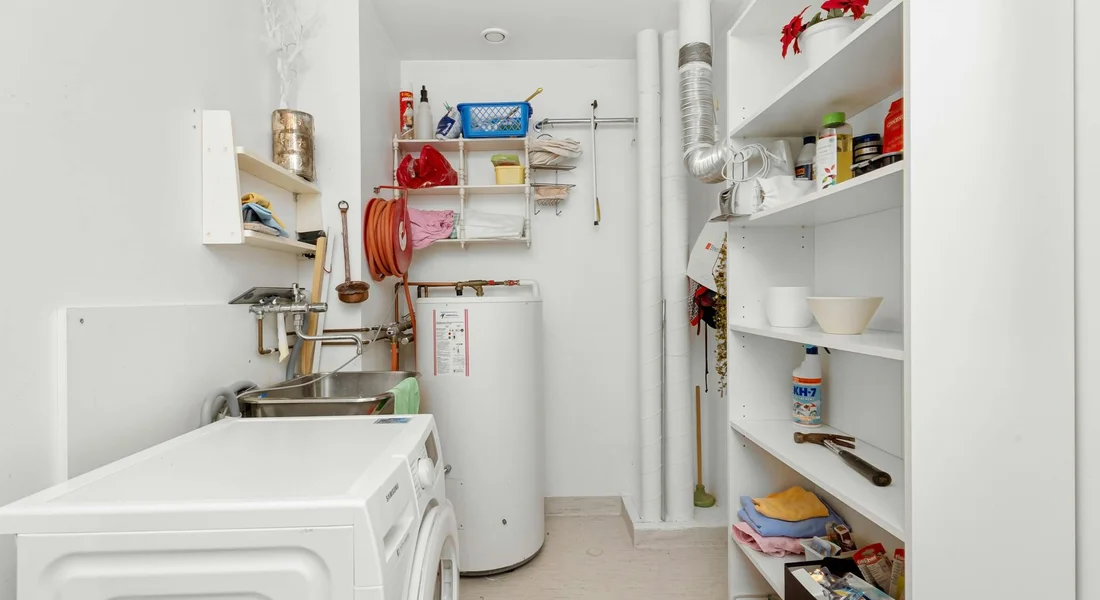
The best spot is on an exterior wall where you can run a short, straight vent pipe directly outside. Your venting type, not the unit’s size, calls the shots on location.
A tankless unit is tiny compared to a 50-gallon tank heater. That small size opens up spots a standard heater can’t fit, like a shallow utility closet or a narrow garage wall. The trade-off is that tankless heaters have much stricter rules for gas supply and exhaust venting, making planning more critical than for a traditional tank. When you choose tankless water heater size, you weigh peak hot-water needs and simultaneous use. This helps ensure you pick a model that fits your usage and keeps gas and venting aligned.
Venting is Your Location Dictator
You have two main venting types, and your choice determines where you can install the unit.
Direct-Vent (Sealed Combustion): This system pulls combustion air from outside through one pipe and exhausts fumes through another concentric or separate pipe. It’s the most flexible for interior locations. You can install a direct-vent unit in a garage, basement, or interior laundry room because it doesn’t use indoor air.
Power-Vent: This system uses indoor air for combustion and has a fan that pushes exhaust horizontally through a single pipe out a sidewall. It must be installed in a room with ample fresh air volume, like a large, well-ventilated basement or garage, as specified by the manufacturer’s manual.
Your local building code will have the final say on clearances from windows, doors, gas meters, and property lines. These rules are not suggestions.
Flexibility vs. Strict Requirements
The compact design lets you mount a tankless heater in many places: on an exterior wall, in a garage corner, inside a dedicated utility closet, or even in an attic (if you can meet access and drainage requirements).
This flexibility disappears the moment you look at the gas line and vent clearances. A standard tank water heater might run on a 1/2-inch gas line. Most tankless units require a 3/4-inch or even 1-inch gas line to deliver enough fuel for the powerful burner. You must verify your home’s gas pressure with a tool called a manometer. The vent pipe material is also critical. For high-efficiency condensing units, you use specific PVC piping. For non-condensing models, you need certified stainless steel venting that can handle much higher exhaust temperatures.
Tools & Material Checklist
Gathering the right tools before you start prevents mid-job frustration. Here is what you need for a proper gas tankless installation.
- Manometer: This measures your gas pressure in inches of water column. It is the only way to know if your meter and line can supply the unit’s required pressure.
- Correct Venting Material: Do not substitute. Use only the PVC (like CPVC or PVC) or AL29-4S stainless steel vent kit listed for your specific heater model.
- Large Pipe Wrench (18-inch or 24-inch): You will need serious leverage to disconnect old iron pipe fittings and secure new gas connections.
- Tubing cutter (for clean copper cuts)
- Two adjustable wrenches
- Non-corrosive pipe thread sealant (for gas connections)
- Torpedo level
Transporting and Moving Your Heater: Do Not Tip It Over
Can you transport a water heater on its side? The short answer is a hard no for any traditional tank-type model, whether it’s electric, gas, or propane. If you’re weighing options, our water heater transport laying-down guide provides context and safety considerations.
The universal rule is simple: never transport a tank water heater lying down. Keep it upright, the same way it sits in your home. Tipping it over risks serious internal damage you won’t see until it’s installed and leaking. Following safe transport practices helps prevent damage during handling. We’ll cover how to transport a water heater tank safely in the next steps.
The main risk is to the inner glass liner. This fragile coating protects the steel tank from corrosion. When the tank is on its side, the heavy insulating foam and internal components can shift and crack that liner during transport bumps. You can also snap the plastic dip tube, which is the pipe that sends cold water to the bottom of the tank. Material safety concerns around water tanks include corrosion resistance, leaching, and durability. Choosing materials with certified standards helps prevent contamination and failure.
A Story from a Service Call
I was once called to a house with a brand-new water heater that was leaking from the tank seam immediately after installation. The homeowner had saved money by picking it up himself. He told me proudly how he laid it flat in his pickup truck to keep it from rolling. That sideways ride was all it took. We drained it, and I could hear pieces of the shattered glass liner rattling around inside. He had to buy a whole new unit.
When This Rule Does Not Apply
This warning is only for traditional tank-style heaters. Small, wall-mounted tankless water heaters are built completely differently. They contain no large glass-lined tank. You can transport a tankless unit in any orientation without harming its copper heat exchanger or solid-state electronics. Just pack it securely to avoid dents.
The Red Flag Troubleshooting Guide
Don’t wait for a flood. Your water heater tells you when its location is a problem. You just need to know what to look for. Ignoring these signs costs thousands in repairs. Let’s run through the urgent ones. Spotting hot water heater signs symptoms early can save you from bigger trouble. We’ll outline what to check next.
Rust Stains on the Floor or Ceiling
This is your heater screaming for help. A small drip from a bad connection or a tiny tank leak might seem minor. In a garage or basement, you see it right away. In an attic or crawl space, that same drip soaks insulation and rots wood for months before you notice a stain on your ceiling.
If you see a rust-colored puddle or a new water mark on a ceiling, you must investigate the source immediately.
Here is what you do:
- Shut off the power: For electric, flip the breaker. For gas, turn the knob to “Pilot” or “Off”.
- Shut off the water: Turn the cold water inlet valve clockwise.
- Check the fittings: Dry everything with a rag. Feel the inlet and outlet connections, the temperature/pressure relief valve pipe, and the drain valve for moisture.
- Look at the tank: Inspect the tank’s exterior, especially near the bottom. A wet spot on the tank itself often means internal corrosion and the tank is finished.
If the leak is from the tank in an attic, you have a major emergency. Water damages everything it touches. A tank in a pan with a drain line to the exterior is the only safe way to install in an overhead space.
Persistent “Rotten Egg” Smell from Hot Water
That sulfur smell is bacteria reacting with a spent anode rod. The rod is a sacrificial metal stick inside the tank that protects the steel from rusting out. When it’s gone, the tank corrodes, and the smell gets bad.
The location matters because nobody changes an anode rod in a low-clearance attic or a tight closet. It’s a maintenance task that gets skipped because it’s too hard to access. By the time you smell it, the rod is often completely gone and your tank is actively rusting.
For a heater in a tough spot, checking the anode rod is a project. You need about a foot of clearance above the tank to wrench out the old rod. If you can’t get to it, your only fix is a chemical treatment like hydrogen peroxide, which is a band-aid, not a cure. This is a strong argument for installing heaters where they can be serviced.
Sputtering from Hot Water Taps
Air shouldn’t be in your hot water lines. Sputtering means it is. This usually points to one of two serious issues caused by location or condition.
First, a leak on the suction side. If your heater is in a crawl space, check all the cold water pipes leading into it. A small leak there can suck air into the system when the heater drains, causing sputtering at your faucets.
Second, and more dangerous, is an overheating tank. A heater stuffed into a tiny closet with no airflow can’t vent properly. A failed thermostat can also cause it. The water gets so hot it actually boils inside the tank, creating steam and air pockets. You’ll hear rumbling or knocking sounds from the tank, too.
This is a safety hazard. The temperature and pressure relief valve should activate, but if it’s old and stuck, pressure can build. If you have sputtering and the hot water is excessively hot, turn the heater off and call a pro. Tankless units installed in enclosed spaces without proper combustion air can also fail to ignite properly, causing similar system air issues.
Condensation “Sweating” and High Humidity
You might see water around the base and think it’s a leak. In a cool, damp crawl space or basement, a cold water inlet pipe and a cold tank can sweat just like a glass of ice water. This moisture drips and promotes mold and rust.
Constant condensation shortens the life of the tank and everything around it. The solution is to insulate the cold water pipes and, if possible, improve the area’s ventilation or run a dehumidifier. This is a location-specific problem you don’t get in a conditioned garage or utility room.
Pilot Light That Won’t Stay Lit on a Gas Unit
If your gas heater is in a dusty garage, a tight mechanical room, or a windy crawl space, the pilot assembly gets dirty or drafty. A clogged pilot orifice or a weak thermocouple will shut the gas off for safety.
Location-induced draft or dust is a common root cause for pilot outages. Before you replace parts, check the environment. Is there a vent blowing directly on it? Is it surrounded by laundry lint and dust? Clean the area around the unit and the pilot assembly carefully with compressed air. Often, improving the immediate environment solves the problem. If not, the thermocouple likely needs replacing.
Clearance is King: The Space You Really Need
What are the clearance requirements for a water heater? This is not just a code question. It’s a practical one. If you can’t reach the valves and drains, you can’t maintain the unit. I’ve seen heaters shoved into closets where the door barely closes. That’s a future headache waiting to happen.
Here’s the simple breakdown most pros work from. You need at least 18 inches of clear floor space in front of the heater. This is your working room. For the sides and back, 6 inches is a typical minimum. These numbers are a starting point, but your unit’s installation manual is the final word-always check it.
Combustible Clearance vs. Service Clearance: Two Different Rules
This is where DIY plans often go wrong. You must plan for two types of space. Service clearance is the room you need to work on it. Combustible clearance is the safe distance required from hot surfaces, mainly the flue pipe on a gas model, to any material that can burn like wood framing or drywall.
A gas water heater’s flue can need 1 inch or more of clearance from combustibles. The side panels might only need that standard 6 inches. You need to satisfy both the service access rules and the combustible material safety rules, which are not the same measurement. Ignoring the flue clearance is a fire hazard.
Your System Maintenance Roadmap
Proper clearance isn’t about bureaucracy. It’s about being able to perform the basic upkeep that extends your heater’s life by years. Here’s how the space you leave directly enables each critical annual task:
- Draining the Tank: You need that full 18 inches in front to connect a standard garden hose to the drain valve, open it, and manage the flow. Cramped space means spilled water and a job you’ll avoid.
- Checking the Anode Rod: This requires a 1-1/16″ socket on a long breaker bar or impact wrench. You need solid, unimpeded overhead access and room to swing that tool. If the ceiling is too close, you can’t do it.
- Testing the Pressure Relief Valve: You must be able to lift the valve’s lever easily and direct the discharge from the drain line safely. This is impossible if the unit is buried in a corner.
In my own basement, I gave my heater an extra 4 inches on the left side. That’s where the drain valve sits, and the extra room makes flushing it a five-minute job instead of a knuckle-busting struggle. Plan for the work, not just the install.
Your Installation Toolkit: What You Need on Day One
Getting your tools and materials ready before you start saves hours of frustration. This is the exact checklist I use for a standard water heater swap.
Tools & Material Checklist
Gather these items first. Having them on hand means you won’t be running to the hardware store with water shut off and pipes disconnected.
- Two Pipe Wrenches (14-inch or 18-inch): You always need two. One wrench holds the fitting, the other turns the pipe. This prevents you from twisting and damaging other plumbing in your walls.
- Tubing Cutter (for copper) or PEX Crimp/Cinch Tools: A sharp tubing cutter makes clean, square cuts on copper pipe. If your home uses PEX, you must have the correct crimp rings and tool or cinch clamps and tool. They are not interchangeable.
- Hacksaw: For cutting through old, corroded nipples or pipes in tight spots where a cutter won’t fit.
- Teflon Tape & Pipe Dope (Thread Sealant): Use both on all threaded connections. Wrap the male threads with tape, then apply a smear of pipe dope over the tape. This creates a reliable, leak-free seal.
- A Garden Hose: You need this to drain the old tank. Connect it to the drain valve and run it to a floor drain or outside.
- A 4-Foot Level: Critical for setting the new heater perfectly plumb and level on an uneven floor. A tilted tank can cause sediment buildup and noisy operation.
Forget one wrench and you’ll fight the job the whole time. The right tool makes it a straight swap instead of a wrestling match.
Flexible Connectors vs. Rigid Copper: What to Use When
Connecting the new heater is the final step. Your choice here depends on your skill and the existing pipes.
Flexible Stainless Steel Connectors (Corrugated):
- These are the DIY homeowner’s best friend. They bend and flex to connect misaligned pipes.
- Use them when the existing water lines are not perfectly aligned with the new heater’s inlets. They forgive imperfect measurements.
- I keep a set in my truck for service calls because they solve alignment issues fast. In my own basement, I used flex connectors for a quick, sure installation.
Flex connectors are forgiving and fast, making them ideal for most direct replacements where alignment is a question.
Rigid Copper Pipes & Fittings:
- This is the traditional, professional method. It looks cleaner and is more durable over decades.
- Use rigid copper if you are confident in your soldering skills and the pipes line up perfectly. It requires cutting, fitting, and soldering with a torch.
- Choose rigid for new construction or if you’re moving the heater location and running new pipe. It’s a permanent, high-quality connection.
Rigid copper is for a permanent, pro-grade install, but you need the skill to solder it correctly without creating leaks.
When to Call a Professional Plumber
Knowing your limits saves money and prevents disasters. Some jobs are strictly for licensed professionals.
Scenarios That Require a Pro
Do not attempt these yourself. Call a licensed plumber or gas fitter for:
- Any gas line work. This includes connecting a new gas water heater, extending a gas line for relocation, or repairing a gas valve.
- Major relocation of the unit. Moving a heater to a different room or floor often requires new gas, vent, water, and drain lines.
- Installations in attics or crawl spaces. These are complex, hazardous environments requiring special handling for the unit and code compliant access.
- If your local building code demands a permit and licensed installer. Most jurisdictions require this for new water heater installs. Failing to pull a permit can void your home insurance and create issues when you sell.
A pro isn’t a luxury here, it’s a requirement for safety and legality.
What the Professional Handles
When you hire a qualified technician, they manage critical steps you cannot safely DIY.
- Pressure Testing Gas Lines: They use a manometer to ensure all new connections hold pressure without leaks. A gas leak is silent and deadly.
- Proper Vent Sizing and Installation: For gas models, the vent pipe must be the correct diameter and length to safely exhaust carbon monoxide. A mistake here can be fatal.
- Final Gas Leak Check: After pressurizing the line, they use leak detection solution or an electronic sniffer at every joint.
- Code Compliance: They ensure the entire installation-from seismic straps to drain pans-meets your local building and plumbing codes.
What Helped Me: The Photo Tip
Even when I hire a pro for a big job, I take my own set of detailed photos first. Before anyone touches a pipe, I use my phone to snap pictures from every angle.
This creates a free, permanent record of how everything was originally routed and connected.
When I had my old tank replaced, I took photos of the gas valve, the vent connection, and the plumbing lines. A year later, when I was running a new circuit in the basement, those photos showed me exactly where the safe pathways were behind the new heater. It takes two minutes and has saved me hours of guesswork more than once.
Common Questions
What’s the biggest risk of putting a water heater in the attic?
Catastrophic water damage. A leak up there is a silent disaster, ruining ceilings, insulation, and framing long before you see a stain. If an attic install is unavoidable, a large, leak-proof drain pan piped directly to the home’s exterior is your only defense.
How do I protect a water heater in a crawl space from moisture and pests?
Start with a solid, non-absorbent base like a concrete pad to keep it off the dirt. Seal all pipe penetrations with foam to block critters, and use rigid metal conduit for all electrical wiring to prevent rodents from chewing through it.
What’s the most important factor when choosing a location for a tankless water heater?
Venting. Your venting type-direct-vent or power-vent-dictates where you can put it. The unit must be on or near an exterior wall to allow for a short, straight, code-compliant exhaust run, which is far more critical than the unit’s small physical size.
Do electric water heaters need a special base or pad like gas models?
No, there’s no open flame, so a fireproof pad isn’t required for safety. However, you should always install one inside a drain pan to protect your floors from water damage if a leak occurs.
Why is clearance so important around a water heater?
It’s a two-part rule: safety and service. You need space to keep combustibles away from heat sources to prevent fires, and you must have room to access valves and drains to perform the annual maintenance that extends the unit’s life.
Final Checks for Your Water Heater’s Home
Pick a location you can easily reach for yearly flushing and filter changes-this saves you from major headaches later. No matter where it goes, always leave the clearance space listed in your unit’s manual to keep your home safe and efficient.
Bob McArthur
Bob is a an HVAC and plumbing industry veteran. He has professionally helped homeowners resolve issues around water softeners, heaters and all things related to water systems and plumbing around their homes. His trusted advice has helped countless of his clients save time, money and effort in home water systems maintenance and he now here to help you and give you first hand actionable advice. In his spare time, Bob also reviews home water systems such as tankless heaters, water softeners etc and helps home owners make the best choice for their dwelling. He lives around the Detroit area and occasionally consults on residential and commercial projects. Feel free to reach out to him via the contact us form.