Efficient Pool Heating Methods That Actually Save You Money
Heating your pool can burn a hole in your pocket fast. Let’s cut through the noise and find a system that keeps you swimming without the sting.
We will cover solar heaters, heat pumps, gas heaters, and solar covers to show you what works.
I’ve fixed and installed these systems for over a decade. Here’s the takeaway: your local weather is the biggest factor in your choice.
The First Rule of Pool Heat: Stop the Bleeding
Think of your pool like a leaky bucket. You can pour warm water in all day, but if there are holes, you’ll never get ahead. Your pool loses heat in three main ways.
Evaporation is the biggest thief. When water turns to vapor, it takes a massive amount of heat with it. Radiation sends heat energy directly from the water surface into the cool night sky. Conduction transfers heat through the pool walls and floor into the colder ground.
Your first and most important step is to plug the biggest hole, which always starts with a high-quality solar cover. It acts like a blanket, cutting evaporation by over 90% and trapping heat that would radiate away. It’s the single most cost-effective “heating” device you can buy.
Above ground pools lose heat even faster. The entire wall area is exposed to cold air. The advice is the same but more urgent. Use a solar cover every single time the pool is not in use. For extended seasons, consider insulating the walls underneath the liner with rigid foam panels. It’s a weekend project that makes your heater’s job much easier.
Choosing Your Heat Source: A Side-by-Side Plumber’s Breakdown
Forget complicated efficiency ratings. For a pool owner, efficiency is simple: how many BTUs of heat do I get for each dollar I spend on gas or electricity? More BTUs per dollar equals higher efficiency and a lower operating bill. In a gas water heater, BTU efficiency means more heat per unit of gas, so you get hotter water for less fuel. That makes BTU efficiency a practical criterion when comparing models.
Let’s clear up two common questions right now. Can you heat a pool with boiling water from your house? Technically yes, practically no. You’d need to continuously add hundreds of gallons of boiling water to make a dent. Your home water heater can’t keep up, and your utility bill would be astronomical. It’s a fun myth, not a real solution. For salt water pools, the answer is easy. All standard pool heaters are built with materials to handle salt water. You don’t need a special “salt water heater.”
Here’s how the main contenders stack up.
| Heater Type | How It Works | Efficiency (BTU/$) | Heat Speed | Best For |
| Heat Pump | Moves heat from air to water | Very High | Slow & Steady | Warm climates, long seasons |
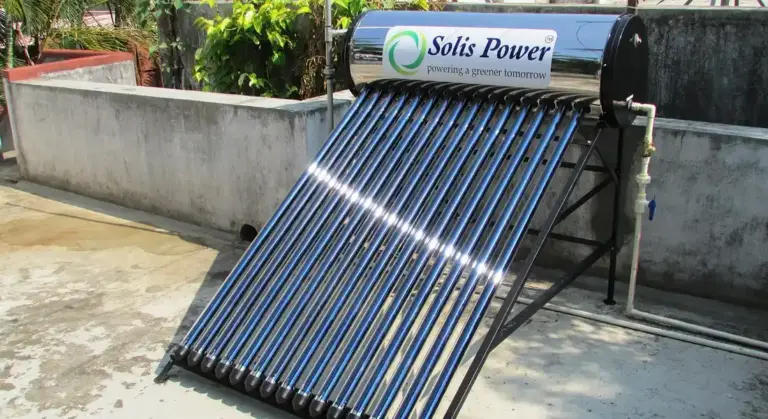
| Solar (Panels) | Sun heats water in roof panels | Highest (free sun) | Slow, sun-dependent | Sunny areas, low operating cost |
| Gas (Nat. or Propane) | Burns fuel to heat water | Lowest | Very Fast | Quick heat, any weather, short seasons |
| Electric Resistance | Heating element (like a kettle) | Low | Fast | Small spas, not full pools |
Heat Pump Pool Heaters: The Long-Term Champion
Imagine your home’s air conditioner running in reverse. A heat pump uses a compressor and refrigerant to capture heat energy from the surrounding air and transfer it into your pool water. It doesn’t create heat, it moves it.
This process works best when the outside air is warm and humid, giving it plenty of heat energy to extract. In my Florida projects, they’re fantastic. In chilly northern fall air, their output drops dramatically. They have a higher purchase price, similar to replacing a home AC unit. The payoff is very low daily operating cost. If you swim for months on end, a heat pump will save you money over time.
Solar Pool Heaters: Free Fuel, Smart Setup
You have two main choices here. The first is an active solar panel system. Pool water is pumped through a series of black plastic or rubber panels on your roof or a ground rack. The sun heats the panels, which heats the water. The second is a passive solar pool cover or solar rings floating on the surface, which we already covered as your essential first step.
Do solar panels work on cloudy days? They do, but at reduced capacity. They absorb infrared heat even through cloud cover. They won’t boil your pool, but they’ll extend your season. The big decision is mounting. Roof mounts are common but require a strong, south-facing roof. Ground arrays need space but are easier to service. I helped my neighbor install a ground array next to his shed, and it added a solid month to his swim season.
Gas Pool Heaters: The Fast & Reliable Workhorse
A gas heater is straightforward. It has a burner that fires when you need heat. Water flows through a copper heat exchanger above the flames, getting hot quickly before returning to the pool. Natural gas is cheaper to run than propane if you have the line. That choice also affects installation and ongoing costs. We’ll compare propane vs natural gas water heaters to help you decide which setup works best for your home.
The unmatched benefit of gas is speed and independence. Want to heat the pool for a weekend party? A gas heater can raise the temperature overnight, rain or shine. The trade-off is the operational cost. You are literally burning money for that convenience. It’s perfect for heating a pool for specific events or in climates with a short, unpredictable swim season. Just budget for the gas bill.
The DIY vs. Pro Verdict: What You Can Actually Do Yourself

Knowing where to draw the line saves money and prevents disaster. Here is a clear breakdown of what you can handle and what demands a licensed professional.
Difficulty Ratings and Where to Stop
Think of these ratings like a plumbing job. A 1 is cleaning a showerhead, a 10 is rerouting your main sewer line.
- Solar Pool Cover: Difficulty 1. You roll it out and cut it to size. Any homeowner can do this. The only skill is measuring your pool correctly.
- Above-Ground Heat Pump: Difficulty 5-7. This is a moderate to challenging DIY project. You need to plumb it into your existing pool filtration lines and wire it to a dedicated electrical circuit. If you have successfully replumbed a sink or installed a water softener, you have the basic skills. The major hurdles are ensuring proper electrical service and creating watertight PVC joints.
- Gas Pool Heater: Difficulty 9. Call a pro. Full stop.
- Solar Panel System (Roof-Mounted): Difficulty 9+. Call a pro. Full stop.
Drawing the Line: Homeowner vs. Professional Work
Your comfort zone ends where specialized licenses and serious risk begin.
A confident homeowner can typically handle:
- Installing a solar blanket or liquid solar cover.
- Placing a prefabricated solar ring kit on the water’s surface.
- Installing an above-ground heat pump, provided the concrete pad is level and all utilities are already stubbed out correctly nearby.
- Basic plumbing connections using PVC pipe and fittings to integrate a heater into the pool’s return line.
You need a licensed professional for:
- Any natural gas or propane line work, including connections to a heater. This is not a suggestion, it’s a safety requirement.
- Creating new roof penetrations for mounting hardware or running plumbing for solar thermal panels. One leaky roof penetration costs far more than the install.
- Any major electrical work: running a new dedicated circuit from your main panel, installing a new sub-panel, or connecting high-voltage equipment. This work must meet National Electrical Code (NEC) standards.
- Complex plumbing that involves cutting into pressurized main lines near your pool equipment if you’re not sure how to isolate and drain the system.
The Code Compliance Non-Negotiables
Ignoring building codes can void your insurance and make your home unsafe to sell.
Gas lines require a licensed plumber or gas fitter. The International Fuel Gas Code (IFGC) is strict for a reason. A pro will pressure test the line, ensure proper venting, and get the required permit. My own gas water heater install was done by a pro, even though I could have physically connected it. The permit and inspection were peace of mind.
Electrical work must meet the National Electrical Code (NEC). This covers wire gauge, conduit type, GFCI protection, and grounding. An electrical inspector will look for these details.
Plumbing follows the International Plumbing Code (IPC) or Uniform Plumbing Code (UPC). This governs pipe material, support, and proper jointing. Using the wrong glue on PVC or improper pipe sizing can lead to failure.
Tools & Materials Checklist for a Typical Install
For a heat pump or plumbing-intensive project, having the right gear ready turns a headache into a straightforward job. This is the same kit I use for pool equipment and water softener installs.
Essential Tools
- PVC Pipe Cutters (a ratcheting style is best for clean cuts)
- PVC Primer (Clear or Purple) and PVC Cement
- PTFE Thread Seal Tape (Teflon Tape) for threaded fittings
- Adjustable Wrenches (Two is ideal, one to hold, one to turn)
- Multimeter for verifying power is OFF and checking voltage
- Tube Cutters or a Hacksaw (if working with copper lines)
- Deburring Tool or File
- Torpedo Level
- Tape Measure
- Marker/Pencil
Common Materials & Supplies
Never use standard hardware store supplies for permanent pool plumbing. Chlorine and constant UV exposure will destroy them, unlike specialized PVC or CPVC used in home water systems.
- Schedule 40 PVC Pipe and Fittings (slip x slip unions, elbows, couplings)
- Stainless Steel Hose Clamps (not the zinc-plated ones, they rust quickly)
- Liquidtight Flexible Electrical Conduit and Connectors (if specified for the heater’s power cord)
- Pool & Spa Lube (a silicone-based lubricant for O-rings and gaskets)
- Pool & Spa Thread Sealant (a paste sealant for threaded joints, often better than tape alone)
- Concrete Pad or Composite Pad sized for your heater
Pool-grade lubricants and sealants are formulated to withstand harsh chemicals. Using a standard plumbing grease will cause rubber O-rings to swell and fail within months. I keep a tube of pool lube in my toolbox just for this reason.
System Sizing: How to Calculate What You Really Need
Buying a pool heater is like buying a water softener. You size it for your specific water volume and hardness. You do not just buy the biggest one. The same principle applies when choosing a water heater size capacity for your home. Size it to meet your peak hot-water demand.
First, you need your pool’s gallons. If you don’t know, here is a simple math formula. For a basic rectangle pool, multiply Length (feet) x Width (feet) x Average Depth (feet) x 7.5. That number is your total gallons.
The core formula for sizing any pool heater uses your pool gallons and the temperature rise you want. However, it’s different from how you choose a tankless water heater size for your home.
Here is how it works. Let us say you have a 20,000-gallon pool. The water is 60°F and you want it at 80°F. That is a 20-degree rise.
You take your gallons (20,000), multiply by 8.33 (the weight of a gallon of water), then multiply by your desired temperature rise (20°F). This gives you the total BTUs needed to heat the water. A 400,000 BTU gas heater can do that job fast. A 100,000 BTU heater will take longer.
For heat pumps, sizing is different. They are rated by BTUs too, but their output drops as the air gets colder.
With a heat pump, bigger is not always better because an oversized unit will short-cycle, turning on and off constantly, which wastes energy and wears it out faster.
You must factor in your local climate. A heat pump that works great in Florida may struggle in Michigan. Look for the unit’s COP (Coefficient of Performance) and its rated output at 50°F air temperature. That is the number that matters for spring and fall swimming.
Your pool cover is the most important efficiency tool you own. A good solar cover can cut your heating needs by 50% or more. It stops evaporation, which is where most of your heat escapes.
Be honest about your swim season goals. Want to swim in May and September? A heat pump or solar system might work. Want 85°F water anytime, day or night? You are looking at a gas heater.
Everyone asks, “How long will it take to heat my pool?”
The answer depends entirely on your heater’s BTU output and the temperature difference.
A 400,000 BTU gas heater can raise a 20,000-gallon pool by 20 degrees in about 4-5 hours. A 120,000 BTU heat pump might take 24-48 hours for the same job, but it costs far less per hour to run. You trade speed for operating cost. That trade-off is exactly why many ask, are heat pump water heaters worth it? We’ll weigh upfront costs against long-term savings to help you decide.
Your Pool Heater Maintenance Roadmap
Treat your pool heater like your water softener or furnace. A little regular care prevents big, expensive repairs.
Seasonal Schedule
Spring Startup:
- Remove any winterizing plugs or fittings from the plumbing.
- Turn on the pool pump and check for water flow through the heater. Listen for unusual sounds.
- For gas heaters, light the pilot (follow the manual’s instructions exactly). Listen for the main burner to ignite smoothly.
- Inspect the exterior for insect nests or animal damage. I find mud daubers in my unit every spring.
Weekly Checks:
- Clean the pool pump’s filter basket. A clogged basket reduces flow and can trigger a heater shutdown.
- If you have a solar system, quickly check the rooftop panels for leaves or debris.
- Look at the heater’s pressure gauge (if it has one). A steady reading is good. A rising reading means your filter is getting dirty.
Winter Shutdown:
- Completely drain a gas heater’s internal plumbing to prevent freeze damage. There are drain plugs on the headers.
- For heat pumps, follow the manufacturer’s guide. You usually just turn it off and cover it.
- Blow out water from solar panel lines with an air compressor.
- Install winterizing plugs in any open ports.
Detailed Maintenance Tasks
Cleaning is your best friend. Every month, open and rinse out the heater’s filter canister if it has one.
Once a season, visually inspect the burners on a gas heater (when cold) for rust or spider webs. If you ever smell gas near the unit, turn it off at the gas valve immediately and call a professional. Do not try to repair gas lines yourself.
For heat pumps, keep the fins on the external coil clean. Gently spray them with a garden hose to remove dirt and grass clippings. Bent fins block airflow and kill efficiency.
Red Flag Troubleshooting Guide
- Low Flow Error: Your pool’s filter is dirty, the pump is failing, or a valve is closed. Clean the filter first. It is almost always the filter.
- Strange Noises (Rumbling, Screeching): Rumbling in a gas heater often means scale buildup in the heat exchanger. Screeching can be a bad blower motor bearing.
- Failure to Ignite (Gas Heaters): Could be a bad thermopile, a closed gas valve, or a dirty pilot orifice. If you are not comfortable testing the millivolt output, call a tech.
- Rising Gas Bills: Your heater is running too much. Check for a leak in the plumbing, a missing pool cover, or a failing thermostat. Compare your runtime to last year’s.
Cost to Own: Upfront Price vs. Lifetime Burn
The real cost of pool heat isn’t the sticker price. It’s the long-term burn in your utility bill. Let’s break it down like a service invoice.
Realistic Installed Cost Ranges
These are ballpark figures for a typical residential inground pool, including standard professional installation. A complex plumbing run or an old electrical panel can add to this.
- Gas Heater (Natural Gas or Propane): $3,500 – $6,500. You’re paying for the metal box, the gas line work, and the venting.
- Electric Heat Pump: $4,500 – $8,500. The unit itself costs more, and it often needs a dedicated 240-volt circuit.
- Solar Thermal System: $8,000 – $16,000. This is highly variable based on roof type, panel count, and plumbing complexity.
- Solar Pool Cover (Reel + Cover): $300 – $800. This is the one item a handy homeowner can often install themselves.
The cheapest system to buy (gas) is often the most expensive to run, while the most expensive to install (solar thermal) can have near-zero monthly costs.
Monthly Operating Cost Comparison
Operating cost depends on your climate, pool size, desired temperature, and local fuel rates. Using national averages, here’s how they stack up for consistent seasonal use.
| System Type | Primary Fuel | Estimated Monthly Cost* |
|---|---|---|
| Gas Heater | Natural Gas / Propane | $200 – $500+ |
| Electric Heat Pump | Electricity | $75 – $200 |
| Solar Thermal | Sun | $10 – $30 (for pump electricity) |
| Solar Cover | Sun | $0 (operating cost) |
*Costs are for a 20,000-gallon pool in a moderate climate, heating from 70°F to 82°F. Propane is typically 2-3x the cost of natural gas. Heat pumps become less efficient as ambient air drops below 50°F.
What Does a Week of Heat Cost?
This is the most common question I get. Let’s use a 20,000-gallon pool and a 7-day warm-up from 70°F to 82°F as our example.
- Gas Heater: Expect $80 to $150 for the week. It heats fast but burns fuel constantly while running.
- Heat Pump: Closer to $30 to $60 for the week. It runs longer to reach temperature but uses far less energy per hour.
- Solar Cover (Used Alone): If you have full sun, maybe $0. It relies on passive solar gain and preventing overnight heat loss. It can’t force a rapid warm-up.
A solar cover used with any other heater will cut its weekly running cost by 50% or more by trapping the heat you paid for.
Payback Period on Efficient Systems
Payback is when your savings on utility bills equal the extra upfront cost of the efficient system. Think of it like this.
If a heat pump costs $2,000 more to install than a gas heater but saves you $150 a month in fuel, it pays for itself in about 13 months of swimming season use. After that, the savings are pure profit. Solar thermal has a longer payback (5-10 years) but effectively locks in your “fuel” price for the next 20 years. I factor payback into every major system I install at my own house, especially when considering the installation and operating costs of different water heaters.
Recommended Products & Features to Look For
Forget brand wars. Focus on the engineering features that determine reliability and efficiency. These are the specs I check on the box.
For Gas and Heat Pump Heaters
- Digital Control Panels: Look for one with a simple interface and a programmable scheduler. Setting it to lower the temperature when you’re not using the pool is the easiest way to save money.
- Freeze Protection: This is non-negotiable in most climates. The unit must automatically turn on the pump or heater if temps near freezing are detected to prevent catastrophic pipe damage.
- Corrosion-Resistant Heat Exchangers: Copper-nickel or cupro-nickel alloys are excellent. In a heat pump, look for titanium. Pool water chemistry is harsh, and a rotted heat exchanger is a total system failure.
- EPA Certification for Heat Pumps: For heat pumps, an EPA ENERGY STAR® certification is a reliable indicator of high efficiency. It means the unit meets strict performance criteria.
For Solar Pool Covers
A good solar cover is a workhorse. A cheap one is trash in a year.
- Thickness (12-16 mil): Go for 12 to 16 mil thickness. The thinner 8-mil covers tear easily and don’t insulate as well. The 16-mil on my pool has lasted 5 seasons so far.
- UV Resistance: The cover lives in the sun. UV inhibitors in the bubble material prevent it from becoming brittle and disintegrating. This is a must-have feature.
Pair a thick, UV-resistant solar cover with a quality reel. If it’s a pain to put on and take off, you won’t use it, and its value drops to zero.
Quick Answers
1. I’m overwhelmed by the choices. What’s the single best system for me?
Your local climate is the deciding factor. For long swim seasons in warm areas, a heat pump offers the lowest operating cost. If you need heat quickly for weekend swims in cooler climates, a gas heater is the reliable, albeit costly, choice. Always start with a solar cover, regardless of your heater type.
2. Can I combine two systems, like a heat pump and solar panels?
Absolutely, and I often recommend it for maximum efficiency. Use solar panels as your primary “free” heat source during sunny days, and let the heat pump take over at night or during cloudy periods. This combination dramatically reduces your reliance on gas or grid electricity.
3. What is the one safety check I should do monthly on my heater?
Always check for clear airflow and ventilation. For heat pumps, ensure the external coil is free of leaves and debris. For gas heaters, visually inspect the area for spider webs or insect nests near the burner and air intake, and always sniff for the rotten egg smell of a gas leak.
4. My heater stopped working before a big pool party. What should I check first?
First, verify your pool’s water flow. A clogged pump basket or dirty filter is the most common cause of heater shutdowns. Check the system pressure gauge, clean the filter, and ensure all valves are open. If flow is good, then consult the unit’s error code.
5. How do I maintain my system during the off-season?
For gas heaters, completely drain the internal plumbing using the drain plugs to prevent freeze damage. For heat pumps, simply power down and cover the unit. For solar panel systems, you must blow the water out of the roof lines with an air compressor to prevent freezing and cracking.
Smart Choices for Warm Pool Water
Pick a heater that fits how often you swim and your local climate to save the most money. For many homes, solar panels or a heat pump give reliable warmth without high bills. It’s also important to use energy-saving tips to reduce water heating bills.
Bob McArthur
Bob is a an HVAC and plumbing industry veteran. He has professionally helped homeowners resolve issues around water softeners, heaters and all things related to water systems and plumbing around their homes. His trusted advice has helped countless of his clients save time, money and effort in home water systems maintenance and he now here to help you and give you first hand actionable advice. In his spare time, Bob also reviews home water systems such as tankless heaters, water softeners etc and helps home owners make the best choice for their dwelling. He lives around the Detroit area and occasionally consults on residential and commercial projects. Feel free to reach out to him via the contact us form.