Water Heater Blankets: Stop Wasting Cash on Hot Water
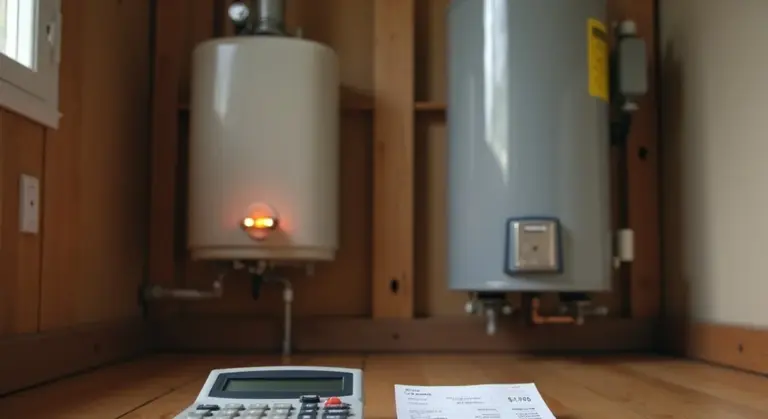
Your water heater is burning money just to stay warm. A blanket wraps it up and keeps those dollars in your pocket.
Let’s get straight to the facts. We will cover exactly how much you can save each month, how to choose the right blanket without overpaying, and the simple steps to install it yourself in under an hour.
I’ve slapped these on everything from old clunkers to new units on service calls. The short takeaway: if your tank is in a cold spot, this upgrade pays for itself fast.
Your Tank is Losing Heat, Here’s Why
Your water heater works non stop. It heats water, then it sits and waits for you to use it. While it waits, heat bleeds out through the tank walls. This is standby heat loss.
Think of it like a coffee pot left on the warmer. It keeps cycling on to reheat what’s inside because the heat escapes. Your water heater does the same thing, running constantly in an attempt to maintain the temperature, wasting energy and money.
An insulation blanket wraps the tank like a winter coat. It slows down that heat loss. The tank doesn’t have to reheat as often. This reduces the energy it uses just to sit there.
The key factor is the R value, which measures resistance to heat flow. A typical blanket adds an R 8 to R 10 insulation layer. Compare that to many older tanks that might only have an R 5 or less built in. That extra layer makes a real difference.
Check your tank first. Many newer models (roughly from the last 10 years) come with much better foam insulation. Their R value can be 16 or higher. If you tap the side and it feels like hard foam, not bare metal, a blanket may not help much.
The Real Savings: Crunching the Numbers
Let’s break it down with a real example. Take a common, older 40 gallon electric water heater. The Department of Energy states adding an insulation blanket can reduce standby heat loss by 4 to 9 percent. We’ll use a middle number.
Say your electric water heater costs about $40 a month to run. A 6.5 percent saving means you’d keep about $2.60 in your pocket each month. That’s over $30 saved in a year.
Your savings depend entirely on your heater’s age, location, and your utility rates. A gas heater might see only 2 to 4 percent savings, as they are generally more efficient at heating. Especially when compared to electric models, their BTU efficiency tends to be higher.
Here is a simple rule of thumb to estimate your own savings. Find your last water heating bill (or the portion of your utility bill for water heating). Multiply that cost by 0.05 (for a 5 percent estimate). The result is roughly your potential monthly savings with a blanket on an older electric unit.
Cost vs. Payback: The Simple Math
A standard water heater blanket costs between $25 and $40. You only need basic tools (scissors, tape) to install it yourself. There is no professional labor cost for this simple job, unlike installation of a water heater which can be more time-consuming and difficult.
Using our earlier example: a $30 blanket saving $2.60 per month pays for itself in about 11.5 months. If your savings are higher, the payback is faster. For most older electric tanks, the blanket pays for itself in less than a year, which is a great return.
So, do hot water heater blankets save money? Yes, on older tanks with poor insulation. Are they worth it? Absolutely, if your tank is in an unheated space like a cold garage or basement, and it’s over 10 years old.
They are not worth it for newer, well insulated tanks. The savings would be pennies. They are also not recommended for gas tank water heaters unless the manual specifically allows it, as you must never cover the top, bottom, thermostat, or burner compartment. Gas water heater safety and efficiency hinge on following the manufacturer’s guidelines and keeping the unit unobstructed. Proper maintenance boosts both safety and efficiency.
How to Install a Water Heater Blanket (DIY Verdict)
This is a 3/10 difficulty project. It’s simple, but the safety steps are critical and non-negotiable.
Before you start, gather your tools. You don’t need much.
- Utility knife or heavy-duty scissors
- Tape measure
- Work gloves (the fiberglass insulation can be itchy)
- Marker
- Duct tape or the foil tape that often comes with the blanket kit
Here are the clear steps to wrap your tank.
- Turn off the power to an electric water heater at the circuit breaker. For a gas unit, turn the gas control knob to “Pilot.”
- Measure the height of your tank and cut the blanket to fit, leaving the top and bottom edges of the tank exposed.
- Wrap the blanket around the tank. Start from the bottom and work up. The blanket should be snug, but don’t compress it tightly.
- Use your marker to outline the thermostat access panel(s), the pressure relief valve pipe, and any gas valve or piping. On a gas heater, you must also mark the flue vent at the top.
- Carefully cut out these marked sections with your utility knife. These areas must remain completely uncovered for safety and operation.
- Secure the blanket. Tape the vertical seam first, then tape around the top and bottom. Do not tape over the cut-out sections.
- Turn your water heater’s power or gas back on.
The final check is the most important part. Before you walk away, visually confirm that every critical component is fully exposed: the thermostat access panels, the temperature and pressure (T&P) relief valve and its pipe, and on gas models, the top flue vent and the gas control valve. If any of these are covered, you created a hazard.
Safety First: Are Water Heater Blankets Safe for Your Unit?
The golden rule is simple: never cover anything that needs air, needs to be seen, or needs to blow off steam.
- Never cover thermostat access panels.
- Never cover the top of a gas water heater (where the flue is).
- Never cover the temperature and pressure (T&P) relief valve or its discharge pipe.
Safety depends heavily on your heater type.
Gas Water Heaters: These require the most caution. They burn fuel. Covering the top air inlet or the flue vent is a carbon monoxide and fire risk. Always keep the top 12 inches and the bottom burner compartment completely clear.
Electric Water Heaters: These are simpler. The main risk is covering the thermostat and heating element access panels, which can cause them to overheat and fail. Following water heater safety guidelines helps prevent these issues.
Heat Pump Water Heaters (Hybrids): Do not use a blanket. These units specifically need to draw in surrounding air for their operation. Insulating the tank will choke the system and likely damage it. Hybrid models switch with electric elements to meet demand. Proper airflow remains crucial across all hybrid configurations.
Are blankets safe for older tanks? Usually, yes, and they help the most. Tanks built before 2015 often have an insulation value of R-6 to R-10. Adding a blanket (R-8 to R-10) can significantly reduce standby heat loss.
The real question is about newer tanks. Modern water heaters, especially those with an Energy Star label, already have high-density insulation, sometimes up to R-25. Adding a blanket to these offers minimal savings and can cause overheating issues. Check the manufacturer’s label on the side of your tank. If the R-value is R-16 or higher, you probably don’t need a blanket.
Improper installation can create a fire hazard by causing components to overheat. It can also void your manufacturer’s warranty if they determine the blanket caused a failure. When in doubt, check your owner’s manual or call the manufacturer. A five-minute call is cheaper than a new water heater or a house fire.
Choosing the Right Blanket for the Job
You wouldn’t put a winter parka on a gas water heater. It’s a fire hazard. The right blanket isn’t about the most expensive brand; it’s about the correct material and fit for your specific tank.
Recommend products by category: fiberglass wrap kits, foil-backed jackets.
Blankets come in two main types, and your heater’s fuel source decides which one you need.
- Fiberglass Wrap Kits: These are the standard for electric water heaters. They look like thick, fluffy pink or yellow insulation. This is what I used on my own 50-gallon electric heater in the basement. The kits come with the blanket, tape, and sometimes straps. They’re effective and affordable.
- Foil-Backed Jackets: These have a reflective foil surface on fiberglass or foam. You must use a foil-faced, flame-retardant blanket specifically labeled for gas water heaters. The reflective surface helps keep heat in while being safe around the burner compartment at the bottom. Never use a standard fiberglass wrap on a gas unit.
Explain what to look for: R-value, precut vs. roll, and secure fastening straps.
Once you know the type, check the specs. Here’s what matters.
- R-value: This measures resistance to heat flow. Higher is better. Look for an R-value of at least R-8. An R-10 or R-12 blanket offers more savings, especially in cold basements or garages.
- Precut vs. Roll: Precut kits are sized for common tanks (like 40-gallon or 50-gallon). They’re easier. A roll of insulation is cheaper per square foot but requires more work to cut and seal. For one tank, a precut kit is the way to go.
- Secure Fastening Straps: Good kits include long, durable plastic or vinyl straps. You wrap them around the tank and cinch them tight. Flimsy tape alone won’t hold the blanket snugly against the tank for years. Check the reviews to see if people complain about short straps.
Advise on measuring your tank correctly before buying.
Don’t guess. Grab a tape measure.
- Measure the Height: Measure from the floor to the top of the tank. Do not include the pressure relief valve pipe on the side.
- Measure the Circumference: Wrap your tape measure around the middle of the tank’s body.
- Check the Manual: Look at your water heater’s manual or label for any required clearance around the thermostat panels. You must leave these areas uncovered.
Write down the height and circumference, then find a blanket kit that matches. Buying one slightly bigger is fine; you can trim excess. Buying one too small leaves gaps that waste heat.
Note that the “best” blanket is the one that fits your specific tank and safety requirements.
The best blanket is not a brand name. It’s the one that meets three simple rules.
- It is the correct type (fiberglass for electric, flame-retardant foil for gas).
- It fits your tank’s dimensions without blocking access panels, valves, or the top.
- It has a good R-value and comes with strong straps to keep it in place.
For gas heaters, you must also use special foil tape (often included) to seal seams, never regular duct tape. Always keep the top of the tank, the temperature and pressure relief valve, the drain valve, and the burner access panel completely uncovered. If it doesn’t fit safely, it’s not the right blanket.
Common Questions
How much will a blanket reduce my monthly water heating costs?
For an older electric tank, expect a 4-9% reduction in standby heat loss, typically saving $2-4 monthly. Gas heaters see smaller savings of 2-4%. Your exact savings depend on your tank’s age, existing insulation, and utility rates.
How quickly will the blanket pay for itself?
With a blanket costing $25-$40 and saving a few dollars monthly, it often pays back in less than a year for electric units. In cold locations like garages, payback can be even faster. This makes it a high-value, low-cost upgrade.
Can I use a blanket on my gas water heater?
Only if you use a foil-faced, flame-retardant blanket specifically rated for gas units. Never cover the top, bottom burner compartment, or thermostat access panels. Improper covering risks fire or carbon monoxide hazards.
What type of blanket should I buy for my heater?
Choose a fiberglass wrap for electric heaters and a foil-backed jacket for gas models. Look for an R-value of at least 8, and ensure it includes secure straps for a snug fit. Always measure your tank first to avoid blocking safety components.
What’s the most critical safety step during installation?
After wrapping, visually confirm all access panels, the temperature and pressure relief valve, and on gas units, the top flue and burner area, are fully exposed. Covering these can cause overheating, equipment failure, or safety risks.
Is a Water Heater Blanket Worth It?
Start by checking if your tank is warm to the touch; if it is, installing a blanket is a straightforward project that pays for itself. You can expect to save around 4% to 9% on your water heating costs each year, which adds up to real money back in your pocket for very little effort.