Why Your Electric Water Heater Trips the Breaker (And How to Stop It)
Your electric water heater tripping the breaker is infuriating. You’re left with cold showers and that nagging worry about what’s wrong.
We will cover how to test the heating elements and thermostat, check for bad wire connections, and understand why this keeps happening.
I’ve fixed this problem on hundreds of service calls over 15 years. Most of the time, it’s one of three simple things gone bad.
Is a Tripping Water Heater Breaker Dangerous? The Straight Answer.
Yes, it can be. The immediate danger isn’t from the trip itself. It’s from your reaction to it.
The circuit breaker is doing exactly what it’s designed to do: cutting power to prevent a fire or catastrophic equipment failure. Think of it like a smoke alarm blaring. It’s annoying, but you don’t just yank the battery out and go back to sleep. Ignoring a tripping breaker is the electrical equivalent of that.
Constantly resetting a breaker that’s trying to tell you something is a major risk. You could overheat the wiring in your walls, damage the heater beyond repair, or create a serious shock hazard. Here’s what you do right now:
- Do not keep resetting the breaker. Once, maybe twice to confirm the problem, is enough. After that, stop.
- Do not bypass it. No jumper wires, no taping it in the “on” position. Ever.
- Turn the breaker to the OFF position and leave it off until you find and fix the problem. If it trips again immediately after you reset it, leave it off and call a pro.
Your breaker is a critical safety device. Annoyance is a small price to pay for preventing a house fire.
The Red Flag Checklist: Signs Your Water Heater is Failing
A tripping breaker rarely happens in isolation. It’s usually the loudest symptom of a quieter problem. Look for these other warning signs that often show up before the breaker finally gives up. Spotting them early can turn a big repair into a small one.
- Lukewarm Water, Not Hot. If your showers are never truly hot anymore, one or both heating elements have likely failed. A dead element can sometimes short out and cause a trip.
- Popping, Rumbling, or Banging Sounds. This is sediment. Mineral scale builds up at the bottom of the tank, trapping water underneath it. That water superheats, bubbles up, and makes noise. This buildup insulates the elements, causing them to overwork and overheat, which can trip the breaker.
- Visible Corrosion on Wires or Terminals. Open the heater’s access panels (with the power OFF) and look. Green or white crusty stuff on the wire connections or element terminals is bad. Corrosion increases electrical resistance, which creates intense heat at the connection point and can cause a short. I found this on my own heater last year; the connection was so hot it had started to melt the wire insulation.
- Water on the Floor Around the Heater. A leak can drip onto electrical components below the access panels. Water and electricity cause shorts. Even a small, slow leak is a big problem here.
- The Breaker Trips at Predictable Times. Does it pop every morning when the whole family showers? That points to an overworked system. A failing element or one coated in sediment struggles to recover, drawing more and more power until the breaker says “no more.”
Any one of these signs, combined with a tripping breaker, tells you exactly where to start looking for the root cause.
What Causes a Hot Water Heater to Trip the Breaker? The Usual Suspects.
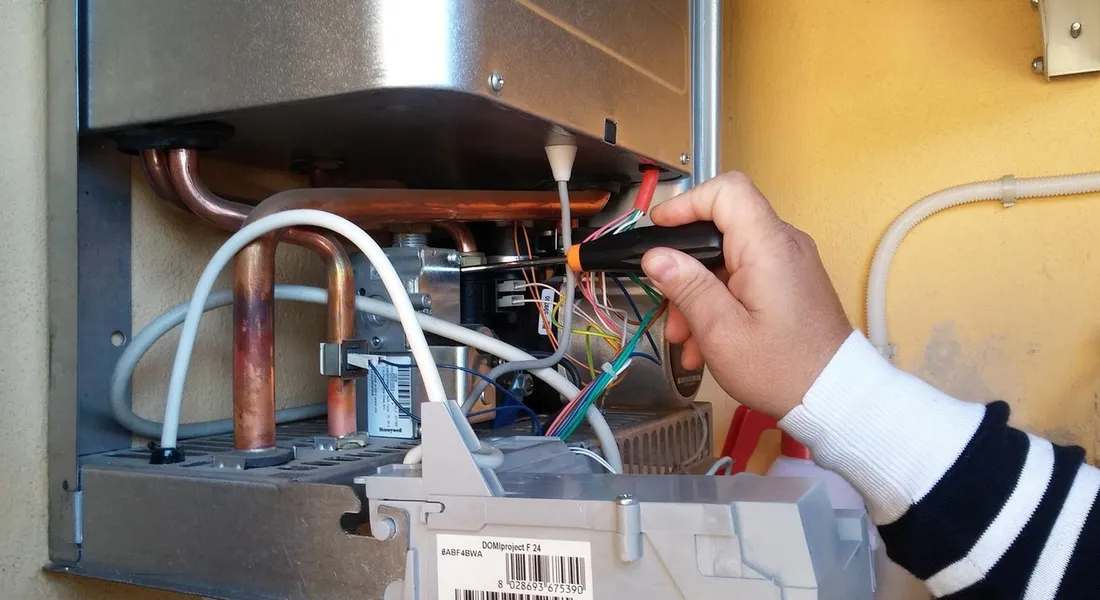
When your breaker trips, it’s a safety shutoff. Your water heater is pulling more power than the circuit can handle or there’s a dangerous electrical fault. To fix it, you first need to know what causes a water heater breaker to trip, and we’ll run through the most common culprits from most to least likely. We’ll also touch on water heater reset trips—what triggers them and the practical solutions to reset safely.
-
A Bad Heating Element (Shorted Out)
This is the number one suspect. Inside the tank, the heating element can develop a crack or weak spot. When water touches the live wire inside, it creates a direct shortcut to the metal tank-a “short to ground.” Think of it like a bridge collapsing into a river. This massive, sudden power draw trips the breaker instantly to prevent a fire. -
Sediment Buildup (Overheating the Element)
Hard water leaves mineral deposits (sediment) at the bottom of the tank. The lower heating element gets buried in this sludge. It’s like wrapping the element in a thick blanket. The element can’t release its heat into the water, so it gets hotter and hotter until it fails or causes a short, overloading the circuit. -
A Faulty Thermostat (Stuck “On”)
Understanding what causes a hot water heater thermostat to trip internally is key; it usually fails by getting stuck in the “on” position. The thermostat’s job is to turn the element off once the water is hot. If it’s stuck, the element never stops heating. This constant, high power draw can eventually overload and trip the breaker, much like holding down the accelerator in a car until the engine blows. -
Loose or Corroded Wiring (Resistance Creates Heat)
The electrical connections at the terminal block on your heater can loosen or corrode over time. A loose or dirty connection resists electricity. Resistance creates intense heat at that spot. This heat can melt wire insulation, cause further corrosion, and create a power draw irregular enough to trip the breaker. -
A Failing Circuit Breaker Itself (Worn Out)
Breakers are mechanical devices that wear out. An old, weak breaker might trip below its rated amperage. It’s like a tired spring that gives way too easily. If the breaker is hot to the touch or trips randomly on other appliances, it might be the problem, not the water heater. -
A Ground Fault (Moisture Where It Shouldn’t Be)
Water is electricity’s best friend for causing trouble. If there’s a leak that gets wiring wet, or condensation soaks the thermostat area, electricity can find a stray path to ground. This ground fault will trip a GFCI breaker immediately or can cause a standard breaker to trip.
Your Step-by-Step Troubleshooting Guide: Start Here, Stay Safe
This is a process of elimination. We’ll start simple and work toward the more involved tests. Your first and most critical step is safety: go to your main electrical panel and turn the breaker for the water heater to the OFF position. Then, use a non-contact voltage tester on the wires at the water heater to double-check the power is truly off. Do not skip this. Next, we’ll test voltage at the water heater’s components to confirm no live energy remains. This keeps the process safe while you proceed to the next steps.
Step 1: The Visual & Sensory Check
With the power confirmed OFF, remove the access panels on the side of the water heater. Pull back the insulation.
- Look for obvious signs: black charring or melted plastic on wires, a discolored (blue/brown) terminal block, or a burning smell.
- Check for water leaks from the tank or element gaskets that could cause a ground fault.
- Feel the wires and connections with your hand. If a wire or terminal lug is still noticeably warm after the heater has been off for an hour, that’s a clear sign of a bad, high-resistance connection that needs cleaning or replacement.
- If you have a floor drain, briefly open the drain valve at the bottom of the tank into a bucket. If a bunch of sandy, gritty sediment comes out, you’ve found a likely contributor to your problem.
Step 2: Testing the Heating Elements with a Multimeter
This is the definitive test for the most common problem. You need a basic multimeter set to measure resistance (Ohms, or Ω).
- Ensure power is OFF. Disconnect the wires from one heating element.
- Set your multimeter to the lowest Ohms setting (often 200Ω).
- Touch one probe to one of the element’s screw terminals. Touch the other probe to the other terminal. A good element will show a resistance reading, typically between 10-16 ohms for a 4500-watt element. A reading of “0” or “1” means it’s shorted and bad. A reading of “OL” (open line) means it’s burned out and broken inside.
- Now test for a short to ground. Touch one probe to a terminal and the other probe to the bare metal of the water heater tank or the element’s metal flange. The meter should read “OL” (no continuity). If you get any other reading, the element is shorted to ground and must be replaced.
- Repeat this test for the second heating element. A best practice is to replace both upper and lower heating elements at the same time, even if only one tests bad. If one has failed, the other is often not far behind.
Step 3: Checking the Thermostats
Your heater has two thermostats (upper and lower). Each has a high-limit reset button (a little red button).
- First, press any reset buttons you see. If one was tripped, it may solve the immediate issue, but the underlying cause (like a bad element) must still be found.
- With power OFF and wires disconnected, set your multimeter to continuity (the setting that beeps).
- For a simple test, turn the thermostat dial to its lowest setting. Place a probe on each of the two terminal screws power would go to. There should be NO continuity (no beep). Now, turn the dial up past the current tank temperature. You should now get continuity (a beep). If the thermostat shows continuity when it’s set to “off,” it’s stuck and faulty.
Step 4: Inspecting the Wiring and Connections
Go back to the terminal block where the main power wires connect.
- Check every screw terminal for tightness. They should be snug.
- Look for corrosion-a white or greenish, crusty powder on the metal lugs or wires. This increases resistance.
- Check the wire insulation for brittleness, cracking, or heat discoloration.
Any corrosion must be cleaned off with a wire brush or sandpaper, and all connections must be tightened firmly to ensure a smooth path for electricity. A loose or corroded connection heats up, which can trip the breaker all by itself.
The DIY vs. Pro Verdict: When to Call for Backup
Testing the heating elements yourself is a moderate job. I give it a 6 out of 10 for difficulty. You need a multimeter, screwdrivers, and the courage to work with the power off. A quick water heater element resistance check with a multimeter can confirm whether an element has failed. This simple test ties directly into the next steps.
Diagnosing or replacing a faulty circuit breaker is a different story. That’s an 8 out of 10. Any work inside the main electrical panel requires a licensed electrician, full stop. This isn’t a suggestion, it’s a rule for your safety and your home’s insurance.
Know when to hand it off. Call a professional if you see any of these red flags:
- Visible signs of melted wires, scorch marks, or burnt insulation on the wiring or at the heater’s terminals.
- Persistent ground fault (GFCI) trips that continue after you’ve tested and ruled out a wet element.
- You complete the basic tests but still feel unsure about the diagnosis or the next step.
- The circuit breaker feels physically hot to the touch when it trips.
Combining jobs is a smart reason to call a pro. If your tests point to a bad lower element and you know the tank is full of sediment, paying for one service call to flush and replace is often more efficient than two separate DIY projects.
Your Water Heater Maintenance Roadmap: Prevent the Trip
A little routine care prevents most breaker trips. Stick to this simple schedule.
| Task | Frequency |
|---|---|
| Flush sediment from the tank | Annually |
| Visually inspect wiring and connections | Yearly |
| Test the temperature and pressure relief (TPR) valve | Every 6 months |
The annual flush is your best defense. Over time, minerals drop out of your hot water and settle on the tank floor. This sediment layer insulates the lower heating element, causing it to overheat and draw too much current, which trips the breaker. Flushing removes the insulation.
Here’s the water science. If you have hard water with high mineral content (measured in GPG or TDS), you make sediment faster. It’s like your water heater is boiling tiny rocks out of the water. The harder your water, the more diligent you need to be with that yearly flush.
Code & Compliance Check: Doing It Right
Before you touch a single wire, know the rules. All electrical work on a fixed appliance like a water heater must follow the National Electrical Code (NEC). This isn’t just red tape. It’s the proven standard for preventing fires and shocks.
If you need to replace a heating element or thermostat, you must get the right part. If the thermostat is the faulty component, you may need to replace the faulty thermostat to restore proper operation. The replacement must be UL-listed and have the exact same voltage and wattage rating as the original. A higher-wattage element will instantly overload the circuit. You can find this info on the label of your old part or the heater’s data plate.
Look at the green or bare copper wire attached to the heater. That’s the equipment ground. Its only job is to give stray electricity a safe path to the ground if a wire comes loose inside. This prevents the entire metal tank from becoming electrified. A proper ground wire can save your life.
Gear Up: Recommended Products for the Job
You need the right tools to do the job safely and correctly. Don’t just grab whatever’s in the junk drawer. Here’s what you should have on hand.
A quality multimeter is your best friend for electrical diagnostics. The cheapest ones can give false readings. You’ll use it to check for voltage at the breaker and to test heating elements for continuity (to see if they’re broken). For a water heater, you’ll test both the upper and lower heating elements for continuity to pinpoint a faulty element. This basic check often guides whether an element needs replacement.
A non-contact voltage tester is non-negotiable for safety. Before you work, you double-check that the power is truly off at the heater terminals. I keep mine in my pocket the entire time I’m working.
You’ll also need a few basic items:
- A standard element wrench. It’s a long socket designed to fit the hexagonal head of the heating element.
- Teflon tape for the threads of the new element. This ensures a watertight seal.
- Small wire brushes for cleaning corrosion off electrical terminals. Clean connections are safe connections.
- A standard garden hose for flushing sediment from the tank during maintenance.
One product you likely don’t need is a water heater blanket. Modern tanks have ample internal insulation. Adding an external blanket can trap too much heat, overwork the thermostat, and often voids the manufacturer’s warranty. I removed the old blanket from my unit the week I moved in.
Common Questions
Could the problem actually be my circuit breaker, not the water heater?
Yes, a worn-out breaker can trip too easily. If the breaker feels hot to the touch or trips with other appliances on the same circuit, it might be the culprit. Diagnosing this requires an electrician, as working inside the main panel is dangerous.
What should I check on the water heater first, before any tools?
With the power OFF, do a visual and sensory inspection. Look for water leaks, corrosion on wires, or a burning smell. Feel the wiring connections; if any are still warm after an hour, that points to a bad connection that needs cleaning or tightening.
How exactly does a faulty thermostat cause the breaker to trip?
A thermostat that fails “on” keeps the heating element running non-stop. This constant, high-power draw overheats the system, causing the circuit to overload. It’s like a switch that gets stuck, forcing the element to work until the safety breaker shuts everything down.
What is a ground fault, and could it be why my heater is tripping?
A ground fault is when electricity escapes its intended path, often due to moisture. If water from a leak or condensation reaches the heater’s internal wiring, it can create this stray current, which will trip the breaker immediately. Look for any signs of water near the electrical components.
I’ve done the basic checks. When is it definitely time to call a professional?
Call a pro if you see scorched wires, if the breaker feels hot, or if a GFCI keeps tripping. Also, if you’re unsure after testing the elements and thermostat, or if the work involves the main electrical panel, it’s time to hand it off to a licensed technician for safety.
Staying Safe While Fixing the Problem
Electrical issues with water heaters demand immediate attention, and your first step should always be to turn off the power at the breaker. For any problem inside the tank or with the wiring, call a licensed electrician or water heater technician instead of attempting the repair yourself. Make sure you identify the correct breaker before switching off the power.
Bob is a an HVAC and plumbing industry veteran. He has professionally helped homeowners resolve issues around water softeners, heaters and all things related to water systems and plumbing around their homes. His trusted advice has helped countless of his clients save time, money and effort in home water systems maintenance and he now here to help you and give you first hand actionable advice. In his spare time, Bob also reviews home water systems such as tankless heaters, water softeners etc and helps home owners make the best choice for their dwelling. He lives around the Detroit area and occasionally consults on residential and commercial projects. Feel free to reach out to him via the contact us form.