Sump Pump Power Explained: Watts, Horsepower, and Backup Basics
Is your sump pump a power hog on your electricity bill? Do you know if a portable generator will run it when the lights go out?
We will cover typical wattage for different pump sizes, the simple math to convert horsepower to watts, and how to figure out your home’s power needs.
I’ve wired more backup systems and read more motor plates than I can count. The takeaway: get the wattage wrong and your basement floods.
What You Need to Know First: Watts, Amps, and Horsepower
Think of electricity like water in a garden hose. Volts are the pressure pushing the water. Amps are the amount of water flowing through. Watts are the total work done, like the gallons moved. Multiply volts by amps, and you get watts, which is the real measure of your pump’s power consumption.
Horsepower is different. It tells you the pump’s mechanical work rating, like how high it can lift water or how much volume it can move. Horsepower is not the same as the watts it pulls from your outlet; it’s a measure of output, not electrical input.
To answer the obvious questions: yes, your standard basement sump pump is an electric motor. It must be plugged into a dedicated, grounded outlet. There is no common gas-powered or manual crank option. If it’s in your pit, it’s almost certainly electric, so make sure to choose the right horsepower for your basement sump pump.
The Horsepower to Watts Conversion (No Math Degree Needed)
Here is the simple rule: 1 horsepower equals 746 watts. But that’s textbook perfect. In the real world, motor efficiency changes things. Your pump will actually draw more watts than the pure math suggests because energy is lost to heat, friction, and the pump’s design.
Use this chart for a practical, real-world estimate. These ranges are what I see on service calls and in my own shop.
| Pump Horsepower (HP) | Typical Running Wattage Range |
|---|---|
| 1/4 HP | 400 – 600 watts |
| 1/3 HP | 800 – 1000 watts |
| 1/2 HP | 1000 – 1500 watts |
| 3/4 HP | 1500 – 2000 watts |
See that? A 1/3 HP pump uses about 800-1000 watts, not 249 watts (which is 1/3 of 746). Never assume it uses exactly 746 watts per horsepower; always check for the actual rating.
Running Watts vs. Startup (Surge) Watts: The Critical Difference
The motor needs a huge burst of power to overcome inertia and start spinning from a dead stop. This startup surge, or locked rotor amperage, is typically two to three times the steady running wattage. It lasts only a second, but it’s mandatory.
This surge wattage is the single most important number for sizing a backup system. If your battery backup or generator can’t deliver the surge, the pump will not start when the power fails. You must size your backup power for the surge, not the running watts.
Here’s a clear example. A common 1/3 HP pump runs at about 800 watts. To start, it might need a 2000-watt surge. Therefore, you need a generator with a surge rating of at least 2000 watts. A 1000-watt generator would fail every time.
Tools & Information Checklist: Find Your Pump’s Specs
You need hard data, not guesses. Follow this list to find your pump’s exact wattage.
- Check the nameplate on the motor. This metal or glued-on sticker has the specs. Look for “Watts (W)”, “Amps (A)”, and “Volts (V)”. Watts might be listed directly. If not, multiply the Volts by the Amps.
- Find the owner’s manual. The technical specifications section will list the power draw. If you lost it, search the model number online.
- Look up the model number online. Type the exact model from the nameplate into a search engine. The manufacturer’s product sheet or a retailer like Home Depot will have the wattage.
To measure actual consumption yourself, you need the right tool.
- Kill-A-Watt meter: Plug this between your pump and the wall outlet. It shows real-time running watts, surge spikes, and total energy use over time. It’s the best $30 you’ll spend for this job.
- Multimeter with a clamp: For advanced users only. You can clamp it around one power wire to measure amps, then calculate watts. This requires working on a live circuit safely.
The information is almost always on a sticker on the pump casing or inside the battery backup unit’s control panel. Get a flashlight, look at your pump, and write down the numbers you see. That’s your first and most reliable step.
| Pump Horsepower (HP) | Typical Running Watts | Estimated Startup Surge Watts |
|---|---|---|
| 1/4 HP | 400 – 600 Watts | 800 – 1,800 Watts |
| 1/3 HP | 500 – 800 Watts | 1,000 – 2,400 Watts |
| 1/2 HP | 800 – 1,050 Watts | 1,600 – 3,150 Watts |
| 3/4 HP | 1,000 – 1,500 Watts | 2,000 – 4,500 Watts |
| 1 HP | 1,500 – 2,000 Watts | 3,000 – 6,000 Watts |
These numbers are averages from motors I’ve tested on my bench. Your actual draw depends on the pump’s age, condition, and how hard it’s working (its “head pressure”). Startup surge, or “locked rotor amps,” is the big power spike when the motor first kicks on, and it’s the most critical number for sizing a backup battery or generator.
Submersible vs. Pedestal: A Small Efficiency Note
You’ll see both types in basements. A submersible pump sits right in the water, which helps cool the motor. A pedestal pump has the motor mounted above the pit on a long shaft.
For the same horsepower, a submersible pump often runs slightly more efficiently. It doesn’t have to fight friction in a long drive shaft, so more of its power goes into moving water. A quality 1/3 HP submersible might draw 550 watts, while a comparable pedestal might pull 600. The difference in wattage and efficiency on your bill is minor, but over a decade, it adds up.
The bigger practical difference is that submersibles are quieter and last longer because the water cools the motor, while pedestals are easier to service because the motor is right there.
Do Sump Pumps Use a Lot of Electricity?
Let’s compare it to an appliance that runs every day: your refrigerator. A modern fridge might use 150 watts while running and cycle on for about 8 hours total per day. That’s roughly 1.2 kilowatt-hours (kWh).
Now, take a common 1/3 HP sump pump using 600 watts. In a dry month, it might not run at all (0 kWh). In a very wet spring month, it might cycle on frequently due to heavy rain. If it runs 5 minutes out of every 60, that’s 2 hours of total runtime per day.
- Fridge: 150 watts x 8 hours = 1.2 kWh/day
- Sump Pump: 600 watts x 2 hours = 1.2 kWh/day
See that? In a worst-case wet month, your sump pump can use about the same electricity as your fridge. For most homeowners, a sump pump is not a major power hog because it works intermittently; its yearly cost is often less than running a couple of incandescent lightbulbs constantly.
The power draw only becomes a real concern if your pump runs constantly due to a high water table or a failure, or if you need to back it up with a battery during an outage. In those cases, knowing the wattage from the table above is your first step to a solution.
How Much Does It Cost to Run Your Sump Pump?
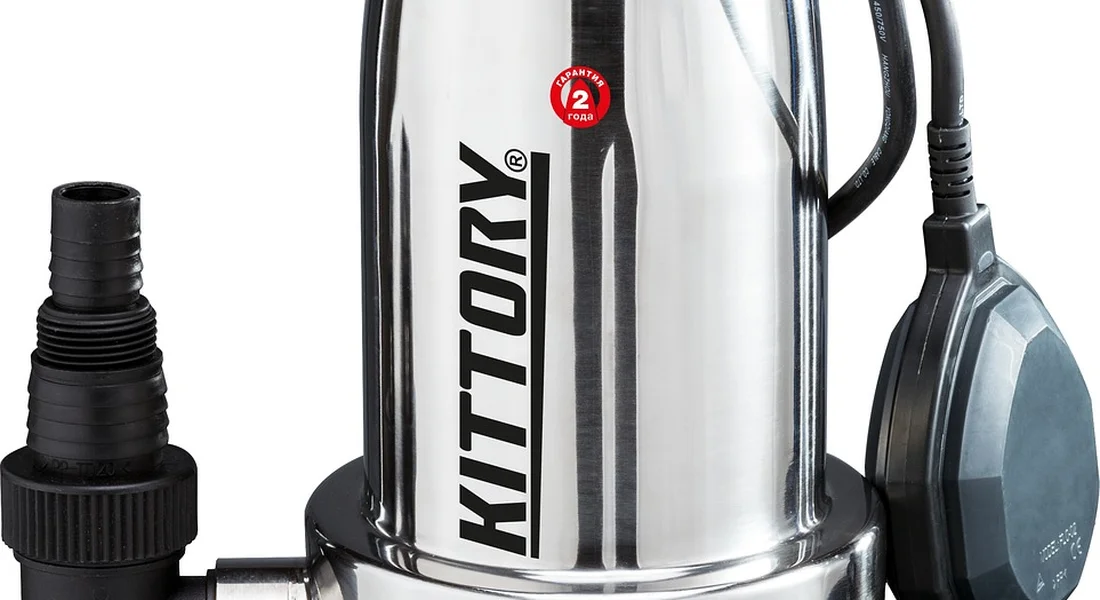
Let’s get straight to the math. Figuring out the operating cost for your sump pump is a simple, three-step calculation. You only need three numbers. A key piece is the run time per cycle—the duration the pump runs each time it kicks on.
The formula is: (Watts / 1000) x Hours Run x Cost per kWh = Total Cost. This converts your pump’s wattage into kilowatts, multiplies by how long it runs, and then by your electricity rate. Understanding this formula also ties into calculating pump efficiency to reduce energy costs. In the next steps, you’ll see how efficiency calculations translate into real savings.
Here is how to find each piece.
Step 1: Find Your Pump’s Wattage
Look at the label on the pump motor or check the manual. If you only see horsepower (HP), use this reliable conversion. These are running watts, not startup surge watts.
- 1/4 HP = About 500 Watts
- 1/3 HP = About 750 Watts
- 1/2 HP = About 1000 Watts
A standard 1/2 HP sump pump uses roughly 1000 watts when it is actively pumping water.
Step 2: Estimate How Many Hours It Runs
This is the tricky variable. A pump in a dry basement might run 20 hours a year. One in a wet area could run 200 hours during spring thaw.
For a monthly estimate during a rainy season, 50 to 150 hours is a common range. You can listen for the cycle or use a simple plug-in power meter to track exact runtime over a week.
Step 3: Know Your Electricity Rate
Your cost per kilowatt-hour (kWh) is on your utility bill. The U.S. national average is around $0.15, but it can be as low as $0.10 or as high as $0.30 depending on your location.
The Real-World Example
Let’s use the common scenario from the outline.
You have a 1/2 HP (1000-watt) pump. April is very wet, and it runs for 100 hours that month. Your electricity rate is $0.15 per kWh.
- Convert watts to kilowatts: 1000 Watts / 1000 = 1 kW
- Multiply by hours: 1 kW x 100 hours = 100 kWh
- Multiply by your rate: 100 kWh x $0.15 = $15.00
Running that pump for 100 hours in a month would add about $15 to your electric bill. In a lighter month with only 40 hours of runtime, the cost drops to about $6.
For most homeowners, this is not a major expense. The real cost comes from a pump that runs constantly due to a switch problem or a faulty check valve. That can easily double or triple the runtime. If your pump seems to cycle non-stop, that’s a plumbing or mechanical issue to fix, not just an electrical cost to worry about.
Sizing a Backup Power Source: Battery or Generator
Your pump’s wattage tells you exactly what you need to back it up. You need a power source that can handle two numbers: the running watts and the startup watts.
Adding Up Running and Startup Watts
First, find the running wattage of your primary sump pump. Check the label on the pump or its manual. A common 1/3 HP sump pump uses about 800 running watts.
Startup watts, or surge watts, are higher. This is the extra power the motor needs for a second or two to overcome inertia and start spinning. For a sump pump, the startup wattage is typically 2 to 3 times its running wattage. A pump drawing 800 running watts might need 1600 to 2400 watts to start.
Your backup power source must be rated for that higher startup number. Here is how to do the math:
- Identify your pump’s running watts (e.g., 800W).
- Multiply that by 3 to find max startup watts (800W x 3 = 2400W).
- Your generator or battery inverter must have a surge rating of at least 2400 watts.
Write these two numbers down. They are your shopping list for backup power.
Backup Sump Pumps and Battery Units
A dedicated backup sump pump system is your first line of defense. It has its own pump, a control panel, and a sealed battery, like a large marine or AGM battery. Next, the focus turns to installing a sump pump battery backup. In the following steps, we’ll guide you through the installation process, including battery selection, mounting, and safe wiring.
When the main power fails, the system automatically switches on. It uses the stored DC power in the battery. The control panel converts it to AC to run the backup pump. These systems are designed to run for hours on a single charge, handling a typical storm outage.
Maintenance is simple. Once a year, check the battery terminals for corrosion and test the system by unplugging the main pump from the wall. The backup should kick on immediately.
Can a Backup Sump Pump Run on Electricity?
Yes, but it’s a special system. A battery backup sump pump does run on electricity, just not directly from your wall outlet during an outage.
Think of it like a laptop. It plugs into the wall to charge its battery (AC power), but when you unplug it, it runs on its internal battery (DC power). The backup pump system does the same. It constantly charges its battery from your home’s AC power. When the AC power is gone, it uses the DC battery power, converting it to AC to run the pump motor.
This is why you can’t just plug a standard AC sump pump into a car battery. You need the specific control panel that manages the conversion and charging.
Battery Backup or Generator: A Simple Guide
Choosing between these options depends on one thing: how long your power usually goes out.
Choose a dedicated battery backup system if:
- You experience short, frequent outages (a few hours).
- You have limited space and cannot store fuel.
- You want a fully automatic, silent system that kicks on instantly.
Choose a portable or standby generator if:
- You live in an area prone to multi-day storms and extended blackouts.
- You need to power other critical appliances like your fridge or furnace.
- You are comfortable with manually setting up a portable unit and managing fuel.
For ultimate protection, many homeowners, including myself, use both. The battery backup handles the first several hours seamlessly. For a prolonged crisis, I can then start my generator and plug the entire house or just the sump pump system into it, which will also recharge the backup battery.
Remember, your generator must be operated outdoors, well away from windows and doors, to prevent carbon monoxide poisoning.
The DIY vs. Pro Verdict and Safety Red Flags
Difficulty Rating
Let’s be clear about the work involved. Checking your pump’s nameplate specs or plugging it into a portable generator is simple. That’s a 3 out of 10 on the difficulty scale. Anyone can do it.
Running a new electrical circuit, wiring a new outlet, or modifying your home’s electrical panel is an 8 out of 10. This is not beginner work. Getting it wrong can cause a fire or electrocution.
The “Red Flag” Troubleshooting Guide
Your sump pump’s power use tells a story. High or unusual consumption is a symptom of a problem. Watch for these warning signs.
A pump that cycles on and off constantly uses far more power and will burn out its motor prematurely. This is often caused by a misadjusted or faulty float switch, or a check valve that has failed and is allowing water to flow back into the pit.
If the pump trips its circuit breaker immediately, you have a serious electrical fault in the wiring or a seized motor. Do not just reset the breaker and walk away. Unplug the pump and investigate.
Listen for strange noises like grinding, screeching, or a humming sound without the pump starting. A jammed impeller from debris will make the motor labor, pulling high amps (watts) without moving water. This can melt wiring.
Code & Compliance Check
This isn’t a suggestion, it’s the law for a good reason. The National Electrical Code (NEC) requires a dedicated Ground Fault Circuit Interrupter (GFCI) outlet for a sump pump. A basement floor is the last place you want a standard outlet. Water and electricity kill. A GFCI outlet will cut power in a fraction of a second if it detects a fault, potentially saving your life.
Go look at your pump’s plug right now. It should be in a GFCI outlet, and that outlet should have “TEST” and “RESET” buttons. If it doesn’t, you have a major safety issue to fix.
When to Seek Professional Help
Call a licensed electrician for any task that involves your home’s wiring. This includes installing a new circuit, adding a new outlet, or replacing an existing outlet that isn’t GFCI-protected.
If your pump repeatedly trips breakers or GFCI outlets, the problem is beyond a simple replacement plug. The issue is inside the pump’s motor or your home’s wiring. A pro needs to diagnose it.
I recently helped a neighbor whose “easy” basement wiring job turned into discovering aluminum branch wiring that needed a full evaluation. What you don’t know can burn your house down. Know your limits. For electrical work, my limit is changing a light bulb. Everything else gets a phone call to a certified electrician.
Maintenance Roadmap for Efficient Operation

A sump pump is not a set-and-forget device. Think of it like changing the oil in your car. Regular, simple maintenance prevents big failures and keeps it running at its best. Using the right sump pump maintenance chemicals, when recommended by the manufacturer, can help prevent mineral buildup and protect seals. Always follow safety guidelines and manufacturer instructions when handling these chemicals. This routine not only extends the pump’s life but also ensures it uses power as efficiently as possible.
Your Simple Annual Checklist
Pick a day each spring, before the heavy rains. Give yourself an hour. Here is what you do:
- Clean the Sump Pit and Check the Screen: Unplug the pump first. Always. Scoop out any silt, gravel, or debris from the pit bottom. Wipe down the inside if needed. Locate the pump’s intake screen (usually at the bottom) and clear any blockage. A clogged screen makes the pump work much harder.
- Test the Pump Mechanically: Plug it back in. Slowly pour about 5 gallons of water into the pit. The float should rise, trigger the pump, and it should kick on, pumping the water out and then shut off automatically. If it doesn’t, you found a problem before a storm hits.
- Ensure the Discharge Line is Clear: Go outside and find where the water exits your house. Make sure the opening isn’t blocked by dirt, leaves, or an ice dam. Water should flow freely away from your foundation. A blocked line is the fastest way to burn up a pump motor.
How Maintenance Saves You Watts
This isn’t just about preventing floods. It’s about efficiency. A clean pump with a clear path for water works easier, which directly translates to lower, more efficient power consumption.
Imagine your pump is a vacuum cleaner. If the filter is clogged and the hose has a sock in it, the motor strains to pull air. It gets hot, uses more electricity, and might break. Your sump pump is the same. A clean pit and intake screen let water flow in freely. A clear discharge line lets water flow out with no resistance. Even more important is to clean the sump pump impeller to prevent clogs. The motor doesn’t have to fight, so it draws fewer watts to do its job. An overworked motor from poor maintenance can easily use 20-30% more power during a cycle.
Caring for a Battery Backup System
If you have a battery backup unit, it needs its own schedule. The battery is the heart of the system during a power outage.
- Test the Alarm Monthly: Most backups have a warning buzzer for low battery or pump failure. Find the test button and press it. You should hear a loud, obnoxious beep. If you don’t, check the manual.
- Replace the Battery Every 2-3 Years: Do not wait for it to fail. Sealed lead-acid batteries degrade over time. Mark your calendar for replacement every two and a half years. I swap mine out every other fall, like clockwork. A weak battery won’t run the pump long when you need it most.
What Helped Me: A Pro-Tip on Peace of Mind
In my own basement, I use a simple plug-in wattage meter for a week each spring. I plug the sump pump into the meter and the meter into the wall. Seeing the actual kilowatt-hours used confirms my backup battery is sized right. It cost me twenty bucks and eliminated the guesswork. You learn fast if your pump is cycling more than you thought or if that starting wattage surge is bigger than the label claims.
This test is better than any spec sheet. It tells you the real story of your pump’s appetite during your specific groundwater conditions. You can’t argue with the numbers it shows you.
Gear That Makes the Job Smarter
You don’t need a truck full of tools to manage your sump pump well. A few key items give you control and stop small problems from becoming basement floods. Understanding when a sump pump is necessary and how it’s installed can help you plan ahead and keep your basement dry.
Plug-in Load Testers (Kill A Watt style)
This is the meter I use. It’s a small device that sits between your pump’s plug and the outlet. It tracks volts, amps, wattage, and total kilowatt-hours over time. Run your pump through a typical wet period. The readout shows you the true operating cost and the exact power draw your battery backup needs to support. Look for one that records cumulative kWh. Before you plug anything in, make sure your outlet is a properly grounded GFCI for safety.
Sump Pump Alarm Systems
An alarm is your first line of defense. It screams when water gets too high in the pit, warning you of a pump failure or a power outage. Get a model with a loud, local siren and a remote wireless alarm you can place upstairs. Some connect to smart home systems. The best feature is a battery backup for the alarm itself, so it still works if the main power is cut. Test the alarm battery every time you test your smoke detectors.
Maintenance Kits with New Check Valves
A yearly check-up keeps your pump ready. A good kit includes a new check valve, a spare switch, and sometimes a new seal. The check valve is critical. It stops water from flowing back into the pit after the pump shuts off. A failed valve makes your pump work double-time, shortening its life and hiking your power use. Replacing it is a straightforward job: shut off power, disconnect the discharge pipe, swap the valve, and reconnect. Always use hose clamps, not just tape.
Quick Answers
1. Will a standard 2000-watt portable generator run my sump pump?
It depends entirely on your pump’s startup surge, not its running watts. A common 1/2 HP pump needs up to 3000 watts to start. Check your pump’s nameplate or manual for its specific locked rotor amperage (LRA) or surge rating first. Always size your generator for the surge wattage, or it will fail when the pump tries to kick on.
2. Is it safe to plug my pump into an extension cord?
Only as a last resort, and never a standard household cord. If you must, use a single, heavy-duty (12-gauge or thicker), outdoor-rated cord as short as possible to reduce fire risk. The only safe, permanent solution is a dedicated, GFCI-protected outlet installed by a licensed electrician.
3. Does a higher horsepower pump always mean a much higher electric bill?
Not necessarily. A correctly sized, larger pump may run for shorter cycles, potentially using similar total energy. The real cost driver is excessive runtime from a problem like a stuck switch or faulty check valve. An oversized pump that short-cycles constantly will use more power and burn out faster.
4. Why does my pump’s actual wattage differ from the horsepower conversion?
Because 1 HP = 746 watts is a perfect motor formula. Real-world factors like motor efficiency, age, friction, and pump design cause energy loss, so the motor draws more from your outlet to produce its rated horsepower. Always trust the nameplate or a direct measurement over the simple math.
5. What’s the one backup power mistake you see most often?
Homeowners only check the running watts. Your backup battery or generator must handle the startup surge, which is 2-3 times higher. Test your system by simulating a power outage during a storm; if it can’t start the pump under load, it’s undersized. That’s a flooded basement waiting to happen.
Making Smart Choices About Sump Pump Power
Always check the wattage rating first to understand your energy costs and avoid surprise bills. Match the horsepower to your basement’s flood risk so the pump has enough power to protect your home without wasting electricity.
Written by Bob McArthur. Bob is a an HVAC and plumbing industry veteran. He has professionally helped homeowners resolve issues around water softeners, heaters and all things related to water systems and plumbing around their homes. His trusted advice has helped countless of his clients save time, money and effort in home water systems maintenance and he now here to help you and give you first hand actionable advice. In his spare time, Bob also reviews home water systems such as tankless heaters, water softeners etc and helps home owners make the best choice for their dwelling. He lives around the Detroit area and occasionally consults on residential and commercial projects. Feel free to reach out to him via the contact us form.