Water Heater Showdown: Tank, Tankless, Heat Pump, or Solar for Your Home?
Choosing a water heater is a big decision that hits your wallet and your daily comfort. Let’s cut through the noise and get you the right system.
This article breaks it down with how each heater works, its upfront cost and lifetime expenses, installation realities, and which type delivers the best value for different homes.
I’ve swapped out and serviced all these units for twenty years. Here’s the takeaway: your best value depends more on your local energy prices and daily gallons used than any flashy ad.
The Simple Breakdown: How Each Heater Makes Your Water Hot
Think of these systems like different kinds of kitchen appliances. Each one cooks your water, but the recipe and the energy bill are totally different.
The Standard Tank: Your Water Thermos
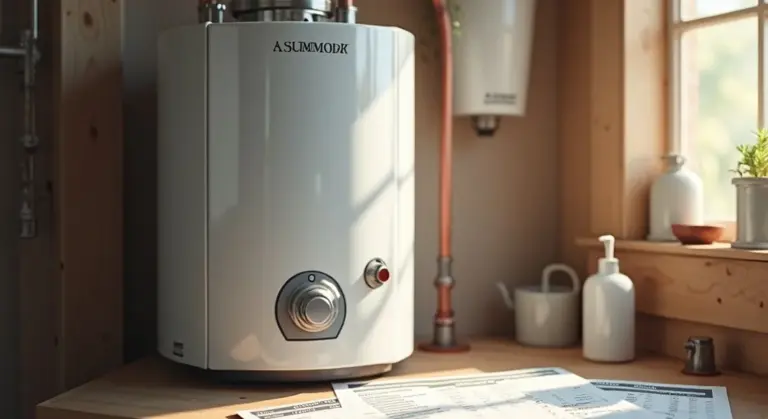
This is the classic. It’s a big insulated metal tank that constantly keeps 40 to 80 gallons of water hot, ready to go. A gas burner or electric heating elements inside the tank kick on whenever the water temperature drops. It works just like a giant thermos with a built-in reheating function. The downside? You pay to reheat that water all day and night, even when you’re asleep or at work. They also take up a lot of floor space.
The Tankless Heater: The On-Demand Flash Heater
Also called an “on-demand” heater, this unit has no storage tank. When you turn on a hot water tap, cold water races through a pipe and over a powerful gas burner or electric heating element. It heats the water instantly as it flows through. You only pay to heat water the exact moment you need it. The limiting factor is flow rate-how many gallons per minute it can heat at once. Try to run a shower and a washer simultaneously, and you might run out of heating power.
The Heat Pump Water Heater: An Air Conditioner in Reverse
This one is clever. It looks like a tall tank with a mini-fridge compressor on top. It pulls heat from the surrounding air (even warm basement air) and concentrates it into the water tank. It uses electricity, but not to directly heat the water. Instead, it runs a compressor and refrigerant cycle, moving existing heat from the air into the water. This makes it 2-3 times more energy efficient than a standard electric tank. They work best in warm spaces (like a furnace room) because they exhaust cool, dry air.
Are heat pump water heaters gas or electric? They are 100% electric. They plug into a standard 240-volt outlet, just like a conventional electric tank. The “pump” refers to the compressor that moves thermal energy, not water.
The Solar Water Heater: A Sun-Powered Pre-Heater
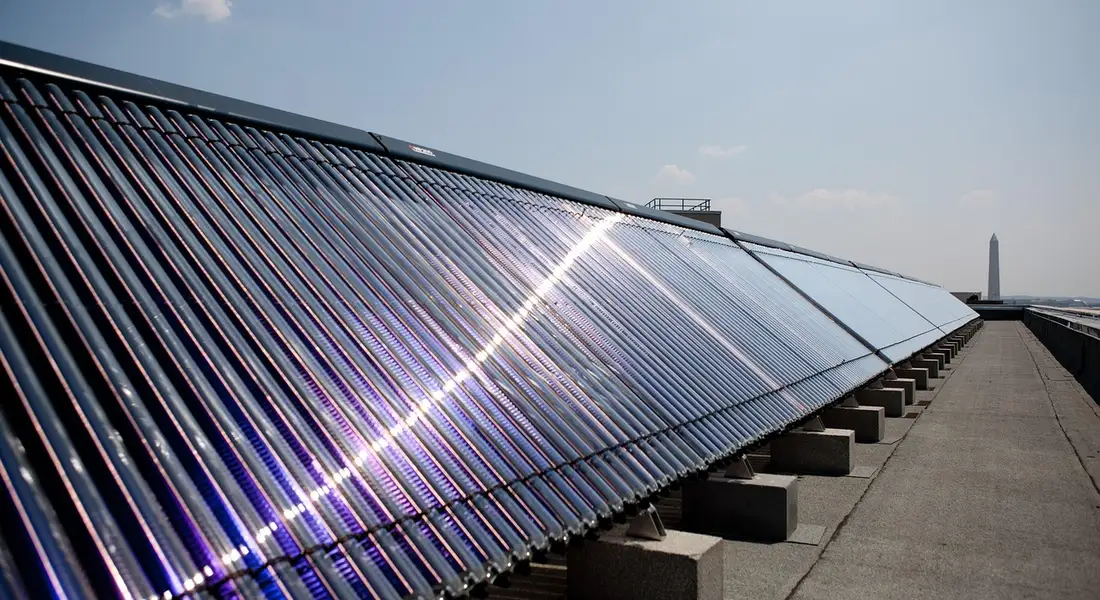
This system uses rooftop solar collectors (often tubes or panels) to capture the sun’s heat. A fluid (usually a glycol mixture) circulates through the collectors, gets hot, and then transfers that heat to your water in a storage tank. On sunny days, it can provide nearly all your hot water for free. Because the sun isn’t always reliable, solar systems are almost always paired with a backup heater-either an electric element or a gas connection in the tank. Think of it as a solar pre-heater that dramatically cuts your backup system’s workload. Some installations extend this concept to solar water purification, using the heat captured to power solar water purification methods like solar distillation or heat-assisted filtration. This means your solar setup can help deliver both hot water and purified water with minimal extra energy.
Are hot water tanks electric or gas? Both exist, and the choice comes down to your home’s existing hookups and local fuel costs. Gas tanks (natural gas or propane) generally cost less to operate and recover heat faster. Electric tanks are simpler to install where gas lines aren’t present. The tank itself is just a storage vessel; the fuel type is determined by the burner or element inside it.
Side-by-Side Showdown: Costs, Performance, and Lifespan
Here’s a direct comparison to see how these systems stack up where it counts: your wallet and your daily use.
Are tankless water heaters better than tank? It’s not a simple yes or no. It’s a trade-off between flow rate and stored volume. A tankless provides an endless stream of hot water, but that stream has a maximum width (gallons per minute, or GPM). A 50-gallon tank provides a finite volume of hot water all at once, which can be used by multiple fixtures until it’s drained. You need to match the system to your household’s peak demand, especially when you choose the right tankless water heater size.
Tank heaters have a “recovery rate”-how fast they can reheat a full tank of cold water. A gas tank recovers much faster than an electric one. Tankless units don’t recover; they just heat as it flows. Some early or lower-end tankless models can cause a “cold water sandwich.” This is a brief blast of cold water between cycles during a single use, like in between pulses of a shower spray. Modern units with better modulation have mostly solved this issue.
The Water Science: How Hard Water and Chemistry Shorten Heater Life
Think about the white, chalky stuff inside your tea kettle. That’s scale. Now picture that same crust forming inside your expensive water heater. It’s the same process. Your water isn’t just H2O. It carries dissolved minerals, mostly calcium and magnesium. The amount of these minerals determines your water’s “hardness.”
Understanding TDS vs. Hardness (gpg)
You’ll hear two terms: TDS and hardness. They’re related but different. TDS (Total Dissolved Solids) measures everything dissolved in your water-minerals, salts, even some organics. It’s measured in parts per million (ppm). Hardness specifically measures the calcium and magnesium, reported as grains per gallon (gpg).
For water heaters, hardness (gpg) is the number you care about most because calcium carbonate is what makes the rock-hard scale that destroys efficiency.
Here’s a simple breakdown:
- 0-3 gpg: Soft water. Little to no scaling risk.
- 3-7 gpg: Moderately hard. Scaling begins, shortening appliance life.
- 7-11 gpg: Hard water. Noticeable scaling, frequent cleaning needed.
- 11+ gpg: Very hard water. Rapid, damaging scale buildup is guaranteed.
How Scale Kills Your Water Heater’s Efficiency
Heat causes the minerals in hard water to solidify. They stick to heating elements and tank walls like cement. This scale acts as a powerful insulator. This hard water build up harms heater efficiency by reducing heat transfer. It also increases energy use and wear on components. Mineral scale is the number one killer of efficiency in all water heaters, especially tankless and heat pump models.
Why are tankless and heat pump units so vulnerable? Tankless heaters have small, intense heat exchangers that must transfer heat instantly to the flowing water. A thin layer of scale blocks that transfer, forcing the unit to work harder, overheat, and fail. Heat pump water heaters have complex evaporator coils. Scale on those coils makes the heat pump struggle, drastically cutting its efficiency-the very reason you bought it.
Even standard tank heaters suffer. Scale blankets the heating element or gas burner flue, wasting energy. It also settles at the tank bottom, trapping heat and causing the tank bottom to overheat and eventually crack.
Test Your Water and Protect Your Investment
Don’t guess. Test. A simple, free test strip is all you need to start. I keep a jar of them in my own basement and check every six months. Dip the strip in your cold water supply and match the color to the chart. You’ll get your hardness number in gpg.
If your water tests above 3 gpg, you need to treat it. You have two main choices:
- A Water Softener: This is the gold standard for hard water. It uses an ion-exchange process to physically remove the calcium and magnesium ions, replacing them with sodium or potassium ions. The result is truly soft water that will not form scale. It protects every water-using appliance and fixture in your house.
- A Descaler System (Template Assisted Crystallization or TAC): This is a salt-free alternative. It doesn’t remove the minerals but changes their structure so they don’t stick to pipes and heaters as scale. It’s a good option if you cannot or do not want to add sodium to your water, but its scale prevention, while effective, works differently than softening.
Installing a softener or descaler before your new water heater is the single best thing you can do to guarantee it reaches its advertised lifespan and efficiency. It’s cheaper than replacing a scaled-up heat exchanger or a failed compressor. Think of it as an insurance policy for one of the hardest-working appliances in your home.
Installation Reality Check: Code, Space, and the DIY Verdict
Forget the sales brochure. The real cost of a new water heater includes what happens in your basement or utility closet. You need to think about codes, physical space, and who’s actually going to do the work. Even when you factor in installation and operating costs, the upfront sticker shock can be misleading.
Local plumbing and building codes aren’t suggestions. An inspector will check, and your homeowner’s insurance may deny a claim if work isn’t permitted and done to code. For most systems, a thermal expansion tank is mandatory if you have a closed plumbing system (a check valve or pressure reducing valve). Gas units have strict rules for venting materials and clearances from combustibles. In earthquake zones, seismic strapping is non-negotiable.
Getting a permit and a final inspection is the only way to guarantee the installation is safe and legal.
Now, let’s talk about where this thing will live. A standard tank heater needs a clear floor area. A tankless model needs unobstructed access to an exterior wall for its dedicated vent. A heat pump water heater is a different beast. It needs about 1000 cubic feet of air space (like a 10’x10′ room) to operate efficiently, plus a drain for condensate. Solar thermal is the biggest commitment. You need roof space with southern exposure for the panels, and you still need a storage tank and potentially a backup heater inside the house.
Measure your space twice before you buy anything. An undersized utility room can rule out a heat pump heater before you even look at prices.
Installation Difficulty Ratings
Here’s my honest take on DIY potential. A rating of 10 means only a specialized contractor should touch it. Remember, messing with gas lines, your main electrical panel, or your roof is a hard line. Call a pro.
- Electric Tank (Difficulty: 4/10) – This is the most DIY-friendly option, but only for a straight replacement. If you’re swapping an old 40-gallon electric for a new 40-gallon electric and the wiring and plumbing hookups are identical, a skilled homeowner can handle it. Turn off the power at the breaker first. Always.
- Gas Tank (Difficulty: 7/10) – The physical swap is straightforward. The gas line and vent work are not. Gas line connections and venting require a licensed professional. It’s a matter of safety, code, and keeping your insurance valid.
- Tankless (Difficulty: 9/10) – This is almost always a professional installation. The unit may need a larger gas line, a new dedicated vent, or a heavy-duty electrical circuit. Sizing and configuring these systems is complex. This is not a weekend project.
- Heat Pump (Difficulty: 8/10) – These units are very heavy and require a dedicated 240-volt circuit. You also need to run a condensate drain line, like for an AC unit. The combination of electrical, plumbing, and heavy lifting makes this a job for installers.
- Solar (Difficulty: 10/10) – This is a full-scale home modification. It involves roof penetrations, running pipe between the roof and basement, installing a heat exchanger, and integrating with a backup tank system. You need a certified solar thermal contractor.
If the job requires a permit, which most of these do, you are almost always better off hiring the licensed pro who will pull it.
Finding Your Best Value: A Homeowner’s Decision Guide

Forget the sales brochures. Choosing a water heater is about matching a machine to your house and your habits. You need to ask the right questions first.
Your 4 Key Decision Questions
Answer these before you look at a single model. This table cuts through the noise.
| Question to Ask | Why It Matters | How It Guides Your Choice |
| What’s your fuel source? | Gas (natural or propane) or electric? This is your biggest constraint. | Gas opens all options. Electric-only homes rule out standard gas tank and tankless models, leaving electric tank, heat pump, or electric tankless. |
| How many people/bathrooms? | This defines your “demand.” How much hot water do you use at once? | A large family running showers, dishwasher, and laundry needs high flow (Gallons Per Minute). A small household or one-bathroom home can prioritize efficiency over raw output. |
| What’s your climate? | Average air temperature and sunshine directly impact system performance. | Heat pumps work poorly in cold basements or garages. Solar needs good sun. Tank and tankless units are less affected, though incoming water temperature matters. |
| What’s your budget for upfront cost? | This is the check you write for the unit and professional installation. | Standard tanks are cheapest to install. Heat pumps and tankless cost more upfront. Solar thermal systems have the highest initial price tag by far. |
Are Electric Tankless Water Heaters Worth It?
This question comes up constantly. The honest answer is: only in specific, limited cases. An electric tankless heater demands a massive amount of power all at once. To run a single shower, it might need 30 amps or more. Running two showers at once could require over 60 amps.
Most older homes have 150-200 amp electrical service panels. A large electric tankless unit can consume half of that by itself. You often need a costly electrical panel upgrade.
They are worth considering only for a small, all-electric home (like a 1-2 person condo) with low simultaneous hot water demand and adequate existing electrical capacity. For a whole-house application, especially with gas available, other options provide better value.
Real-World Examples That Make Sense
Let’s apply the questions to some typical households.
Example 1: The Family of Four in a Gas-Heated Home
This is a classic scenario. You have two teens, two bathrooms, and a busy morning routine. Gas is available. A high-efficiency condensing gas tank or a condensing gas tankless system will likely give you the best performance for the money. The tank is a lower upfront cost with proven reliability. The tankless offers endless hot water and slightly better efficiency for a higher initial investment. Both are excellent choices here.
Example 2: The Sunny Climate Home with High Electric Rates
You live in Arizona, Texas, or Florida. Your electricity is expensive, but you have plenty of sun. A solar thermal water heating system with a gas or electric tank backup deserves a very serious look. The high upfront cost is offset by near-zero operating costs for most of the year. The backup tank handles cloudy days. The math on payback time can be very favorable in this scenario.
Example 3: The Retiree Couple with an All-Electric Home
Your kids are gone, demand is lower, and you only have electricity. You want to cut bills. A hybrid electric heat pump water heater is often the star here. It uses far less electricity than a standard electric tank. As long as it’s installed in a space that stays above 40°F year-round (like a conditioned basement or interior closet), it will provide significant savings. The upfront cost is higher than a standard electric tank, but utility rebates can help.
| Water Heater Type | Key Maintenance Task | Recommended Frequency |
| Storage Tank | Anode Rod Inspection, Tank Flushing | Annually |
| Tankless (On-Demand) | System Descaling | Annually |
| Heat Pump (Hybrid) | Air Filter Cleaning, Area Clearance | Every 3-6 Months |
| Solar | Panel, Fluid, & Pump Inspection | Annually |
Tank Water Heater: Fight Sediment and Corrosion
The classic tank heater is simple, but it will fail early if you ignore two jobs.
First, flush the tank. Sediment from your water settles at the bottom. This sludge makes the heater work harder and can ruin the tank. Once a year, connect a garden hose to the drain valve, run it to a floor drain or outside, and open the valve until the water runs clear.
Second, check the anode rod. This metal rod sacrifices itself to protect your tank’s steel lining from rust. Once it’s mostly gone, your tank is next.
- Turn off the power and the cold water supply.
- Drain a few gallons from the tank.
- Use a 1-1/16″ socket and breaker bar to unscrew the rod from the top of the tank.
- If it’s less than 1/2″ thick or heavily crusted, replace it.
A new rod costs about $50. A new tank costs over $1,000. The choice is easy.
Tankless Water Heater: Prevent Scale Buildup
Tankless heaters don’t store water, but mineral scale builds up inside the heat exchanger. Hard water makes this worse. Annual descaling is non-negotiable for performance and longevity.
You need a submersible pump, two hoses, and a bucket. Use white vinegar or a citric acid solution.
- Turn off the unit’s power and shut its water valves.
- Connect the pump and hoses to the unit’s service ports to create a flushing loop.
- Fill the bucket with your descaling solution and run the pump for 45-60 minutes.
- Flush with fresh water, restore power and water, and check for leaks.
If you’re not comfortable with this, hire a pro. A scaled-up heat exchanger is a very expensive repair.
Heat Pump Water Heater: It Needs to Breathe
This unit works like an air conditioner in reverse, pulling heat from the air. It must have airflow.
Clean the reusable air filter every 3 to 6 months, or more if you have pets. A clogged filter makes the compressor labor and kills efficiency. Just pull it out, rinse it, let it dry, and put it back.
Keep the area around the heater clear. You need at least 750 cubic feet of air space around it, and never install it in a tight closet. The manual will specify the exact clearance. I keep mine in my open basement, well away from my laundry dryer vent.
Solar Water Heater: Check the Loop
Solar systems have more parts, so your annual check is a visual and functional inspection.
Start with the roof panels or tubes. Look for debris, shading from new tree growth, or physical damage. Hose them off if they’re dirty.
For systems with a heat-transfer fluid, check the fluid level and color in the expansion tank. Look for leaks at the pump and connections. Listen to see if the circulation pump runs when the sun is on the panels.
Most homeowners should have a certified technician do the full system check, which includes testing the antifreeze concentration and pressure. A failed pump or frozen line will shut your whole system down.
Red Flag Troubleshooting: Signs Your Heater is Failing
Don’t wait for a cold shower to tell you something’s wrong. Your water heater sends signals long before it quits. Here’s how to read them.
Clear Failure Signs for Storage Tank Heaters
These are the classic tank-type heaters, gas or electric, sitting in your basement or closet. Their problems are usually straightforward.
If you have no hot water, your first check is always the power source. For electric heaters, check the circuit breaker. For gas, make sure the pilot light is on. If power is fine, the heating element (electric) or gas control valve is likely faulty. These are common repairs.
Rusty water from your hot side taps is a major warning. This often means the steel tank lining has corroded through. You can try flushing the tank to clear sediment, but if the rust returns quickly, the tank itself is failing. Replacement is near.
A leaking tank is a full-stop emergency. Water pooling from the tank body means internal corrosion has created a hole. This is not a repairable problem; shut off the water and power to the unit and plan for immediate replacement.
Strange noises like rumbling, popping, or banging are almost always caused by sediment. Minerals in your water settle and harden at the bottom of the tank. The heater then has to work harder to burn through that layer, causing noise and reducing efficiency. An annual tank flush can prevent this.
Tankless Water Heater Warning Signs
Tankless units are computers attached to plumbing. Their issues are less about corrosion and more about sensors, flow, and scale.
Error codes are your best clue. A flashing light or code on the display is the unit diagnosing itself. Common codes point to ignition failure, flame loss, or over-temperature limits. Your manual is essential here to decode the message.
Limited hot water, especially if it’s just a trickle, often points to a clogged inlet filter or a failing flow sensor. The unit won’t fire if it doesn’t detect enough water moving. Checking and cleaning the filter is a simple first step.
Fluctuating temperature, where water goes from hot to cold during a shower, is frequently a scale problem. Mineral buildup inside the heat exchanger causes uneven heating. A professional descaling is needed to restore proper function and prevent permanent damage.
Heat Pump Water Heater (Hybrid) Issues
These efficient units move heat from the air into your water. When they act up, it’s usually related to that heat pump system.
If the unit is running constantly but not heating water, the compressor or refrigerant may have failed. It’s trying to work but can’t transfer heat. First, ensure it’s not just in efficient “heat pump only” mode. If it is and the water is still lukewarm, you likely need a technician.
Blowing cold air when in heating mode is a direct sign of trouble. In winter, the unit should blow air that’s cooler than the room, but not cold. Air that feels like a refrigerator blast means the refrigerant cycle isn’t working. This requires a certified HVAC professional to diagnose and recharge the system.
What to Look For When You’re Ready to Buy
Focus on Category Specs, Not Brands
Forget the brand hype. I have fixed expensive brands that failed because the specs did not match the home’s needs. Look at the numbers that matter for your hot water use rather than just fancy brands.
With tank water heaters, find the First Hour Rating (FHR) on the spec sheet. This number tells you how many gallons of hot water the tank can supply in one hour after a full recovery. Match the FHR to your family’s biggest morning rush to prevent cold showers. A 50-gallon tank with a high FHR often beats an 80-gallon tank with a low one. Also, check the warranty length. A six-year warranty is standard, but a nine or twelve-year warranty usually means better internal parts. My home’s gas tank has a twelve-year warranty, and it has needed zero repairs in eight years.
For tankless units, the critical spec is flow rate in gallons per minute (GPM) at your specific temperature rise. Temperature rise is how many degrees the heater must warm the water. Here is how to find yours:
- Measure your groundwater temperature. Run a cold tap into a cup and use a cooking thermometer.
- Subtract that number from your desired hot water temperature, usually 120°F.
- The result is your needed temperature rise, often between 40°F and 70°F.
Now, look at the tankless unit’s performance chart. Choose a model that delivers the GPM you need for simultaneous showers at your calculated temperature rise. A common mistake is buying a unit rated for 8 GPM at a 40°F rise when you actually need 5 GPM at a 60°F rise.
Emphasize Third-Party Certifications
Manufacturer claims are one thing. Independent verification is what you trust.
Every new water heater must have a yellow EnergyGuide label. This label shows the estimated yearly operating cost and how it compares to similar models. Use the EnergyGuide to instantly see which heater will cost you less each month on your gas or electric bill. It is the easiest way to compare real-world efficiency.
Look for the blue ENERGY STAR logo. This certification means the unit meets strict efficiency and performance rules set by the U.S. Environmental Protection Agency. An ENERGY STAR certified water heater is tested to use less energy and perform reliably over time. In my service truck, I carry far fewer parts for these certified models because they break down less often.
Recommend Product Categories
Based on thousands of installations and my own home projects, these four categories offer the best balance of performance and value for most people.
High-Efficiency Gas Condensing Tank
This is a storage tank with a secondary heat exchanger. It captures heat from the exhaust gases that standard models waste. These units are ideal for larger families with consistent, high hot water demand who want to cut gas bills. They cost more upfront but save money on fuel. Plan for proper venting, often with PVC pipe, which is easier to install than metal flue.
Condensing Tankless (Gas)
This tankless type also uses a condensing heat exchanger for maximum efficiency. It provides endless hot water in a compact size. It is the best choice for a large home where you want continuous hot water for multiple bathrooms and appliances. The main pitfall is neglecting maintenance. You must flush the heat exchanger with vinegar once a year to prevent mineral scale from clogging it.
Heat Pump Hybrid Water Heater
This electric unit works like a refrigerator in reverse, pulling heat from the surrounding air to heat the water. It can be two to three times more efficient than a standard electric tank. Install a heat pump hybrid in a space that stays between 40°F and 90°F year-round, like a basement or conditioned garage. I put one in my insulated garage. My summer electric bills for hot water dropped by 60 percent. Remember, it will cool the space it is in, which is great for a basement but not for a cold closet.
Certified Solar Thermal System
These systems use rooftop solar collectors to heat water directly. They have very high installation costs but the lowest operating costs. Only invest in a certified solar thermal system if you have unshaded, south-facing roof space and you plan to live in the home for 10+ years. Ensure it is certified by the Solar Rating & Certification Corporation (SRCC). This guarantees the collector performance and that the system includes necessary safety valves and controls. It is important to compare this option with other home water heating methods to make an informed decision.
Quick Answers
Which type gives me the most “bang for my buck” upfront?
A standard storage tank heater has the lowest purchase and installation price. For long-term value, a heat pump water heater in a suitable space often provides the fastest payback through lower electric bills. Your true best value depends entirely on your local utility rates and daily usage.
I’m worried about safety and leaks. Is one system safer?
All modern units are safe when installed to code. However, a tankless heater eliminates the risk of a catastrophic 40-80 gallon tank leak. The most critical safety step is ensuring your installer pulls a permit, which guarantees an inspection for proper venting, pressure relief, and gas or electrical connections.
How big of a problem is my hard water, really?
It’s the number one cause of premature failure and lost efficiency, especially for tankless and heat pump models. Test your water hardness with a strip. If it’s above 3 grains per gallon (gpg), installing a softener or descaler before your new heater is a mandatory investment to protect it.
We have a cold basement. Does that rule anything out?
Yes, it rules out a standard heat pump water heater. They need warm air (ideally above 40°F year-round) to operate efficiently. In that scenario, focus on a gas tank/tankless or a well-insulated electric tank instead. Always match the technology to your install environment.
When is solar thermal a genuinely smart buy?
It’s a smart long-term investment only if you have strong, unshaded southern exposure, high local energy costs, and plan to stay in the home for 10+ years. Think of it as a pre-heater that drastically cuts your backup system’s work on sunny days, making it ideal for sunny climates.
Lock In Your Water Heater Value
First, get honest about your home’s hot water habits and your local utility rates. Then, weigh the total install and operating cost of each system against those facts-the best value always fits your actual use, not a generic sales pitch.
Bob McArthur
Bob is a an HVAC and plumbing industry veteran. He has professionally helped homeowners resolve issues around water softeners, heaters and all things related to water systems and plumbing around their homes. His trusted advice has helped countless of his clients save time, money and effort in home water systems maintenance and he now here to help you and give you first hand actionable advice. In his spare time, Bob also reviews home water systems such as tankless heaters, water softeners etc and helps home owners make the best choice for their dwelling. He lives around the Detroit area and occasionally consults on residential and commercial projects. Feel free to reach out to him via the contact us form.