How Your Washing Machine Heats Water: Gas, Electric & Hybrid Explained
Is your washer leaving clothes cold? The problem often starts with how it heats water.
We will cover how gas burners work, what electric heating elements do, and where hybrid systems fit in.
I’ve swapped more heating elements than I can count. Check your water temperature setting first.
How Your Washing Machine Decides to Heat Water
Think your washer just uses hot water from your tank? For most modern machines from LG, Bosch, Miele, or Hotpoint, that’s only part of the story. These washers have their own built-in heater, giving them precise control over water temperature—something that’s essential for effective cleaning.
You must connect both the hot and cold water supply lines for the machine to work correctly, even if it heats its own water. The cold line is for filling and rinsing. The hot line provides a warm starting point, which saves the internal heater time and energy. This practice is especially important when you connect the hot water line to a dishwasher.
The machine’s computer, called the control board, makes the final call. You select a cycle like “Sanitize” or “Cold Wash.” The control board reads that command and decides the best way to hit the target temperature. It might mix incoming hot and cold water. For a very hot wash, it will let in cold water and then activate its own heater to bring it up to the exact degree. Different brands often highlight their water-heating methods as a key feature. Some use built-in electric heaters, while others employ heat-pump systems or rapid-heat boosters.
It’s like your kitchen sink. You can get warm water by mixing the hot and cold taps. But if you need boiling water, you run the cold tap and use a kettle. Your washer does the same thing, using its internal heater as the kettle.
Electric Water Heating: The Inside Job
This is the most common method, especially in front-loading machines. An electric heating element sits at the bottom of the wash drum, submerged in water. It works exactly like the element in your electric water heater or a large kettle.
How does the heating element in an electric washer work?
The process is straightforward and controlled by the machine’s computer. Here’s the step-by-step.
- The washer’s inlet valve opens, filling the drum with cold water.
- A temperature sensor monitors the water.
- If the cycle requires heat, the control board sends power to the heating element.
- The element gets very hot, transferring that heat directly to the water around it.
- The sensor keeps checking. Once the target temperature is reached, the control board cuts power to the element.
This electric heating method is the standard for most front-loaders, which is why models from brands like LG and Bosch are known for heating their own water efficiently. A safety thermostat (a high-limit switch) is always in the circuit. If the main sensor fails, this switch will cut power to prevent overheating.
From a water science perspective, it’s a direct conversion. Electrical energy (measured in Joules) passes through the resistant element and is converted nearly 100% into heat energy. The efficiency is very high, but your operating cost is tied directly to your local electricity rate compared to natural gas. Understanding water heater consumption efficiency helps estimate yearly energy use and costs. It guides choices between electric and gas models for your home.
Gas Water Heating: The Direct-Fire Method
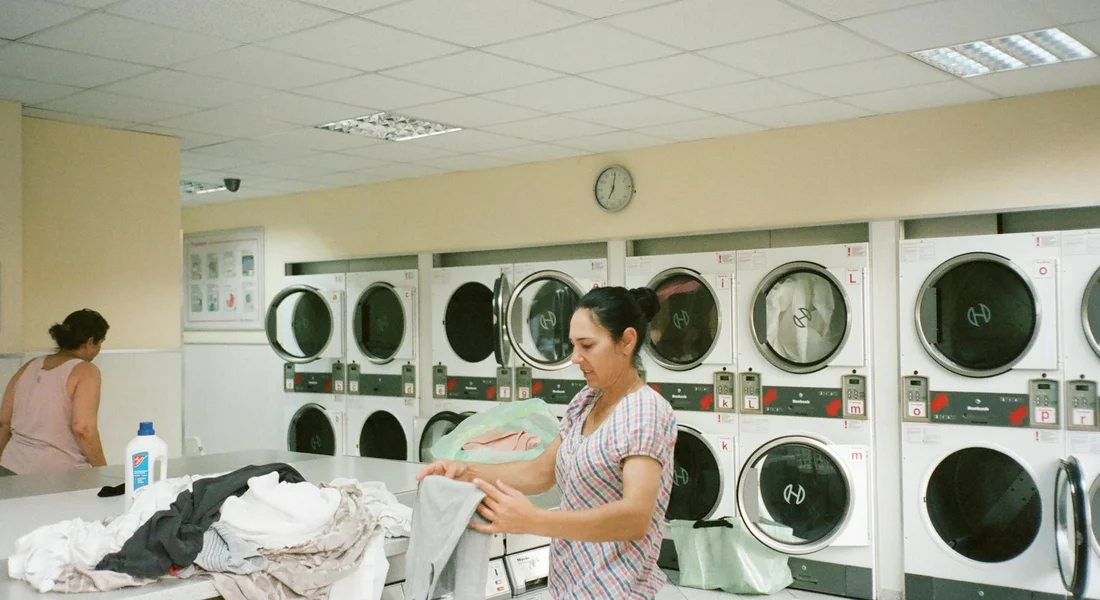
A gas washing machine heats water like a tiny, self-contained tankless water heater. Inside the machine is a compact gas burner and a heat exchanger, usually a coiled copper tube. It does not have a storage tank.
Here is how the direct-fire method works from start to finish:
- The machine’s timer calls for hot water.
- A cold water inlet valve opens, sending water into the machine’s plumbing.
- This water flows into the heat exchanger coil.
- A gas valve opens, and the burner ignites directly below the coiled tube.
- The flame instantly heats the metal coil, and the water inside it, as the water passes through.
- The now-hot water exits the coil and goes directly into the wash tub.
This on-demand process means gas models typically heat water much faster than standard electric heating elements. You get hot water for your wash cycle almost immediately, which can shorten overall cycle times. Gas models also rely on safe venting and correct installation for peak efficiency. Regular maintenance helps prevent leaks and ensures consistent performance.
Code & Compliance Check
You cannot install a gas washer like a regular appliance. It involves gas lines, combustion, and venting. This is not a DIY project.
Installation must be done by a licensed professional to comply with building codes like the International Plumbing Code (IPC) and International Fuel Gas Code (IFGC). They will ensure the gas line is correctly sized and connected, and that the unit is properly vented to expel exhaust gases safely outdoors. Incorrect installation is a serious fire and carbon monoxide risk.
The Hybrid Approach and Other Machines
A hybrid washing machine gives you two ways to get hot water. It has its own internal electric heating element, but it can also accept pre-heated water from your home’s gas (or electric) water heater.
You choose the source based on speed or cost. For the fastest hot water, connect it to your home’s existing gas water heater. For a potentially lower operating cost if you have cheap electricity, or if a gas hookup isn’t available, you can use the machine’s internal electric heater instead.
These machines use one heat source at a time; they do not simultaneously use gas and electric to heat the same water. The “hybrid” refers to the dual capability, not a combined system. In heat pump water heater hybrid models, the unit can switch between a heat pump and an electric element to meet demand without running both at once. This approach preserves efficiency while maintaining reliable hot water when you need it.
What About Carpet Cleaners?
This often causes confusion. Most residential carpet cleaning machines you rent or buy for home use do not heat water. They simply pump hot water from your sink’s tap through their system. The heating is done by your home’s water heater. Commercial-grade carpet cleaners are different and often have built-in heaters, but for home use, assume you need to supply the hot water yourself.
Electric vs. Gas: The Real-World Pros, Cons, and Costs
Choosing between a gas and electric washer comes down to your hookups and your wallet. Here is the direct comparison.
The real choice is often made for you by the hookups in your laundry room.
Electric Water Heating: The Simple Plug-and-Play Option
Most homes are wired for an electric washer. It’s the standard.
The pros are about simplicity and installation.
- Lower appliance cost.
- Simple installation-you often just connect the hoses and plug it into a standard 240V outlet.
- No combustion means no venting requirements.
The cons hit your utility bill and your patience.
- Slower heating. An electric element heats the water inside the tub, which takes time.
- Higher operating cost in most regions. Electricity is usually more expensive per unit of heat than natural gas.
Gas Water Heating: The Fast and Efficient Workhorse
If you have a gas line and the proper vent, a gas dryer’s partner is a gas washer.
The pros are about performance and long-term cost.
- Faster heating. A gas burner can bring water up to temperature much quicker than an electric element.
- Lower operating cost. Natural gas is typically cheaper than electricity for generating heat.
The cons involve complexity and upfront investment.
- Higher appliance cost.
- Requires a professional installation. You need a gas line, correct venting, and everything must be leak-checked.
- More complex system with more parts that can fail (burner assembly, vent, gas valve).
Addressing Efficiency: It’s All About Your Utility Bill
Forget general statements. You need to look at your own bills.
Gas is measured in therms. Electricity is measured in kilowatt-hours (kWh).
To compare, you need to know the cost of one therm of gas versus one kWh of electricity in your city. Divide the cost per therm by 29.3 (the number of kWh in a therm). This gives you the equivalent electric rate. If your actual electric rate is higher, gas is cheaper to run. In my area, gas consistently wins on cost for heating. If you’re considering a gas-to-electric water heater conversion, this same cost comparison can help determine whether a conversion is financially sensible. A quick check of local rates can guide your decision and potential payback timing.
DIY vs. Pro Verdict & The Red Flag Troubleshooting Guide
This is where safety and skill separate a simple hookup from a major project.
Difficulty Rating:
- Electric Washer Hookup: 3/10. If the 240V outlet is already there, it’s connecting hoses and plugging it in.
- Gas Washer Installation: 9/10. This is professional-only work. Gas leaks and improper venting are serious hazards.
Red Flag Troubleshooting Guide
If your hot wash isn’t hot, run through this list.
- Clothes are always cold: The heating system has failed. This could be a burnt-out electric heating element, a faulty thermostat, or a dead gas valve.
- Error codes for heating: Your machine’s computer has detected a fault in the heating circuit. Consult your manual.
- Sudden steam or overheating: A stuck thermostat or control board is telling the heater to stay on. Unplug the machine immediately.
- Gas smell: This is an emergency. Do not turn any lights or appliances on or off. Evacuate the area and call your gas company from outside.
Tools & Material Checklist
What you need depends entirely on the job.
For a basic electric washer hookup:
- Adjustable wrenches (or channel locks).
- New hose washer gaskets (always replace the old flat ones).
- A bucket for spillage.
- Leak detector solution or just look carefully for drips.
For a gas hookup (The Pro’s List):
- Pipe thread sealant approved for gas (like Teflon tape rated for gas).
- Commercial gas leak detector solution (not dish soap).
- A manometer to test and adjust gas pressure.
- The proper knowledge and local permits.
Choosing and Maintaining Your System
Think about your laundry habits and your home’s setup before you buy.
Key considerations include:
- Existing hookups: Do you have a gas line and proper vent, or just a 240V outlet?
- Local utility costs: Do the math on therm vs. kWh costs as shown above.
- Laundry frequency: A large family doing daily loads might benefit more from gas speed and lower cost.
- Need for sanitize cycles: If you regularly use 160°F washes, a gas heater’s speed is a major advantage.
System Maintenance Roadmap
A little care prevents big repairs.
For electric washers:
Scale is the enemy of the heating element. Run an empty hot wash cycle with a washing machine cleaner tablet once a month. This dissolves mineral buildup that insulates the element, making it work harder and fail sooner.
For gas washers:
Your yearly job is to hire a pro. Have a technician inspect the burner assembly for corrosion and clean the lint from the venting system. Proper combustion and ventilation are critical for safety and efficiency.
Recommended Products
These are product categories I use in my own home and service calls.
- Washing machine cleaning tablets: They work. Use them monthly.
- Inlet hose leak detector alarms: These small devices screw onto your water inlet valves and sound an alarm at the first sign of a drip. Cheap insurance.
- High-efficiency (HE) laundry detergents: They are formulated to work effectively in cooler water, which takes strain off your washer’s heater, whether it’s gas or electric.
Common Questions
Is a gas or electric washer more efficient for my home?
Efficiency depends on your local utility costs. Gas typically heats water faster and has a lower operating cost in most regions, but electricity converts energy to heat very efficiently at the appliance. You must compare the cost per therm of gas to your price per kilowatt-hour of electricity to know for sure, especially when considering gas vs electric water heater costs.
How do I use a hybrid washer’s two heating options?
Connect both hot and cold water lines to enable the hybrid function. For speed, the machine will use your home’s pre-heated water (from your gas or electric water heater). To potentially save money if you have cheap electricity, or if you lack a hot water supply, it will use its internal electric element instead.
What’s the most common reason an electric washer stops heating water?
Mineral scale buildup insulating and burning out the heating element is the top culprit. Prevent this by running a monthly cleaning cycle with a washer cleaner. If it fails, replacing the element is a common repair, but always unplug the machine first.
Are gas washing machines safe?
When professionally installed and maintained, yes. The critical dangers are gas leaks and improper venting of combustion gases. Installation is not a DIY job, and you must have an annual service to inspect the burner and venting for safety and performance.
What’s the easiest way to lower my washer’s heating energy use?
Use colder wash cycles whenever possible and choose a High-Efficiency (HE) detergent designed for cold water. This reduces the workload on any heater. Also, ensure your machine’s hot water inlet hose is connected to an efficient home water heater to give it a warm start.
Smart Steps for Your Washing Machine’s Heater
Always identify if your washer uses gas, electric, or hybrid heating before any repair or maintenance. Stick to routine checks like inspecting heating elements or gas connections to keep hot water flowing without hiccups.
Written by Bob McArthur. Bob is a an HVAC and plumbing industry veteran. He has professionally helped homeowners resolve issues around water softeners, heaters and all things related to water systems and plumbing around their homes. His trusted advice has helped countless of his clients save time, money and effort in home water systems maintenance and he now here to help you and give you first hand actionable advice. In his spare time, Bob also reviews home water systems such as tankless heaters, water softeners etc and helps home owners make the best choice for their dwelling. He lives around the Detroit area and occasionally consults on residential and commercial projects. Feel free to reach out to him via the contact us form.