Find That Leak: A Homeowner’s Guide to Detecting Water Line Problems
You hear a drip or see a suspicious water bill. A hidden leak is wasting money and threatening your home.
This guide shows you how to track it down. We will cover the obvious signs to look for, the simple tools you need, and how to check each section of your pipes.
I’ve been on too many calls for soggy drywall. Shut off all your water and check the meter first. That tells you if the leak is inside or outside.
Start With Your Eyes and Ears: The Obvious Signs of a Leak
Your home is talking to you about leaks. You just need to know the signs. I start every service call by asking the homeowner what they see and hear. Nine times out of ten, they’ve missed a simple clue.
Visual and Audible Clues You Can’t Miss
First, stand still and listen. A persistent dripping or hissing sound behind a wall or under a floor is a dead giveaway. At my own house, I once tracked a faint trickling noise to a pinhole leak in a basement supply line.
Next, look for wet spots. Check for unexplained puddles on the floor, especially under sinks, around toilets, and near your water heater or softener. Stains on your walls or ceilings are a major red flag. Water stains often appear as yellowish-brown rings or dark patches that feel damp to the touch.
Peeling paint or wallpaper and warped floorboards are also clear signals that moisture is present where it shouldn’t be.
How to Perform a Basic Visual Inspection
Grab a flashlight and do a walkthrough. Don’t just glance, really look.
- Check every wall and ceiling, especially in bathrooms, kitchens, laundry rooms, and basements.
- Look for bubbling, cracking, or discoloration in paint and drywall.
- Examine floors for buckling, cupping, or a soft, spongy feeling underfoot.
- Look for mold or mildew, which often shows up as fuzzy black, green, or white spots in corners or along baseboards.
The Smell of Hidden Trouble
Your nose is a powerful tool. A persistent musty, earthy, or mildewy smell in a room often means hidden moisture is present. If you walk into a room and it smells like a damp basement, but it’s not your basement, start investigating for a leak.
Your Water Bill is a Silent Alarm
Compare your last few water bills. A sudden, unexplainable spike in usage is one of the strongest indicators of a hidden leak. If your water usage doubles without a change in routine, you likely have a significant leak somewhere in your system.
How can I identify signs of a water leak inside my home? Look for audible drips or hissing, visible water stains or puddles, warped materials, mold growth, a musty odor, and an unexpected increase on your water bill.
Inspecting the Easy Spots: Under Sinks, Toilets, and Basements
Now, let’s get hands on. These are the areas where leaks most commonly start and are easiest for you to check yourself.
A Step-by-Step Guide to Checking Under Sinks
You need to check under every sink, not just the one you think is leaking.
- Clear out everything from under the sink so you have a clear view.
- With a flashlight, visually trace the entire water supply line from the shut-off valve to the faucet tailpiece. Look for droplets, rust, or mineral deposits (white or green crusty buildup).
- Check the drain pipe (the P-trap) and all its connections. Feel for moisture with your fingers.
- Place a dry paper towel along the pipes and joints. Check it in an hour for any wet spots.
- Finally, turn on the faucet and look again while water is running, as some leaks only appear under pressure.
The Simple Dye Test for Toilet Leaks
A running toilet can waste hundreds of gallons a day. The flapper valve is the usual culprit.
- Remove the toilet tank lid.
- Add a few drops of dark food coloring or a dye tablet into the tank water. Don’t flush.
- Wait 20-30 minutes.
- Look in the toilet bowl. If you see colored water, the flapper is leaking and needs replacement.
How can I check my toilets for leaks? Use the dye test: put coloring in the tank, wait without flushing, and see if color appears in the bowl.
Checking Your Water Heater, Softener, and Filtration System
These appliances are leak hotspots. Look for pooling water directly underneath them. Check all the connecting hoses, valves, and fittings for signs of seepage. On a water softener, inspect around the brine tank and the control valve head. For a water heater, a small leak from the pressure relief valve pipe or the drain valve is common. To troubleshoot water heater leaks, it helps to know the common leak causes. The next steps will guide you through the typical culprits and what to check.
Condensation Versus Active Seepage
Not all moisture on a pipe is a leak. Pipes, especially cold water lines, can sweat in humid conditions. Wipe the pipe dry with a rag. If the wetness returns quickly and you can see or feel a steady bead of water forming, it’s likely a leak. Condensation will usually return more slowly and evenly.
How do I inspect exposed pipes under sinks and in basements for leaks? Visually trace all pipes for droplets or crusty deposits, feel all connections, and use the dry paper towel test to confirm slow, seeping leaks.
Your Water Meter Doesn’t Lie: The Shut-Off Test
Your water meter is the best tool for finding a hidden leak. It’s the most honest piece of equipment in your house. If you’ve checked all the faucets and toilets and still have a high water bill, this test is your next move.
How do I use my water meter to test for a leak?
The process is simple. You are looking for any water movement when you are not using any. Do this on a day when you can be out of the house for a couple of hours.
- Find your water meter. It’s usually in a box near the street or sidewalk. For indoor meters, look in the basement, crawlspace, or a utility closet.
- Turn off every water-using device in your home. This includes ice makers, humidifiers, and sprinkler system timers. Make sure all toilets have finished filling.
- Look at your meter. Note the current reading on the odometer. Then, find the low-flow indicator. This is a small red triangle, star, or gear. It spins with the tiniest water movement.
- Walk away. Do not use any water for two hours. Go run errands.
- Check the meter again. Compare the odometer reading to your first note. If the numbers changed, you have a leak. If the low-flow indicator is spinning at all, even if the main dials are still, you have a leak.
A moving meter with all water off confirms you need to find the source. The next step is figuring out if the leak is inside your home or between the meter and your house.
When the Leak is Hiding: Signs of Trouble Behind Walls and Under Slabs
Leaks in walls or under concrete don’t announce themselves with a spray. They leave clues. You need to know where to look and what you’re seeing.
What are common indicators of a hidden water leak?
The signs are often visual or sensory before they become a flood. Walk around your home and look closely.
- On walls and ceilings: Look for warping, bubbling, or peeling paint or wallpaper. A persistent damp spot or a stain that grows is a major red flag. The drywall may feel soft or spongy to the touch.
- On floors: Listen for creaking in areas that never creaked before. Feel for soft spots under carpeting. With hard floors, look for tiles that are lifting or grout that is crumbling. A warm spot on a cold floor can signal a hot water line leak.
- In the air: A musty, earthy smell that won’t go away, especially in a room with no plumbing, can point to hidden moisture and mold growth.
What are the signs of a leak in my home’s main water line?
A break in the main line is serious. The signs are more dramatic.
- An unexplained, persistently soggy patch in your yard, especially if it’s a lush, green spot during a dry spell.
- A sudden drop in water pressure throughout your entire house.
- You can hear the sound of running water from the street or near your meter box when nothing is on.
- Visible cracking in your home’s foundation or exterior walls near where the main line enters.
A slab leak happens when a water line under your home’s concrete foundation breaks, and the warning signs are impossible to ignore once you know them. You might hear water running under the floor, feel a hot spot, or see your water heater running constantly to feed the leak. Your floors may warp or tile may crack for no apparent reason.
What steps should I take if I suspect a slab leak?
You need to act fast. Water under a slab can erode the soil and damage your home’s foundation. Do not wait.
- Confirm the leak. Perform the water meter test. If it moves, you have confirmation.
- Shut off your home’s main water valve immediately. This stops the flow and prevents more damage.
- Call a licensed plumber who specializes in leak detection and slab leaks. This is not a standard DIY fix. They use specialized electronic listening devices and pressure tests to pinpoint the leak’s exact location.
- Be prepared for the repair, which may involve rerouting the pipe or carefully breaking through the slab to access the line. A pro will explain your options.
Ignoring these signs costs you money on your bill and risks major structural damage. Finding the leak early is always cheaper than fixing the damage it causes.
The Toolbox: From Simple Tricks to Pro Gear
What tools can you use to check for a water leak in your plumbing system? You don’t always need fancy gear. Start with what you have.
DIY Detective Kit
Your ears and eyes are your first tools. A simple mechanic’s stethoscope or even a long screwdriver can help you listen. Press the metal tip against a pipe and put your ear to the handle. You’re listening for the faint hiss of escaping water behind a wall or under a slab. A quiet house is your best friend for this.
For visible moisture, a basic moisture meter from the hardware store is a great buy. It gives you a digital reading of moisture levels in walls and floors, confirming what might just look like a damp spot.
Your water meter is the most important tool you already own. To use it, make sure no water is being used inside or outside your home. Find the leak indicator on the meter face (it’s often a small triangle or wheel). If it’s spinning, you have a leak. Write down the meter reading, wait two hours without using any water, and check again. A changed reading means water is moving.
The Pressure Gauge Test
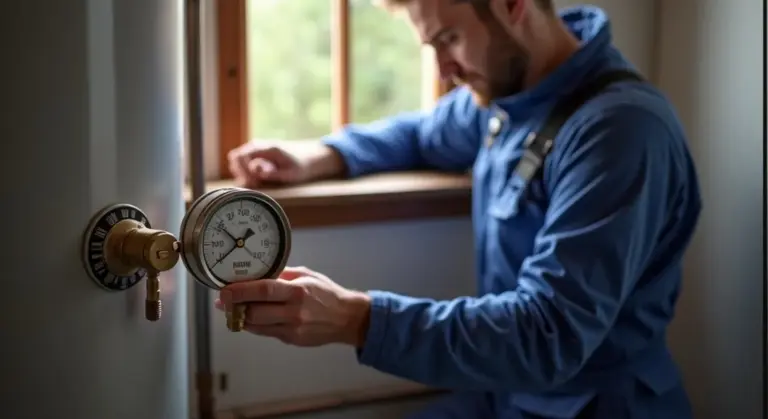
This is how you isolate a leak’s general location. You need a pressure gauge that screws onto a hose bib. Shut off the main water valve to your house. Attach the gauge to an outdoor spigot and open the spigot. The gauge will show your home’s static water pressure, usually between 40-80 PSI.
Now, watch the gauge for 15-20 minutes. If the pressure holds steady, the leak is likely somewhere in the water main running from the street to your house shut-off valve. If the pressure drops, the leak is inside your home’s plumbing, downstream of that main shut-off. Before closing, perform a pressure test to confirm there are no hidden leaks. This final check helps ensure the system is ready for occupancy.
What the Pros Use
For hidden or underground lines, plumbers use advanced tools. Acoustic listening devices amplify the sound of a leak through soil or concrete. They can pinpoint the location within a few feet.
Infrared cameras show temperature differences. A leaking cold water line will often cool the surrounding material, showing up as a dark spot on the camera. These tools are expensive and take skill to interpret. They’re necessary for finding a leak in an underground water line without digging up your entire yard.
DIY vs. Pro for Underground Lines
You can do the preliminary work. You confirmed the leak with your meter test. You isolated it to the supply line with your pressure test. You even found a soggy patch in the yard. That’s where your job ends and a pro’s begins — especially when it comes to testing, troubleshooting, and replacing the TP valve.
Trying to find the exact spot of an underground leak yourself almost always leads to unnecessary digging and bigger repair bills. A professional with an electronic leak detector or correlator can find the exact break. They dig one small, precise hole instead of a trench. In my own yard, I called a pro for a suspected main line leak. He found it under a concrete walkway in 30 minutes. I would have been tearing up sod for days.
The Water Science of a Leak: It’s All About Pressure and Flow
Your home’s plumbing is a sealed, pressurized system. Think of it like a balloon full of water. When the system is closed and working right, the pressure inside stays constant.
A leak is a hole in that balloon. The water pressure, usually between 40 to 80 pounds per square inch (PSI), constantly forces water out of that hole. The system tries to maintain that pressure, so more water flows in from the main supply to replace what’s lost.
This constant, unintended flow is what your water meter detects, and it’s the root of every high bill from a leak. Even a small leak at 60 PSI can waste thousands of gallons.
This principle is exactly how a pressure test works. When you shut off the main valve and attach a gauge, you’re capping the balloon. If there’s a hole (a leak), the pressure has nowhere to go but out that hole, and the gauge reading will fall. A tight, leak-free system will hold that pressure rock-steady. If your system uses a bladder pressure tank, also check the bladder pressure tank as part of the test. This helps ensure the tank will hold pressure during regular use.
It’s simple cause and effect. Hearing a drip or seeing a stain means the leak has found a way out. No visible signs just means the water is escaping into a wall cavity, under the slab, or into the ground. The physics are the same. Pressure forces flow, and flow moves the meter.
The DIY vs. Pro Verdict: When to Pick Up the Phone
Finding a leak is one thing. Fixing it is another. Think of it like a strange noise in your car. You can hear it’s there. That’s a 4 out of 10 on the difficulty scale. Actually pulling the transmission apart to replace the worn part is the 8 out of 10 job. Plumbing is the same.
Here is when you should stop searching and start calling a professional plumber.
- The Main Water Line: This is the pipe bringing water from the street into your home. A leak here is a big deal. It can undermine your foundation, driveway, or landscaping.
- A Slab Leak: This means a pipe has burst under your home’s concrete foundation. You’ll need specialized equipment just to find it, and repairing it involves concrete work.
- Leaks Inside Walls or Ceilings: If you hear water running in a wall but can’t see it, you need a pro. Cutting open drywall to find a leak is guesswork without the right tools.
- Any Leak You Can’t Easily Access: If the leak is behind a fixed appliance, under a finished floor, or in a tight crawl space, a plumber has the experience to get to it safely.
What a Plumber Brings to the Job
You have your eyes and ears. A professional plumber has an entire toolbox of technology designed for this. For a hidden leak, they can use acoustic listening devices to pinpoint the exact sound of water under pressure escaping. They use thermal imaging cameras to see temperature differences caused by wet spots behind walls. This technology lets them find the leak with surgical precision, avoiding unnecessary holes in your drywall or cuts in your slab.
They also have the expertise to make the correct repair. A DIY patch on a high-pressure line often fails. A plumber will know if a section needs to be replaced, if a joint needs to be resoldered, or if a compression fitting is the right permanent fix. This is especially important when dealing with sensitive areas like toilet water supply lines.
What to Expect on Cost
Prices vary wildly by location and job complexity, but these ranges will help you budget.
- Leak Detection Service: Expect to pay between $200 and $500 just for a pro to locate a hidden leak using electronic equipment.
- Repair Costs: A simple accessible pipe repair might cost $500 to $1,000. A slab leak repair typically starts around $2,000 and can go much higher. A main water line replacement can range from $1,500 to $3,000 or more.
The cost of not fixing it—in water damage, mold remediation, and wasted water—will almost always be far greater than the repair bill.
Stay Calm and Act Methodically
If you confirm a major leak, don’t panic. Your first move is to shut off the main water valve to your house. This stops the flow and limits damage immediately. Then, call your plumber. You’ve contained the problem. Now let the expert solve it.
FAQ: When should I call a professional plumber for a suspected leak?
Call a pro immediately if the leak is on your main supply line, under the concrete slab, or inside a wall or ceiling. You should also call if you’ve found the leak but lack the skills or tools to make a safe, permanent repair. It’s better to pay for one professional job than to pay for two-your repair attempt, and then theirs to fix your mistake.
Common Questions
What’s the very first thing I should do if I suspect any leak?
Immediately perform the water meter shut-off test. This confirms if you have a leak and prevents you from chasing ghosts. If the meter moves with all water off, you have a confirmed problem and know to proceed to the next step.
What is the single most reliable tool I already own for leak detection?
Your water meter is the ultimate truth-teller. Its low-flow indicator can detect leaks as small as a drip per minute. A confirmed movement on that dial with all water off is an indisputable sign you need to investigate further for potential water line problems.
I’ve confirmed a leak with my meter. How do I tell if it’s inside my house or in the yard?
Shut off the main water valve where the pipe enters your home, then re-check the meter. If it’s still moving, the leak is in the supply line between the meter and your house. If it stops, the leak is inside your home’s plumbing system.
What are the urgent, “call a pro now” signs for a main water line leak?
Act immediately if you see a suddenly soggy or eroding area in your yard, hear running water from the meter box, or experience a major, home-wide loss of water pressure. A main line leak can undermine your foundation and requires professional equipment to locate and repair.
Besides my meter, what’s one simple, cheap tool for checking hidden moisture?
A basic moisture meter from a hardware store is excellent for homeowners. It gives you a digital reading on walls and floors, turning a suspicious damp spot into confirmed data. This helps you track the severity and scope before deciding on next steps.
Stop Water Line Leaks Before They Start
The most important step is to routinely check the areas most prone to leaks, like under sinks and behind toilets, for moisture or changes in water pressure. If you spot any warning signs, act immediately-a fast response saves you money and protects your home from serious water damage.
Written by Bob McArthur. Bob is a an HVAC and plumbing industry veteran. He has professionally helped homeowners resolve issues around water softeners, heaters and all things related to water systems and plumbing around their homes. His trusted advice has helped countless of his clients save time, money and effort in home water systems maintenance and he now here to help you and give you first hand actionable advice. In his spare time, Bob also reviews home water systems such as tankless heaters, water softeners etc and helps home owners make the best choice for their dwelling. He lives around the Detroit area and occasionally consults on residential and commercial projects. Feel free to reach out to him via the contact us form.