Backflow Preventer Rules: What Homeowners Must Know About County Codes
Is dirty water flowing backward into your clean supply? You need to figure out if a backflow preventer is required for your home.
We will cover when a backflow preventer is legally required, how county-specific codes change the rules, and what key specifications you must follow.
I’ve installed and tested these devices on both job sites and my own property. Here’s the deal: ignore local requirements and you risk contamination or fines.
What Is Backflow and Why Is It a Problem in Your Pipes?
Think about your garden hose. You drop the end into a bucket of soapy water or a kiddie pool. A few minutes later, you hear a loud thump from the basement and the washing machine stops. That’s backflow in action.
Water pressure in your main line dropped because another neighbor started their sprinklers or a fire hydrant was used. That drop in pressure created a siphon, sucking the dirty water from your hose backwards through your pipes and into your home’s clean water lines. Now your washing machine and your kitchen faucet are connected to that dirty water.
This happens two main ways. The garden hose example is back-siphonage. The other is back-pressure, which is when a pump or boiler in your home creates more pressure than the incoming city water, forcing your home’s water back into the public main.
What gets sucked back in? You name it:
- Fertilizer and pesticides from an irrigation system.
- Soapy water or pool chemicals.
- Anti-freeze or corrosion inhibitors from a boiler or radiant heat system.
- Car wash detergent from a dedicated workshop faucet.
Installing a backflow preventer isn’t just good practice, it’s the law in most areas to protect the entire public water supply from contamination originating on your property. Your local water authority treats this with the same seriousness as a health code violation. For irrigation systems, this means you should install and regularly maintain a sprinkler backflow preventer. Proper maintenance helps ensure continued protection of your home’s water supply.
Am I Required to Have a Backflow Preventer? Common Triggers.
A backflow prevention device is required when there is a direct physical connection between your potable (drinkable) water line and a source of potential contamination. This connection is called a cross-connection.
Imagine two straws in one drink. One straw goes to you (clean water), the other goes into a cup of motor oil (contaminant). If the pressure changes, the motor oil can get pulled into your drink. A backflow preventer is a one-way valve that keeps the motor oil straw from ever flowing backwards.
Home Systems That Almost Always Need a Preventer
If your house has any of these, you likely need a device installed and tested annually:
- Lawn Irrigation Systems: The most common requirement. Fertilizer and animal waste in the soil can be drawn back into pipes.
- Boiler/ Radiant Heat Systems: These closed loops contain chemicals and anti-freeze you do not want in your drinking water.
- Pool or Hot Tub Fill Lines: Chlorine and other pool chemicals are a major contaminant.
- Dedicated Workshop or Utility Sinks: Often used with hoses for car washing or chemical mixing, creating a risk.
Where You Usually Don’t Need One
Not every appliance needs one. A standard water softener installed on a pressurized loop typically does not require a separate backflow preventer. The softener itself is a closed tank under constant water pressure, so there’s no easy path for the brine to siphon back. The same often goes for a standard water heater.
Some people ask, “Are backflow preventers really necessary?” I get it, it seems like one more code hassle. Then I think about a service call from years ago. A homeowner had a hose connected to a chemical sprayer in their basement utility sink, with the end submerged in the tank. A water main break down the street caused a massive pressure drop. You can understand why backflow prevention in sinks is crucial.
The siphon pulled concentrated herbicide back through their pipes, through their water softener, and out their kitchen tap. The entire household got sick. The cleanup and repairs cost tens of thousands. That one $75 backflow preventer would have stopped it completely.
The Plumbing Code and Cross-Connection Control: What You Must Know
Think of the national plumbing code like a recipe book. It gives you the ingredients and basic instructions. Your local county is the chef who can change the recipe. They use model codes, mainly the International Plumbing Code (IPC) or the Uniform Plumbing Code (UPC), as their starting point. These model codes set the baseline safety rules for preventing contaminated water from flowing backward into your home’s clean supply, which is called cross-connection control. Every rule you find online starts here, but it’s never the final word.
Degree of Hazard: Pollutant vs. Contaminant
Your county doesn’t treat all backflow risks the same. They categorize them by “degree of hazard,” and getting this right tells you what kind of preventer you need. You have two categories.
- Pollutant (Low Hazard): This is water that has a change in taste, color, or odor but isn’t a direct health threat. Examples include water with food-grade dye, boiled water, or water with common minerals from a water softener’s brine tank.
- Contaminant (High Hazard): This poses a clear danger to human health. This includes anything chemical, biological, or toxic. Think lawn fertilizer in an irrigation system, coolant in a boiler, or bacteria from a submerged garden hose.
The basic rule is simple: a contaminant requires a more robust, testable backflow preventer than a pollutant does. If you’re connecting your sprinkler system (where pesticides might be present), you’re dealing with a high hazard. The water line to your humidifier on a furnace is typically a low hazard.
Your Local Code is the Law
Here is the only piece of advice you must remember. Your local county or city plumbing code always overrides any general information you read online, including this article. The county can amend the model code. They decide which devices are approved, who can install them, and how often they must be tested. I learned this the hard way on a service call years ago. A homeowner installed the “right” device according to the UPC, but his town had a stricter amendment requiring a different model. He failed the inspection and had to redo the work.
Before you buy a single part, call your local building department or visit their website. Ask for their cross-connection control ordinance. This document is your actual guide.
Common Types of Backflow Preventers
You’ll hear three main acronyms. Each serves a different level of protection for different applications.
- Atmospheric Vacuum Breaker (AVB): This is a simple, inexpensive device for low-hazard connections. You commonly see these on outdoor hose bibs or lawn sprinkler systems. It only works if it’s installed at least 6 inches above the highest point of water use and is not under constant pressure. If you leave your garden hose connected and pressurized all summer, you’ve defeated it.
- Pressure Vacuum Breaker (PVB): A step up from the AVB. It’s used for irrigation systems and is also for high-hazard contaminants. Like the AVB, it must be installed above ground and 12 inches above the highest sprinkler head. It has test ports and must be inspected annually by a certified tester in most counties.
- Reduced Pressure Zone Assembly (RPZ or RPBA): This is the top level of protection. It’s used for high-hazard, constant pressure connections. You’ll find these protecting the main water line to a commercial building, a hospital, or a home with a complex boiler system or a well with chemical injection. An RPZ has two independent check valves and a relief valve that dumps water if pressure drops, and it requires professional installation and annual testing.
For example, my home irrigation system uses a PVB because my local code requires it for any lawn system. My outdoor faucets have simple AVBs screwed onto the hose threads. That’s the typical homeowner setup.
How to Find Your County’s Specific Requirements and Specifications.
Local codes are the final word on backflow prevention. What works in one county can fail inspection in the next. You need to find your specific rules.
Your first stop is a web search using the right terms. Do not just search “backflow preventer code.” Be specific. Open your browser and try these exact phrases one by one.
- “[Your County Name] plumbing code backflow preventer”
- “[Your County Name] cross connection control program”
- “[Your County Name] water authority backflow requirements”
Look for results ending in.gov. Click on links for the Department of Public Works, Water Quality Division, or Building and Safety. These sites often have a “Codes and Ordinances” section. The document you want might be called the “Plumbing Code” or “Cross-Connection Control Manual.” It is usually a PDF.
Download it and use the search function (Ctrl+F) for “backflow,” “preventer,” or “assembly.” This will jump you to the relevant sections.
Reading the code online is only half the battle. You must call your local water authority for final clarification. I have seen websites be outdated by years. A five minute phone call can save you from buying the wrong device or failing an inspection.
Find the phone number for your county’s Water Department or Building Inspection office. Have your address ready. Ask these questions: “What type of backflow preventer is required for a residential irrigation system?” and “Do you have a list of approved models?” and “What is the inspection process after installation?” Write down the name of the person you speak with and what they said.
You will likely need a permit, and you cannot skip it. If you are installing a new backflow preventer or replacing an old one, a permit is almost always required. It is not optional.
When I added a preventer to my own home’s sprinkler system, the permit cost $65. In other areas, I have seen fees from $50 to over $200. You apply for the permit, usually in person or online, and pay the fee. This triggers an inspection. Skipping the permit risks serious fines, voids your home insurance for related damage, and can lead to your water service being shut off.
Many counties keep a list of approved backflow preventer models that you must use. They test and certify devices that meet their specific standards. Using a model not on this list is an automatic fail, as it may not comply with accepted backflow prevention methods and devices.
This list is often found on the water authority’s website, attached to the code document, or given to you over the phone. Before you buy any hardware, check this list. A common pitfall is buying a “universal” model from a big box store only to learn it is not approved in your county.
Tools and Steps for a Proper Backflow Preventer Installation.

Getting the right tools is half the battle. A sloppy install will fail inspection. It will also let you down when you need it most.
Tools and Material Checklist
Before you cut a single pipe, gather everything. Missing one item means a trip to the hardware store mid job. Here is what you need on your bench.
- Two pipe wrenches (one to hold, one to turn).
- A tube cutter for copper or a PEX cutter for PEX lines.
- The correct joining tools: a propane torch and solder for copper, or the specific crimping or expansion tool for your PEX type.
- Sealants: Teflon tape for threaded joints and pipe dope (thread sealant) for a more reliable seal on pressurized connections.
- The correct pipe material and fittings to match your home. Do not mix systems without the proper transition fittings.
- A level. This is non negotiable.
Match your pipe material exactly. Splicing a copper preventer into a PEX line requires the right transition coupling, not just hope and a prayer.
Critical Installation Specifications
The code book is specific for a reason. These rules prevent the device from failing. Ignore them and your install is useless.
Height and clearance are your first priorities. Most codes require the device to be installed at least 12 inches above the highest downstream outlet or sprinkler head. This is the critical air gap. Measure from your highest sprinkler, not the ground.
Provide drainage. Many preventers have relief valves that will discharge water. They must be installed in a location where that water can drain safely away, not into your wall or basement.
Leave room for testing. A certified tester needs clear access to the test cocks (the small valves on the device). Do not bury it behind drywall or cram it into a corner.
Protect from freezing. If installed outside or in an unheated space, the device and all piping must be insulated or, better yet, installed in a heated valve box. A frozen backflow preventer will crack and is a costly repair—make sure to winterize backflow preventers to prevent sprinkler freeze damage.
Why Horizontal Installations Fail
You might be tempted to install it sideways to fit a tight space. Do not do it. Horizontal installations almost always fail code and inspection.
The internal checks and relief valves inside the device are designed to work with gravity in a vertical position. On its side, a single grain of sand or piece of scale can prevent a valve from sealing. This defeats the entire purpose. The inspector will see a horizontal install and fail you on the spot. It is one of the most common DIY mistakes I see on service calls.
Hiring a Plumber vs. DIY: Legal and Testing Reality
This is the big decision. You can install it yourself, but you must understand the consequences.
In nearly all counties, only a licensed plumber can pull the permit for this work. If you DIY, you cannot get the permit legally. Without a permit, you cannot get the required inspection. An uninspected backflow preventer is the same as not having one in the eyes of your water utility and your insurance company.
Even if you install it perfectly, you cannot test it yourself. Annual testing must be performed by a certified backflow tester. Most testers will only test devices installed by a licensed professional with a permit, because their license is on the line.
My advice? Hire the plumber. The cost includes the permit, the guaranteed correct installation, and the peace of mind that the system is legal and testable. The only time I did my own was on my own property’s secondary irrigation line, where I was willing to accept the liability and knew I’d be the one maintaining it forever.
Code and Compliance Check: The Inspection and Testing Process.
Passing inspection is your goal. Here is exactly what happens next.
The Initial Inspection
Once installed, a city or county inspector will visit. They are not testing the device’s function yet. They are checking the installation against code. They will look for:
- Correct vertical orientation.
- Proper height above the highest outlet.
- Adequate support for the piping (no stress on the device).
- Correct pipe material and proper soldering or crimping.
- Appropriate drainage for relief valves.
- Accessibility for testing and maintenance.
If anything is wrong, they will “red tag” the install. You must fix the issues and pay for a re inspection.
Annual Certified Testing
After the install passes, the real ongoing work begins. Your backflow preventer must be tested every single year by a certified professional. This is not a suggestion. Your water provider will send reminders, and they can shut off your water for non compliance.
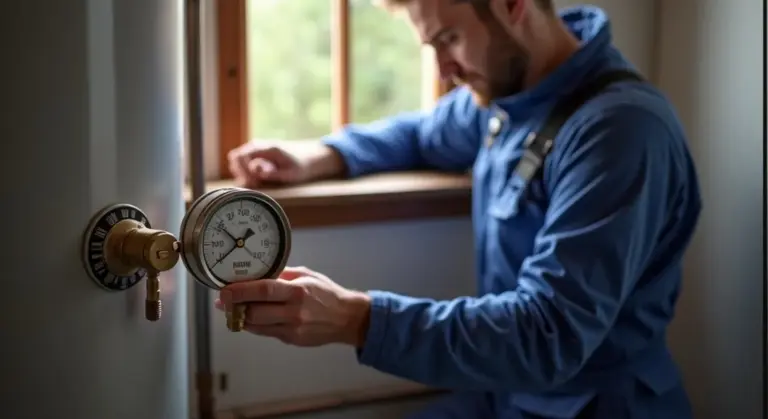
The tester uses specialized gauges to measure pressure differentials across the internal valves. They shut off downstream valves and open test cocks to see if the check valves hold and the relief valves open at the correct pressure. If it fails, you must repair or replace it immediately and have it retested.
The Paperwork You Must Keep
Do not lose these documents. Keep them with your home files.
- The initial Certificate of Installation from your plumber.
- The Passed Inspection Report from the city or county.
- Every single Annual Test Report from the certified tester. These are usually submitted to the water provider, but you need your copy.
Think of these test reports like receipts for a major appliance. They prove you maintained a critical safety system, which matters for liability and if you ever sell your home.
Keeping Your Backflow Preventer Working: Maintenance and Troubleshooting.
Think of your backflow preventer like the emergency brake in your car. You trust it’s there, but you need to know the signs it’s failing before you’re on a hill. A failed unit is a silent emergency.
Your first line of defense is a quick visual check every few months. Look for leaks, damage, or any obvious problems. Keep the area around it clear of weeds, dirt, and storage. A buried or blocked preventer can’t be serviced properly and will likely fail its annual test.
The “Red Flag” Troubleshooting Guide
Here’s what to look for between professional inspections. If you see any of these, it’s time to call a certified technician.
- Leaking Test Cocks: Those small valves used for testing should be completely closed and dry. A drip or stream means the internal o-ring is shot. This is usually an easy fix.
- No Water Flow Downstream: If you have no water at an irrigation zone or a specific faucet, the check valves inside the preventer may be stuck closed. The unit might need cleaning or replacement.
- Constant Drip from the Relief Valve (Air Gap/Spillover): A steady drip or stream from the vent on a reduced pressure zone (RPZ) model means an internal valve has failed. This is a critical failure and needs immediate professional attention.
- Visible Corrosion or Mineral Buildup: Heavy rust or scale, especially around moving parts, means the internal components are likely compromised. Replacement is often safer and cheaper than repair.
- Failure on the Annual Test Report: This is the most important red flag. If your certified tester hands you a failed report, you have a set time (often 15-30 days) to get it repaired or replaced and retested. Do not ignore this paper.
You must have a licensed professional test your backflow assembly every single year. This is not a suggestion. It’s a county and city code requirement for a reason. The test checks the internal spring tensions and valve seals that you can’t see. It’s like getting your car’s brakes inspected. You do it to prevent a catastrophic failure you won’t see coming. Make sure you find a certified backflow tester for the job.
Water Science Snippet: How Pressure and Plumbing Create Risk.
Your home’s water pressure (PSI) is a constant push from the city main. It’s what sends water up to your second-floor shower.
Now, imagine a water main breaks two streets over, or firefighters open a hydrant. The pressure in the main can suddenly drop. This drop can create a vacuum, or suction, inside your home’s pipes. Water wants to flow from high pressure to low pressure.
This suction can literally pull water backwards from your house, your garden hose in a bucket, or your boiler system, and siphon it all back into the public drinking water supply. This is called backsiphonage. A mechanical backflow preventer uses springs and seals to physically block this reverse flow, protecting the community water from whatever is in your pipes. If you’re installing or upgrading a boiler system, consider adding a backflow preventer. It’s a simple, effective safety measure to stop backsiphonage at the source.
Quick Answers
1. Can I be fined for not having a backflow preventer?
Yes. Your local water authority can issue significant fines for non-compliance. In severe cases, they can even shut off your water service until the proper, inspected device is installed.
2. I already have an irrigation system. How do I know if it’s protected?
Look for a valve assembly above ground, typically near where your water line exits the house to feed the sprinklers. It will have test cocks (small, threaded valves). If you don’t see one, check your paperwork or call a local irrigation company for an inspection.
3. Is the annual test really mandatory, and who does it?
Absolutely. It’s a code requirement, not a suggestion. You must hire a certified backflow assembly tester-often a licensed plumber or a specialized technician-to perform the test and file the report with your water provider.
4. What’s the biggest mistake homeowners make with these devices?
Installing the wrong type for their county or hazard level. Never assume a device from a big-box store is approved. Always check your county’s approved model list first to avoid a failed inspection.
5. How do I protect my backflow preventer from freezing?
If it’s installed outside, you must insulate it with a specialized, heated valve box or schedule a professional to winterize it by draining the assembly. A frozen preventer will crack and is not repairable.
Your Next Steps on Backflow Prevention
Forget the general rules; your local plumbing code has the final say on backflow prevention. Your very first move should be to contact your county’s building or health department to get their specific requirements in writing. Get your property inspected to confirm which devices you need, then hire a licensed plumber who knows how to install and test them correctly for your area, including the proper location and orientation of backflow preventers.
Written by Bob McArthur. Bob is a an HVAC and plumbing industry veteran. He has professionally helped homeowners resolve issues around water softeners, heaters and all things related to water systems and plumbing around their homes. His trusted advice has helped countless of his clients save time, money and effort in home water systems maintenance and he now here to help you and give you first hand actionable advice. In his spare time, Bob also reviews home water systems such as tankless heaters, water softeners etc and helps home owners make the best choice for their dwelling. He lives around the Detroit area and occasionally consults on residential and commercial projects. Feel free to reach out to him via the contact us form.