Sprinkler Backflow Preventers: What They Do and Which One You Need
You turn on your sprinklers to water the grass, not to siphon fertilizer and dog runoff back into your kitchen sink. A backflow preventer stops exactly that.
We will cover what a backflow preventer actually does, the main types you’ll find, how they get tested, and how to choose the right one for your setup.
I’ve seen what happens when one of these valves fails. Mine clogged last spring. The fix took an afternoon, but it beats the alternative. Get this right. Your house needs one.
Why Your Sprinkler Needs a Backflow Preventer: The Core Function
Think of your home’s water pipes like a garden hose. When the water is on, pressure pushes it out the sprinkler head. Now imagine dropping that hose nozzle into a muddy puddle. If the water pressure at your house drops suddenly, that dirty water can get sucked right back up the hose and into your pipes.
That suction effect is backflow. In your sprinkler system, the “dirty puddle” is your lawn water, which contains fertilizer, pesticides, and animal waste. The sole job of a backflow preventer is to stop that contaminated water from reversing course and poisoning your home’s clean drinking water supply. Understanding how backflow preventers compare to anti-siphon valves helps you choose the right protection. Your setup may use either approach, or a combination, depending on local codes and irrigation layout.
This is not optional. Virtually every city and county in the U.S. mandates a code approved backflow preventer on any irrigation system tied to the potable water supply. It protects everyone on the municipal line, not just you. County requirements and specifications vary by jurisdiction. Check your local county guidelines for the exact backflow device and testing rules.
A common mix up is the curb stop, that valve in a box by the street. That valve only shuts off all water to your house. It does nothing to stop a reversal of flow inside your pipes. You need a dedicated backflow prevention device.
How a Sprinkler Backflow Preventer Actually Works
The core principle is simple: it creates a one way street for water. Clean water from your house can flow out to the sprinklers, but water from the sprinkler line cannot flow back in.
It guards against two specific problems. The first is back siphonage. This happens when there’s a major drop in your home’s water pressure, like during a water main break or when a fire truck hooks up to a hydrant. The suction can pull sprinkler water backward. The second is back pressure. This occurs when pressure in the sprinkler line becomes higher than the pressure in your home pipes, often from a pump or elevation change, forcing water the wrong way.
Mechanically, you can picture it like a door with a heavy spring that only lets you push it open one way. If pressure or suction tries to push from the other side, the door slams shut and locks.
All backflow preventers use a series of internal check valves to create this one way flow. The different types, which we’ll cover next, are defined by how many valves they have and their specific “fail safe” design. Some dump water out a drain port if they detect a fault, while others use multiple independent barriers.
The 4 Main Types of Sprinkler Backflow Preventers Explained
Here is a straightforward guide to the common models you will see in residential yards. Knowing which one you have, or need, will save you time and trouble.
Atmospheric Vacuum Breaker (AVB): The Simple Sprinkler Sentinel
An Atmospheric Vacuum Breaker is a simple device. It has a valve that lets air in. This valve opens if the water pressure in the supply line drops. When it opens, it breaks the suction that could pull dirty water backwards into your clean lines.
Its main advantage is its low cost and simple design with no springs to fail.
But it has strict rules. You cannot have constant pressure downstream of it, like from a pump. It also must be installed at least 6 inches above the highest sprinkler head in that zone. If you bury it or install it wrong, it does not work.
Use an AVB for basic setups. This includes a single hose bib connection or a simple sprinkler zone without any booster pumps.
Pressure Vacuum Breaker (PVB): The Common Yard Guard
The Pressure Vacuum Breaker is like an AVB with an upgrade. It adds a spring-loaded check valve on the inlet side before the air inlet valve. This first check valve helps maintain pressure in the system, which lets you service multiple zones.
This is why the PVB is the most common type for whole-house residential sprinkler systems. It offers solid protection for moderate hazards, like the fertilizers and weed killers used on a typical lawn.
Like the AVB, it has a critical installation rule. The PVB must be installed 12 inches above the highest point of water use, like the highest sprinkler head. You will often see these mounted on an exterior wall of a house or garage.
Double Check Valve Assembly (DCVA): The Underground Workhorse
A Double Check Valve Assembly uses mechanics, not air. Its design is two independent spring-loaded check valves in a row. If one fails, the other is meant to act as a backup to stop backflow.
A double check valve is often approved for lawn sprinklers where the hazard is considered low, but you must always check your local plumbing code.
Its biggest practical benefit is location. A DCVA can be installed underground in an irrigation box. You do not need to see it on your house wall. This is a plus for curb appeal.
The limitation is safety level. A DCVA is for low-hazard situations only. It lacks an air inlet valve, so it cannot protect against a simultaneous pressure drop and check valve failure like a vacuum breaker can.
Reduced Pressure Zone (RPZ) Assembly: The Maximum Security Unit
The Reduced Pressure Zone assembly is the most complex. It has two check valves with a monitored chamber between them. If pressure shifts, a relief valve in this chamber dumps water to the ground. This keeps contaminated water from passing back into the supply line.
Think of an RPZ as the gold standard for protecting potable water from high hazards, like industrial chemicals or boiler systems.
It is serious overkill for a typical home lawn. An RPZ is also expensive, large, and requires annual professional testing. For most homeowners, it is not the right choice.
You might need one if your local code requires it for properties with well water and chemical injection systems. They must be installed above ground in a freeze-proof enclosure. Be warned, they can be noisy when the relief valve opens and dumps water.
How to Choose the Right Backflow Preventer for Your Lawn
Choosing the right device is a process. Follow this simple text flowchart.
- Start with this question: What does my local plumbing code require? Call your city’s building department.
- If code allows options, identify your hazard level. Is it just lawn fertilizer (moderate) or something more severe?
- Consider your water source. City water mandates are strict. Well water on your own property may have different rules.
- Look at your installation site. Do you have a place 12 inches above everything to mount a PVB? Or do you need a buried DCVA?
- Factor in long-term costs. Simpler devices like AVBs are cheap but have limits. RPZ assemblies need annual professional testing fees.
Your local plumbing code trumps every article, video, or neighbor’s advice. The inspector has the final say.
This quick-reference table compares the four main types.
Hazard level is key. Low hazard means something that would be a nuisance, not a health threat. High hazard involves anything toxic or pathogenic. Your water source matters. City water protects a public supply, so codes are strict. With a private well, you are primarily protecting your own household, but local codes may still apply. Regular testing is essential for both well water and municipal water. It helps you understand how a private well stacks up against city testing standards and which tests are needed.
Tools, Installation, and the DIY vs. Pro Verdict
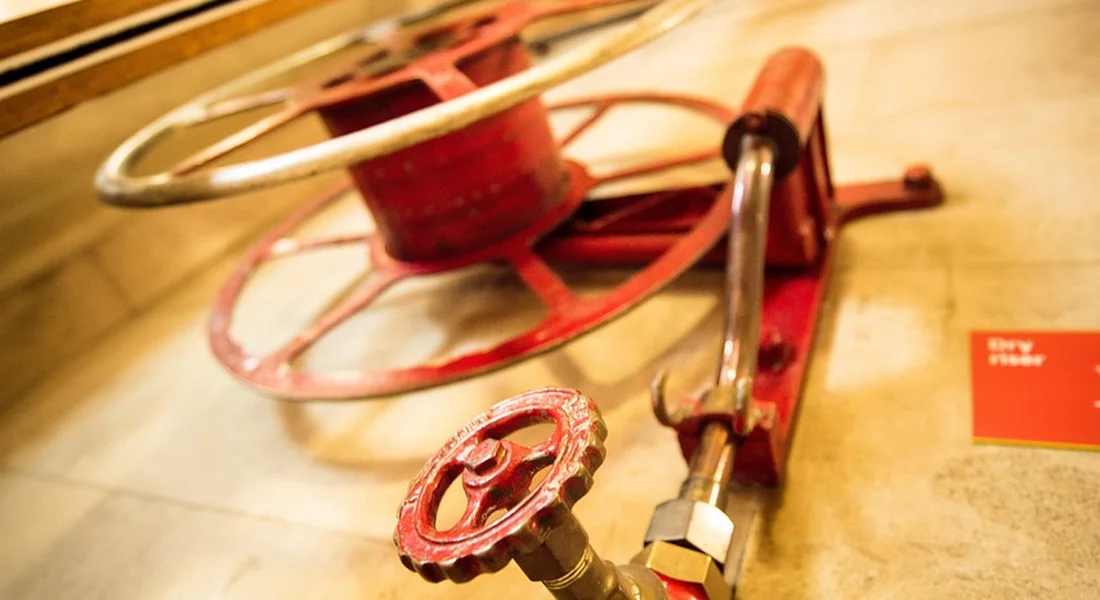
Installing a backflow preventer yourself is about a 7 out of 10 on the difficulty scale. Getting the pipes cut and fitted is one thing. Getting the installation to pass your local plumbing code is the real challenge. It’s even more challenging when you install a sprinkler-specific backflow preventer.
Tools & Materials Checklist
Before you start, gather everything you need. You don’t want to be halfway through and realize you’re missing a fitting.
- Tools: Two pipe wrenches (one to hold, one to turn), a tubing cutter for copper or PEX, a hacksaw with a fine-tooth blade for PVC, Teflon tape or pipe thread sealant, screwdrivers, and an adjustable wrench.
- Materials: The correct backflow preventer unit, the right pipe (PVC, copper, or PEX) and matching fittings, unions to connect the preventer (this lets you remove it later without cutting the pipe), and foam pipe insulation if the unit will be above ground in a cold climate.
Always install unions on both sides of the preventer; the one time I didn’t, I had to cut out a perfectly good unit just to replace a valve downstream.
Key Installation Rules for Each Type
Each preventer type has specific rules. Ignoring them means it will fail inspection.
- Height is critical for AVBs and PVBs. An Atmospheric Vacuum Breaker (AVB) must be installed at least 6 inches higher than the highest outlet in your sprinkler system. A Pressure Vacuum Breaker (PVB) has a giant air inlet valve on top that must be at least 12 inches above the highest sprinkler head.
- The preventer needs solid support. Mount it securely to a wall or post so the pipes aren’t holding its weight. You cannot install any other valve, tap, or connection downstream of the preventer, as this could create a cross-connection.
- Plan for winter. In freezing climates, the unit must be installed in a heated space or be fully drainable. Many installers add drain ports with ball valves before and after the unit to make winterization a one-minute job.
When to Call a Licensed Professional
Be honest about your skills. If you’re handy, you can likely handle the physical assembly of pipes and the preventer in your basement or irrigation manifold. The licensed plumber is needed for two non-negotiable reasons: making the final, legal connection to your home’s main water line, and performing the mandatory initial test, especially for installations like water heaters where permits are required.
Only a certified backflow tester can perform the test and provide the official report your water authority requires. This makes calling a pro essential for passing inspection. The same goes for repairs. If the relief valve leaks or a check valve inside sticks, those internal parts require a certified technician with the proper test kit to verify the repair worked. DIY repairs are not recommended, especially when it comes to repairing and rebuilding the backflow preventer.
Testing and Maintaining Your Backflow Preventer
Once it’s installed, your job shifts from builder to overseer.
Most local codes require annual testing by a certified professional, and this is not a task for a homeowner. The tester uses specialized gauges to measure pressure differentials across the check valves and verifies the relief valve opens and closes at the exact right pressures. They submit the report directly to the water authority.
Your maintenance as a homeowner is simple but vital:
- Perform a visual inspection every few months, especially when the system is running. Look for any drips or leaks from the relief valve or body.
- Ensure the unit is not buried by dirt or landscaping materials and is free from physical damage.
- Winterize it properly. Before the first hard freeze, shut off the water supply, open the test cocks on the RPZ or the drain valves on a PVB, and let all water drain out to prevent catastrophic freeze cracks.
Common problems are a steadily dripping relief valve on an RPZ or reduced water flow indicating a stuck check valve. Do not try to take the unit apart yourself. Internal repairs affect its calibrated operation and must be done by a certified technician who can retest it on the spot. Your role is to notice the problem and make the call.
Common Questions
How often does my backflow preventer need professional testing?
Most local plumbing codes require annual testing by a certified technician. This isn’t a suggestion-it’s a mandatory safety check to ensure the internal valves are sealing perfectly. Schedule this test yearly to stay compliant and keep your water safe.
Which type is easiest to winterize in a cold climate?
A Pressure Vacuum Breaker (PVB) is typically the simplest. You just shut off the water, open its test cocks and downstream ball valve, and it drains completely. Devices like RPZs or DCVAs in pits have more complex drainage needs, so always follow your installer’s winterization steps exactly.
What’s the most common installation mistake you see?
Installing a PVB or AVB too low. If the device isn’t at least 6-12 inches above your highest sprinkler head, it cannot function properly. Always measure from the highest emitter, not just the ground-a slope or raised bed can trick you.
I see a drip from my device. Should I panic?
Don’t panic, but act. A small drip from a PVB’s air inlet or an RPZ’s relief valve during system shutdown can be normal. A steady leak while the system is pressurized or running is not. Shut the system off and call a certified tester for diagnosis; never ignore it.
Can I upgrade my old backflow preventer myself?
You can handle the physical swap if you’re skilled, but the law and safety say get a pro. The final connection and, crucially, the initial performance test must be done by a licensed technician to be legal and valid. This ensures your upgrade actually protects your water.
Make Your Backflow Prevention Reliable
Test your backflow preventer every spring before you turn on the sprinklers. Pick the right type for your home’s water pressure and follow local codes to keep your drinking water safe. Also, make sure to winterize your backflow preventers to prevent damage from freezing temperatures.
Bob is a an HVAC and plumbing industry veteran. He has professionally helped homeowners resolve issues around water softeners, heaters and all things related to water systems and plumbing around their homes. His trusted advice has helped countless of his clients save time, money and effort in home water systems maintenance and he now here to help you and give you first hand actionable advice. In his spare time, Bob also reviews home water systems such as tankless heaters, water softeners etc and helps home owners make the best choice for their dwelling. He lives around the Detroit area and occasionally consults on residential and commercial projects. Feel free to reach out to him via the contact us form.