Find and Mark Buried Water Lines Before You Dig
You’re about to swing a shovel or fire up a trencher. Hitting a buried water line means a flooded yard and a huge repair bill.
This guide walks you through the reliable methods. We will cover calling 811 for public utility marks, using a pipe locator for private lines, reading your home’s plumbing blueprint, and the right way to mark the ground.
I’ve fixed service lines snapped by backhoes and marked my own main for a shed foundation. Verify your lines first-it’s the only way to dig with confidence.
What You’re Actually Looking For in Your Yard
Before you start poking around, know what the pipes are called. This isn’t just plumbing jargon. It tells you who is responsible for fixing what when (not if) something goes wrong.
The Three Main Lines
Think of your home’s water system like your body and your house.
- The Main Supply Line (Street Main): This is the city’s artery. It’s the big pipe running under the street that feeds the whole neighborhood. You don’t own it, but you need to know where it is so you don’t hit it.
- Your Service Line: This is your private driveway for water. It’s the pipe that branches off the city main and runs to your property line, usually to a water meter or a curb stop (your outdoor shutoff valve). This is typically your responsibility from the meter into the house.
- Your Household Lines: These are the hallways inside your home. They start where the service line enters your basement or crawlspace. They branch off to every faucet, toilet, spigot, and appliance.
Your service line is the most critical buried pipe for you to locate and mark before any digging. A leak or break here means your entire house is without water until it’s fixed.
Common Branches You Might Need
From those household lines, you’ll find branches. Two common ones in our world are the water softener loop and filter lines. If you’re adding or servicing a softener or whole-house filter, you need to trace where these lines split off and where they go into the ground, if they do. I once helped a neighbor who was extending his patio. He knew where his main came in but forgot about the softener drain line that ran outside to a dry well. His backhoe found it for him.
Why Finding Them First Saves Your Wallet and Back
This isn’t a suggestion. It’s the rule. I’ve been on too many service calls where a weekend project turned into a very expensive, very wet disaster.
Hitting a buried water line with a shovel, trencher, or excavator causes a cascade of problems:
- Immediate Water Loss: You must shut off the water at the street to stop the geyser. Now your house has no water for drinking, toilets, or showers until it’s fixed.
- Costly Emergency Repairs: Calling a plumber for an emergency dig-and-repair on a weekend costs a fortune. If you damage the city’s main, you’re liable for that, too.
- Landscape and Property Damage: The pressurized water will erode soil, flood your yard and basement, and can undermine foundations or pavement.
- Damage to Other Utilities: The force of the water can shift other buried lines, like gas, electrical, or fiber optic cables, creating even more danger and expense.
Hitting a buried water line can shut off your home’s water and cost thousands to repair. The repair bill is just the start. You also pay for the water lost, the restoration of your yard, and sometimes fines for not calling 811 (the “Call Before You Dig” number) first.
This step is required before any digging project. Planting a tree? Putting in a fence post? Building a shed? You must locate these lines. Even a simple post hole digger can puncture a shallow irrigation line or a poorly buried service line. The few hours it takes to locate them properly can save you tens of thousands of dollars and weeks of headache.
Your First and Most Important Call: Does 811 Find Water Lines?
Yes, 811 can find water lines. The free “Call Before You Dig” service exists to mark public utility lines, which include the main water supply pipe running from the street to your property’s meter. This is your single most important step to avoid a catastrophic and expensive mistake when you need to locate and shut off water lines.
Utility companies, often referred to as “Miss Utility” or “One Call” centers depending on your state, will send locators to your property for free. They mark the lines they own and are responsible for maintaining. They use specific color codes with spray paint or flags so you know what’s buried where.
What 811 Marks (And What It Doesn’t)
Understanding the limits of this free service saves you a major headache later. Locators only mark the utility-owned lines up to your meter. Everything from the meter into your house is your private property and your responsibility.
Think of it like a property line. The utility company owns the pipe from the main in the street to the meter at the edge of your property. You own the pipe from the meter to your house and every branch line inside it. The 811 technician will not trace your private irrigation lines, your well supply line, or the pipe from your meter to your basement.
The Exact Steps to Call 811
The process is standardized, but timing is key. Do not call the day before you plan to dig.
- Mark your planned dig area with white paint. Use white spray paint or flags to outline exactly where you will be digging. This gives the locator a clear map.
- Call 811 or make an online request at least 3 full business days before you dig. “Business days” means weekends and holidays don’t count. Calling on a Monday means locators will come by Thursday.
- Provide your exact address and details about your project. The service will notify all relevant utilities (gas, electric, water, telecom).
- Wait for the locators to visit. Different utility companies may send different people on different days. They will mark the ground with color codes.
- Respect the marks and dig carefully. The law requires you to dig with care. Use hand tools within 18-24 inches on either side of a marked line.
How to Read the Spray Paint and Flag Markings
Those colorful lines and flags are a standardized language. Here is what each color means:
- Red: Electric power lines
- Yellow: Gas, oil, or steam pipes
- Orange: Communication lines (phone, cable, fiber)
- Blue: Potable water lines
- Green: Sewer and drain lines
- Pink: Temporary survey markings
- White: Your proposed excavation area
The blue markings are your public water line. They will typically run in a straight line from the street to a box or pit containing your water meter. These marks are not permanent. Rain, foot traffic, and mowing will erase them, so complete your digging project promptly after they are placed.
FAQ: How Do I Locate My Private Main Supply Line?
Once the public side is marked in blue up to your meter, finding the private supply line to your house is your next job. Start at your water meter. The pipe coming out of the “house side” of the meter is your main supply line. It will typically head in a straight line toward the foundation of your home. Along the way, watch for signs of a leak such as damp soil or pooling water around the line. If you notice anything suspicious, it could indicate a leaking home water line and may guide your next steps.
If the path is not obvious, you have a few practical options. You can carefully use a thin metal probe rod to feel for the pipe a few inches underground, starting near the meter. Go slow and don’t use force. For a more tech-based solution, you can rent a pipe locator from a tool rental store. This device sends a signal through a metal pipe that you can trace with a receiver. For plastic pipes, a technician must insert a special tracing wire or rod into the line.
In my own projects, I always look for the straightest, most direct path from the meter to where the pipe enters my basement or crawlspace. That line rarely has sharp turns unless it was installed to avoid another obstacle.
Tools and Materials Checklist for the Job
Don’t start digging. Get your tools lined up first. This saves time and prevents damage. Here is everything you’ll need, broken down by category.
Physical Digging and Probing Tools
These are your hands-on tools for confirming what’s underground.
- Metal Probe Rod: This is a thin, rigid steel rod, often with a T-handle. You carefully push it into the soil to feel for pipes. Mine is a five footer. You’ll feel a distinct “clunk” or change in resistance when you hit something solid.
- Round-Point Shovel: Use this for careful excavation after you’ve located something. A square shovel is for moving dirt, a round point is for digging. Go slow.
- Utility Flags: Small, wire flags you push into the ground. They are your visual markers for “something is here.” Use different colors if you find multiple lines.
- Marking Paint: This is spray paint made for grass and dirt. It’s how you draw a clear line on the surface above the buried pipe. Blue is the standard color for potable water.
Always call 811 or your local utility locating service before you probe or dig, even in your own yard. They mark the public lines to your property for free. Your job is to find the private lines on your side.
Electronic Locating Tools
For pipes you can’t easily probe, technology helps.
- Basic Pipe Locator (Transmitter/Receiver): This is a two-part unit. You connect the transmitter to a metal part of the pipe, like the house shutoff valve. It sends a signal through the pipe. You then walk with the receiver, which beeps or shows a reading when it detects that signal underground.
You can rent a decent basic locator from most major tool rental centers or plumbing supply houses for a day. Tell them you need to trace a private water line. They often have simple models perfect for this one job. While you’re at it, consider choosing pipes installation practices that simplify future tracing. This small planning step can save time and digging later.
Information and Planning Tools
Your best tool is often free. It’s information.
- Property Plot or Site Plans: Check the documents you got when you bought your house. The surveyor’s plot plan sometimes shows the approximate location of the water service line from the street to the house. It’s a starting point, not a guarantee.
- Your Own Records and Eyes: Think back. Where did the plumber work when your water heater was installed? Look for a straight line from your water meter (at the street) to where the pipe enters your basement or crawlspace. Outside, look for a faint depression in the lawn or a line of different grass. These are clues.
Cheap vs. Professional Tool Options
You have choices. Your project scope decides which is right.
The cheap method uses a metal probe rod, flags, and paint. It works if your pipe isn’t too deep (under 2 feet) and you have a general idea of its path. You probe every few inches along the suspected route. It’s physical work and you can still miss it or damage a line if you’re not careful.
A rented pipe locator is the homeowner’s sweet spot for accuracy on deeper or unknown lines. For about $50 a day, you get a tool that finds the exact path and depth. It takes the guesswork out. The professional version a contractor uses costs thousands, but the rental model does the same core job for a single project.
If your line is very deep, under a driveway, or the signal is confusing, that’s when you call a pro with the advanced equipment. For most yard projects to find a main supply line, a rental locator and careful probing will get the job done.
How to Find Your Private Water Lines Step-by-Step
Finding your buried lines is detective work. You start with the known clues and follow them to the hidden truth. This process answers both “how do I locate buried water lines?” and “how do I find my main water line?” at the same time. From there, a repair main water line guide can walk you through safe, practical fixes. It turns discovery into action, guiding you toward repairing a broken main line.
Start inside your house. Your main water shutoff valve is the first clue. It’s usually within a few feet of where the main supply pipe enters your home. Look in the basement, crawlspace, or a utility closet near your water heater or pressure tank. That valve is connected directly to your main line.
Now, trace the logical path outside. Go to the wall directly opposite that interior shutoff valve. Your main line runs in the most direct path from the street or well to that entry point in your foundation. Go outside and look at that spot on your home’s exterior. You might see the pipe itself, or a patch in the siding or foundation where it was sealed.
Before you do anything else, you must call 811. This free service marks public utility lines (like gas, electric, and the city’s water main up to your meter). Those brightly colored paint lines and flags are your safe starting zone; your private line begins where their markings stop, typically at the meter or property line. Use their marks to visualize the path from the street to your house.
Method 1: The Manual Probe (Cheap and Direct)
This is the old-school way. You need a thin, rigid metal rod about 3/8″ in diameter (a piece of rebar or a purpose-made soil probe works).
- Start near your home’s foundation where you suspect the line enters.
- Push the probe straight down into the soil gently. Water lines are often buried between 12 and 36 inches deep, but frost lines vary.
- Feel for resistance. When you hit the pipe, you’ll feel a solid “clunk” or a change in the vibration. Don’t jab or force it.
- Mark that spot with a flag. Move over 6-12 inches and probe again to find the pipe’s path.
This method is only for shallow lines and requires a delicate touch. You can easily puncture an old, brittle galvanized steel or copper line. If you’re hitting solid resistance less than 6 inches down, you’ve probably found a root or rock, not your water line.
Method 2: Using an Electronic Pipe Locator
These tools work by sending a radio signal along a metal pipe. You clip a transmitter to an exposed metal part of the line (like at the hose bib or the interior shutoff valve). A handheld receiver picks up that signal from above ground, beeping louder as you get closer.
Basic steps for a homeowner model:
- Ensure the transmitter is connected to a clean, bare metal spot on your pipe. You may need to scrape off paint or corrosion.
- Turn on the receiver and start walking the suspected path, holding it level near the ground.
- The locator will indicate both the centerline of the pipe and, on some models, its estimated depth.
- Mark the path with spray paint or flags as you go.
The major limitation is that standard locators don’t work on non-metallic pipes like PVC or PEX. They can’t send a signal through plastic. If you have a plastic main line, look for a tracer wire-a thin copper wire buried with the pipe for this exact purpose. If that’s missing, your best bet is the manual probe or looking for other clues, like a depression in your lawn from the original trench settling.
One last clue is the “pre-existing cut check.” Look at your foundation near where the line enters. Is there a clean, patched hole or a sleeve? That’s a sure sign. Also, check your yard for a straight line of slightly different grass, a trench line, or an access box for an old sprinkler system. These often branch off the main supply. Every clue narrows the search.
The DIY vs. Pro Verdict: When to Stop and Call
Let’s be honest about the difficulty here. Finding a line is one thing. Fixing what you find is a whole different job.
Difficulty Rating: 6/10 for Simple Locating, 9/10 for Complex Systems
I rate simple locating at a 6 out of 10. This is for a homeowner with decent patience using a basic pipe locator or probe rod on a known, shallow line. The skill isn’t in the electronics, it’s in interpreting the beeps and ruling out other buried utilities.
That score jumps to a 9 for complex systems. Think of a 50-year-old house with galvanized lines that have been patched, abandoned sections, or lines buried under a concrete slab or driveway. Untangling that mess requires experience and professional-grade equipment most homeowners don’t own.
Define the Homeowner’s Limit: Locating and Marking for a Known Project
Your job as a homeowner is reconnaissance, not combat. Your limit is finding and marking the path of a utility line for a planned, non-emergency project.
For example, you’re building a deck and need to know where your main water line and sewer lateral run to avoid them with post holes. You locate them, spray paint bright lines on the grass, and take photos. Your work is done. You provided critical information to protect your property, which is a smart and responsible DIY task. The actual plumbing work for the deck, like rerouting a line, stays with a licensed pro.
State When a Pro is Needed: For All Repairs, If Lines Are Deep, If You Have No Confidence
Put the shovel down and pick up the phone in these situations:
- For any repair or modification to the buried line itself. Tapping into, splicing, or replacing a buried water line requires proper permits, pressure testing, and knowledge of local code. A bad joint underground fails silently and expensively.
- If you suspect the line is buried deeper than 24 inches. Most basic locators and probes become ineffective, and excavation becomes dangerous.
- If you simply have no confidence in your markings. Doubt is your signal to stop. Hitting a line is far more costly than a locator service fee.
- Before any major excavation, even if you’ve marked lines yourself. It’s smart to have a professional utility locate (like 811) confirm all public and private utilities.
Integrating the FAQ: “How do I locate service lines?” with Professional Methods
You called 811 and they marked the public lines to your meter. The “private service line” from the meter to your house is your responsibility. A professional uses more advanced tools than a homeowner model.
They often use a combination of a high-frequency transmitter for precise tracing and Ground Penetrating Radar (GPR). GPR is the big gun. GPR doesn’t just find pipes, it can show depth and differentiate between a water line, a conduit, and a buried rock ledge, which a basic locator cannot do.
For a pro, locating a service line is systematic: they connect a transmitter at the meter, trace the signal path with a receiver, and use GPR to confirm depth and avoid other obstructions. This is why their marks are definitive. They’re not guessing, they’re mapping.
The “Red Flag” Guide: Signs of a Problem Buried Line
Before you start locating lines, you need to know if there’s a problem worth finding. A leak in your buried main supply or service line won’t fix itself. It gets worse and more expensive. Watch for these five signs.
Unexplained soggy patches in the yard when it hasn’t rained.
This is the classic giveaway. A slow leak from your main water line saturates the soil around it. The ground stays wet or muddy long after everything else has dried out.
Walk your property the morning after a dry day and press down on any suspicious soft spots with your boot; a spongy, water-logged feel is a major red flag.
First, rule out other causes. Is there a downspout dumping water there? Could it be a sewer line issue? If your yard is dry but one spot is a permanent puddle, your water main is the prime suspect.
A sudden, significant drop in water pressure throughout the house.
When every faucet and showerhead goes weak at the same time, the problem is usually at the source. A large crack or break in the buried supply line reduces the volume of water that can reach your house.
Do a quick check. Ask a neighbor if their pressure is also low. If it’s just your house, you have a problem on your side of the water meter. Check the pressure at an outside hose bib closest to where the line enters your home. If it’s also low, the issue is almost certainly in the buried line. Watch for other water line problems symptoms, such as sudden pressure drops or discolored water. These cues will be addressed in the next steps.
A massive pressure drop, especially in winter, can signal a major break that needs immediate attention to prevent flooding and foundation damage.
Muddy or dirty water coming from taps for no reason.
Clean water comes from the city main or your well. If it’s dirty by the time it gets to your sink, the pipe in between is compromised. A crack allows dirt, sand, and sediment to get sucked into the water stream.
Run the cold water from a faucet on the lowest level of your house into a clear glass. Let it sit for a minute. If you see particles settling at the bottom, you have an intrusion issue. This isn’t just an annoyance; it means the protective barrier of your pipe has failed allowing air and sediment to enter.
Rule out municipal work first. Call your water utility to see if they’ve been flushing hydrants. If they haven’t, the dirt is coming from your property line inward.
An area of your yard that’s noticeably greener or lusher than the rest.
This is the sneaky sign. A very small, persistent leak acts as a constant irrigation system. The grass or plants above the leak get more water and nutrients, leading to a strangely vibrant patch.
I had a neighbor with a stripe of super-green grass running in a straight line from the street to his house. He thought he had great soil. It was a pinhole leak in his copper service line feeding the roots. Look for patterns. A straight, unusually healthy line is often tracing the path of your buried pipe.
This “free fertilizer” is actually a warning that you’re paying to water your lawn 24/7 through a leaking pipe.
The sound of running water when all fixtures are off.
Go to the quietest part of your house, usually a basement or a bathroom. Put your ear near the floor or the wall where the main water line enters. Listen carefully. If you hear a faint hissing or rushing sound when no water is being used, you are listening to money and water escaping.
You can also check your water meter. Find it, make sure no water is on in the house, and watch the small leak indicator (often a red triangle or a silver wheel). If it’s moving, you have a leak. If the leak is fast, the main dials will creep forward right before your eyes.
That sound is a direct ticket to a higher utility bill and a future repair. It will not stop on its own.
How to Mark and Record What You Find
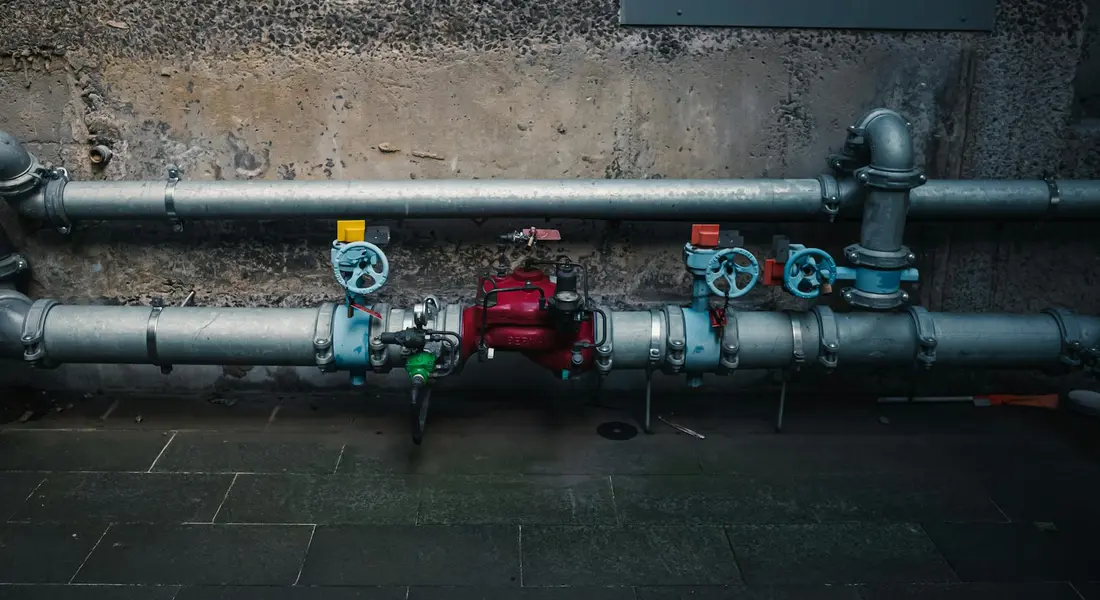
Once you know where your lines are, you must mark them. Spray paint on grass fades. Flags get pulled by mowers or blown away. Your goal is to create two records: one for right now, and one for ten years from now.
Using Marking Paint and Flags
Grab a can of utility marking paint. The standard color for potable water is blue. Use orange for communication lines and red for power, but for this job, you need blue. Shake the can well.
Walk directly over the path of your located line. Spray a continuous line or a series of dots right on the grass or soil. Make your marks at least 6 to 12 inches wide so they are impossible to miss from a standing position. Follow the line’s entire length from the house to the street or well.
For extra visibility, pair the paint with utility flags. Push the flagged stake into the ground directly on your painted line every 10 to 20 feet. The blue flag tops will visually confirm the paint line from a distance. This paint-and-flag combo is your temporary, high-visibility guide for any immediate digging.
Creating a Permanent Map
Your paint will wash away in months. Flags will disappear. A simple, hand-drawn map is your permanent backup. You do not need to be an artist.
Grab graph paper and a tape measure. Start by drawing the outline of your house. Pick two permanent reference points, like the southwest corner of your foundation and a large, mature tree. Do not use a patio stone or a garden shed that could be moved.
Measure from your reference points to key spots on your buried line. For example, measure from the house corner to where the line exits the foundation. Then measure from that tree to the midpoint of the line in your yard. Write every measurement clearly on your sketch.
This “triangulation” method with two fixed points means you can always find the line again, even if every visual mark is gone. Label everything: “Main Water Shutoff to Street,” “Service Line to Garden Shed.” Store this map with your important house documents.
Taking a Reference Photo
On the day you mark the lines, take a photo. Use your phone. Stand on a ladder or a deck to get an overhead view of your yard with the bright blue paint and flags clearly visible. This photo is proof of your work and shows the line’s path in context with your house, driveway, and other landmarks. Save this photo digitally in a “House Utilities” folder and print a copy to clip to your hand-drawn map.
Integrating Common FAQs
The process for marking a main supply line from the street and a smaller service line to an outbuilding is the same. Use blue paint and flags for both. The critical difference is in your permanent map-clearly label which line is which to prevent confusion during future projects. For a service line to a detached garage, for instance, note its origin point at the main house shutoff valve.
If you are marking multiple types of utilities, always use the correct API color code: blue for water, green for sewer, and yellow for gas. This keeps you and anyone else who might dig safe and informed. Your clear, measured records turn a one-time locating job into a lasting resource for your property.
Water Science Snippet: Why Depth and Soil Matter
You need to know how deep your pipes are. The biggest rule is the frost line.
This is the deepest point underground where the soil freezes in winter. Your water line must be buried below this line. If it isn’t, the water inside can freeze, expand, and split the pipe wide open.
Frost line depth isn’t the same everywhere. In warmer southern states, it might only be 12 inches deep. Up north, you could be digging down 4 feet or more. Your local building department has the exact code for your area.
Knowing the frost line tells you the minimum safe depth, but the actual depth can vary based on what was originally installed.
How Soil Type Changes the Game
Dirt isn’t just dirt. The type of soil your pipe is buried in affects its lifespan and how you find it.
Clay soil is dense and holds moisture. It’s tough to dig, but it’s stable. A pipe in clay has good support, but that constant moisture can speed up corrosion on metal pipes. When clay gets wet and freezes, it heaves, which can stress and bend pipes over time.
Sandy or loamy soil is easier to work with. It drains well, which is kinder to pipe exteriors. The downside is it shifts more easily. This can cause pipes to settle or develop leaks at joints. Sandy soil is also much easier to probe with a simple metal rod.
Think of clay like a firm, wet sponge that rusts metal, and sandy soil like shifting beach sand that can cause pipes to sag.
| Soil Type | Effect on Pipe | Ease of Locating |
|---|---|---|
| Clay | Promotes corrosion; stable but can frost heave | Harder to physically probe |
| Sandy/Loamy | Better drainage; can shift and cause stress | Easier to probe and excavate |
Why This Helps You Avoid Future Disaster
Locating your line isn’t just for today’s project. It’s preventive medicine for your water system.
If you know where and how deep your line is, you can plan. You won’t plant a tree with deep roots right on top of it. You’ll know where to avoid when driving fence posts or installing a deck footing.
More importantly, you understand the risks. A line buried just at the frost line in clay soil is a prime candidate for a future freeze break or corrosion leak. Finding it now means you can monitor it, or budget to replace it with a deeper, better-protected line.
Marking your buried line creates a permanent record that protects your property from costly, avoidable damage during future projects.
So, how deep are water lines buried? The short answer is: below your local frost line, but the exact depth depends on the original installer and the soil they had to work with. Always assume it’s deeper than you think.
System Maintenance Roadmap: Keeping Your Map Current
Marking your lines once is a great start, but it’s not enough. Think of your property map as a living document. Water systems change, and your records need to change with them.
An outdated map is worse than no map at all because it gives you false confidence. If you rely on old markings and hit a new line, you’ve created the exact problem you were trying to avoid.
Update After Every New Installation
Any time you add or change something that uses water, grab your map and a pen. This is a non-negotiable habit. Do it the same day the work is completed while the trench is still open and the path is fresh in your mind.
Here are common projects that require an update:
- Irrigation System or Sprinklers: Mark the main supply line from the house and the lateral lines to each zone head.
- Water Softener or Filtration System: Note the new bypass loop and drain line connection if they are buried.
- Outdoor Faucet or Hydrant: Trace and mark the new supply line from its source.
- Patio, Deck, or Walkway: If plumbing was run for an outdoor kitchen or sink, document it. Also mark any lines that were rerouted during construction.
- New Garden Bed with Drip Lines: Map the main feed line from your spigot or valve.
Keep Records of All Repairs
When a buried line fails and you fix it, you’ve gained critical intelligence. That spot is now a potential weak point. Your future self or a new homeowner needs to know what happened there.
Always document repairs with notes on your map and in a separate log. For a patched section, note the date, the type of pipe (e.g., 3/4-inch copper), and the repair method (e.g., slip-fix coupling, sharkbite). If you replaced a long segment, draw the new route clearly.
This history is invaluable. If you have a second leak nearby a few years later, your records will show you’re in an area with older, failing pipe.
Store Records Digitally and Physically
Don’t keep your only copy in a drawer. Use a two-step backup system so your information survives a basement flood or a lost folder.
For your digital file, take a clear photo or scan of your master map. Save it in a dedicated folder on your computer or in a cloud service like Google Drive. Give the file a clear name like “Property_Water_Map_2025.” Update this digital copy every single time you mark a change on the paper original.
For your physical file, use a durable binder or a folder in your “house file” cabinet. Store the original map along with any manufacturer manuals for your water softener, pump, or other equipment. This is the first place you should look for information.
Tell another household member where both the digital and physical files are located. This simple step ensures the knowledge isn’t lost if you’re not home when a problem arises.
Recommended Products for Homeowners
A sturdy, pointed metal probe rod (5-6 foot).
This is your first and most reliable tool. Forget using a thin piece of rebar or a fence post. You need a dedicated, pointed metal rod. The length is critical for reaching down to typical service line depths without excessive force.
Start near your foundation where the line likely enters. Push the rod into the soil at a shallow angle. Feel for firm resistance. That’s your pipe. Use steady, firm pressure and never hammer or jump on the rod, as you can puncture a plastic line or crack an old copper service. Work in a line, probing every 6 to 12 inches to trace the pipe’s path.
In my own yard, I keep a 6-foot fiberglass rod with a steel tip. It’s flexible enough to avoid shocking my hands on rocks and long enough to find my main shutoff valve near the property line.
Professional-grade utility marking paint (blue).
Once you find the line, you must mark it. Blue is the universal color for potable water. Don’t use leftover spray paint from a garage project. Utility paint is formulated to be highly visible and weather-resistant.
Shake the can thoroughly. Mark a solid line directly over the path you traced with your probe. Put a clear “W” for water at the start and end points. This painted line is a temporary guide for your excavation, not a permanent record, as it will fade with sun and rain.
A common mistake is a faint, dashed line. Make it bold. If the line runs under a driveway or sidewalk, mark both sides so you know where it disappears and reappears.
A basic, affordable pipe and cable locator kit.
For lines deeper than 5 feet or under concrete, a manual probe isn’t enough. A basic locator has two parts: a transmitter and a receiver. You connect the transmitter to a metallic part of the line, like your main shutoff valve.
The receiver is a wand you sweep over the ground. It beeps or flashes when it detects the signal. These tools are great for confirming a path, but they can be confused by other buried metals, so always use your probe to verify.
Practice with it first. Run a known length of pipe or wire in your garage to understand how the signal strength changes. This prevents you from mistakenly digging up a sewer line (which uses a different frequency) instead of your water main.
A waterproof notebook for permanent site records.
Your paint will fade. Your memory will fail. A permanent, physical record is non-negotiable. Get a notebook with waterproof paper and use a permanent marker.
Draw a simple sketch of your property. Note distances from fixed points. “Water main runs 2 feet south of the northwest corner of the house, then straight to the street valve, 4 feet deep.” Record the date you marked it. This notebook should stay with your house’s important documents, like the appliance manuals and your water softener’s installation guide.
Take photos of your markings and the sketch. Email them to yourself so you have a digital copy. This record is invaluable for the next homeowner, or for you in five years when you plan a new garden or deck.
What Helped Me: A Story from My Property
Last summer, I decided to build a small deck off my back patio. I was about to start digging post holes when I remembered the old sprinkler system the previous owner mentioned. It was abandoned, but the lines were still in the ground.
Instead of guessing, I grabbed a 4-foot metal soil probe from my garage. I started poking the ground gently along the planned deck perimeter. About three feet out from the house, the probe slid in easily and hit something solid and tubular. I had just found the main sprinkler supply line, right where my first post hole was going to be.
That five minutes of probing saved me a weekend of repairing a shattered PVC line and re-digging a hole full of water. I marked the spot with a bright orange utility flag and adjusted my plans by six inches.
The Garage Door Map: Your Secret Weapon
After finding that line, I didn’t stop there. I took ten minutes and drew a simple map. I sketched my house’s outline, the patio, and marked an “X” for the sprinkler line. I added notes like “4 ft from west wall” and “18 inches deep.”
I laminated that sketch and taped it to the inside of my garage service door, right next to the circuit breaker panel. Now, before any project that involves digging, I check that map. This hand-drawn map costs nothing but gives you immense peace of mind, preventing costly and wet mistakes.
Your map should include your main water line from the street, the sewer cleanout, and any other buried utilities you discover. Update it every time you do work. It becomes the most valuable home maintenance document you own.
Common Questions
What’s the difference between marking the main supply line and my private service line?
The main supply line under the street is marked by 811 locators with blue paint. Your private service line, from the meter to your house, is your responsibility to mark. Use the same blue paint and flags for both, but on your map, label them clearly so you know which is which for future projects.
What if my spray paint marks wash away before I dig?
Temporary paint fading is why you create a permanent record. Use utility flags to supplement the paint, and take a dated photo. Most importantly, transfer the line’s location to a hand-drawn map using measurements from two permanent landmarks, like your house corner and a large tree.
Will a pipe locator work on all types of water pipes?
No. Standard locators only work on metal pipes (copper, galvanized steel). They cannot trace non-metallic pipes like PVC or PEX unless a special tracer wire was buried with them. For plastic lines without a wire, a careful manual probe is often the best DIY method.
How can I be sure my DIY marks are accurate before digging?
Verify with a second method. If you used a locator, confirm the path with gentle hand probing. Always hand-dig with a shovel-never use power equipment-when you are within 18-24 inches of your marked line to expose the pipe visually and confirm its exact location and depth.
What should I do if 811 only marks up to my meter, and the line from there is unmarked?
This is your private service line, and locating it is your next step. Start at the meter and follow the most direct path toward your house. Use a pipe locator (if the pipe is metal) or a manual probe to trace its route, then mark it clearly with blue paint and flags as your own responsibility. Just be aware that water service line easements may affect access and maintenance.
Final Steps for Accurate Water Line Marking
Always start by calling 811 or your local utility locating service; it’s your safest and most reliable first move. After the pros mark the public lines, use a handheld pipe locator to trace and verify the path of your private service line from the meter to your home. If you’re unsure who to call for well pump service, a local licensed well contractor can help with evaluation and repairs. They can guide the next steps and ensure the work integrates safely with the utility markings.
Bob is a an HVAC and plumbing industry veteran. He has professionally helped homeowners resolve issues around water softeners, heaters and all things related to water systems and plumbing around their homes. His trusted advice has helped countless of his clients save time, money and effort in home water systems maintenance and he now here to help you and give you first hand actionable advice. In his spare time, Bob also reviews home water systems such as tankless heaters, water softeners etc and helps home owners make the best choice for their dwelling. He lives around the Detroit area and occasionally consults on residential and commercial projects. Feel free to reach out to him via the contact us form.