Pilot Light on a Water Heater: Find It and Know Which Tanks Have One
Your hot water quit and you suspect the pilot light. Let’s get straight to finding it and seeing if your heater even uses one.
We will cover exactly where to look for the pilot light on common models, which types of water heaters still have a pilot, and how to safely check or relight it.
I fix these for a living. Here’s the bottom line: modern tanks often skip the pilot light entirely.
First, Let’s Figure Out What Kind of Heater You Have
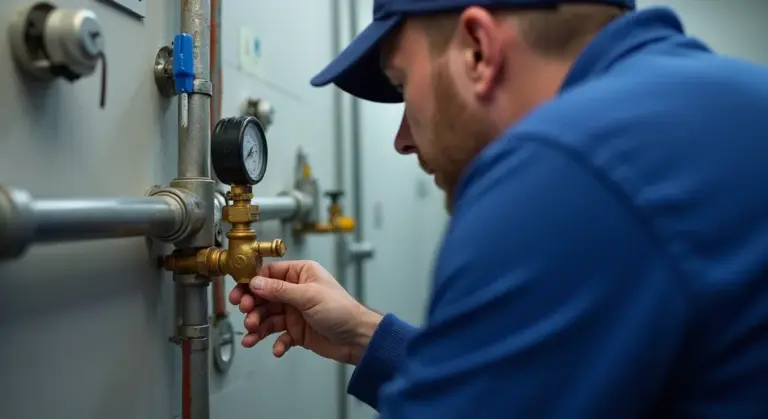
Start by looking at the connections going into the top of your water heater tank.
You have a gas or propane heater if you see a black iron or yellow flexible gas pipe attached to a control valve on the side. You will also see a metal exhaust flue coming out of the top.
You have an electric heater if you see two thick electrical cables (often with conduit) connected to two separate panels on the side. There is no exhaust flue.
Electric water heaters never have a pilot light; they use heating elements instead. Electric models heat water with immersion elements controlled by a thermostat. This is how electric water heaters work in practice. Only gas and propane models use a flame to heat water, and only some of those have a standing pilot light you need to manually light.
Most modern gas heaters made in the last 15-20 years use electronic ignition. No pilot light. If your heater is old, it likely has one. Check the label on the side for the manufacture date.
If you have no hot water, a pilot issue is a prime suspect. Other signs include a faint gas smell near the unit or the burner simply not coming on. Think of it like the starter on a lawnmower. If the pilot is out, the main burner can’t start.
Where to Find the Pilot Light on a Gas Water Heater
Before you touch anything, stop and smell for the distinct odor of rotten eggs or sulfur. If you smell gas, do not open the panel. Leave the area and call your gas company or a professional. If you only notice a sulfur smell in water, it might be an issue with your water heater rather than gas.
Assuming it’s safe, find the access panel. It’s a metal or plastic door at the very bottom of the tank. You might need to pull it off with your fingers or remove one or two screws.
Once the panel is off, you’ll see the burner assembly, a metal chamber at the bottom. Above it is the gas control valve. This valve is like the control board on a water softener, it’s the brain of the operation.
Look for a small, thin metal tube (the pilot tube) running from the gas valve down toward the burner. Follow that tube with your eyes. The pilot light itself is at the very end of this tube, right next to the main burner.
It’s a tiny blue flame about the size of a match flame. On many models, the pilot assembly is mounted so the flame points directly at a sensor called a thermocouple.
If you can’t see the pilot light on your water heater, don’t panic. The viewing area is often small and dirty. Use a flashlight. Sometimes a layer of dust or soot can obscure it. A small inspection mirror can help you see around corners. It’s important to know how to troubleshoot your pilot light if you continue to have problems.
Some heaters have a small glass viewing window on the panel. Clean it with a rag first. If you still can’t see a flame, the pilot is almost certainly out and needs to be relit following the instructions printed on your tank’s label.
Pilot Light vs. Electronic Ignition: Not All Gas Heaters Are the Same

If you’re searching for a pilot light, you likely have a gas water heater. But not all gas heaters work the same way. You have two main types: the old-school standing pilot and modern electronic ignition. Knowing which one you have answers the question right away, especially when trying to light or relight a pilot.
The Old-School Standing Pilot (The one you’re looking for)
This is the classic system. A standing pilot is a small, constant gas flame. It sits ready next to the main burner. When the thermostat calls for heat, the main gas valve opens and this little pilot flame ignites the big burner.
Think of it like a candle you never blow out. It’s always on.
- Pros: Simple design. Easy for most homeowners to understand and relight.
- Cons: It wastes gas 24/7. It can get blown out by a draft. The thermocouple (its safety sensor) can wear out.
You’ll find this standing pilot system on most gas water heaters that are over 10 years old. My last house had one, and relighting it after a power blip was a regular thing. Consider upgrading to a newer model for improved safety and efficiency.
Modern Electronic Ignition Systems
Newer gas heaters don’t have a constant flame. They use an electronic system that only sparks to life when needed. This saves energy. There are two common kinds:
- Intermittent Pilot: When the tank needs heat, a spark plug (like in a car) creates a small pilot flame. That flame lights the main burner, then shuts off completely until the next cycle.
- Hot Surface Ignition: Instead of a spark, an electric element (like a tiny oven coil) glows super hot. The gas valve opens and the gas ignites directly on this hot surface.
The critical point is this: these systems have no standing pilot light to find, watch, or relight. If your heater is newer, you’re looking for something that isn’t there. Checking if the water heater is on involves different steps.
So, do all hot water tanks have a pilot light? No. Only older gas models with a standing pilot system have one.
How to Fix a Pilot Light That’s Out or Won’t Stay Lit
This guide is only for standing pilot systems. If you have electronic ignition and it fails, you typically need a pro.
Difficulty Rating for Relighting: 4/10. You need to follow steps carefully.
Step-by-Step: How to Safely Relight a Standing Pilot
- Turn the gas control knob to “OFF”. Wait at least five full minutes. This clears any unburned gas from the chamber. Smell for gas. If you smell it strongly, stop. Do not light it. Call a professional.
- Find the pilot assembly. Look near the bottom of the tank by the gas control valve. There will be a small metal tube (the pilot gas line) and a labeled “Pilot” knob or setting.
- Turn the gas control knob to “PILOT”. Press and hold it down. This starts the gas flow to the pilot line.
- While holding the knob down, use a long lighter to ignite the pilot at the end of the tube. Hold the flame there. You should see it light.
- Keep the control knob pressed down for a full 60 seconds after the pilot lights. This heats up the thermocouple. Then slowly release it. The pilot should stay lit.
- Finally, turn the knob from “PILOT” to “ON”. You should hear the main burner ignite when the thermostat calls for heat.
Simple Diagnostic Flowchart
Follow this logic to figure out what’s wrong.
- Pilot won’t light at all? Check the obvious first. Is your gas supply on? Is the manual shutoff valve near the heater open? Is the pilot orifice clogged with dust (use compressed air to clean it)?
- Pilot lights but goes out when you release the knob? This is almost always a bad thermocouple. This small copper sensor’s job is to prove the pilot is lit. If it’s faulty, it tells the gas valve to shut off for safety.
The thermocouple is a simple safety device. It generates a tiny bit of electricity when heated by the pilot flame. That electricity holds the gas valve open. No heat, no electricity, valve closes. Thermocouples are commonly used in gas water heaters to ensure safe operation.
Replacing a Thermocouple
Difficulty Rating: 6/10. It’s straightforward but requires working carefully at the gas valve.
- Shut off the gas completely at the manual valve.
- Unscrew the copper thermocouple tube from the gas valve assembly. It’s usually a 7/16″ or 1/2″ nut.
- Unscrew the bracket holding the tip in place next to the pilot tube.
- Take the old one to the hardware store and get an exact match. Install the new one by reversing the steps.
Define your DIY limit here. Relighting a pilot is fine. Replacing a thermocouple is manageable for many. But if you smell gas at any valve connection, if the gas control valve itself is leaking, or if the main burner doesn’t operate correctly, stop. You need a licensed plumber or gas technician. Gas work is not the place for guesswork.
A Quick Science Lesson: Why Your Pilot Light Needs Air
Think of your pilot light like a tiny, permanent kitchen stove burner. For it to work right, it needs the correct fuel-to-air recipe.
A clean, safe pilot light burns with a sharp blue flame because it’s getting the perfect mix of gas and oxygen. That blue color means complete combustion. The process uses up the natural gas or propane cleanly, creating mostly harmless water vapor and carbon dioxide that your flue pipe vents safely outside.
When the air supply is choked off, the flame turns lazy and yellow. A yellow or orange flame means incomplete combustion. It’s now producing carbon monoxide, a deadly, odorless gas. You might also see soot building up on the assembly.
This happens for a few common reasons. A clogged air intake shutter, a dirty pilot tube orifice, or a blocked vent pipe can all starve the flame of oxygen. I’ve seen nests from small animals in vent pipes cause this exact problem.
Poor venting has a secondary cost. Those corrosive combustion byproducts can get forced back around the tank instead of going up the flue. Over years, this acidic environment from a faulty system can eat away at the steel tank from the outside, leading to premature failure.
When to Put the Lighter Down and Call a Professional
Some problems are clear signs to stop and pick up the phone. Your nose and eyes are your best first tools.
- The Smell of Gas (Rotten Eggs): If you smell raw gas at any point, not just when relighting, shut off the gas supply valve immediately. Do not try to light the pilot. Leave the area and call your gas company or a pro from outside.
- A Yellow Pilot Flame: If your pilot light is any color but a steady blue, you have an unsafe condition. Turn off the heater and call for service.
- Water in the Burner Chamber: If you see pooling water or heavy rust in the compartment at the bottom of the tank, your tank may be leaking from above. This is a serious fault. Do not attempt to light the unit.
All diagnostic and repair work on modern water heaters with electronic ignition systems should be done by a licensed technician. These systems have control boards, sensors, and powered gas valves. Troubleshooting them requires specific meters and knowledge, especially when your water heater is not heating. It’s not a DIY project.
For a standard service call to diagnose a pilot or burner issue, expect to pay a professional between $150 and $300. If a part like a thermocouple or gas valve needs replacing, the total bill with labor and the part will typically range from $300 to $600. The exact cost depends heavily on your local rates and the heater model.
Calling a professional for gas appliance issues isn’t a sign of defeat. It’s the smart, safe move that protects your home and family. A good tech can solve the real problem in one visit and ensure everything is venting properly.
Quick Answers
What should I do if I smell gas after trying to relight the pilot?
Turn the gas control knob to “OFF” immediately. Shut off the gas supply valve to the heater. Leave the area and call your gas company or a licensed technician from outside. Do not attempt to relight it again.
Is it cheaper to relight a pilot or call a professional?
Relighting a pilot yourself is virtually free if you follow the safety steps. A professional service call typically costs between $150-$300 just for the visit. However, paying for safety and a correct diagnosis is always a good investment.
How can I tell if my gas heater uses electronic ignition without opening the panel?
Check the manufacturer’s label for the model year. Most units made in the last 15 years use electronic ignition. If your heater has a digital display or you never hear a pilot hissing, it likely doesn’t have a standing pilot.
My pilot keeps going out. Is this a serious problem?
It can be. A frequent cause is a failing thermocouple, which is a simple, inexpensive part. However, a persistent draft or a clogged pilot orifice can also cause this. Investigate and fix it promptly, as an unreliable pilot leaves you without hot water.
What exactly does “standing pilot” mean?
It means the small flame is “standing” or burning continuously, 24/7, ready to ignite the main burner. Think of it like a tiny candle that’s never blown out. This is different from modern systems that only create a spark or flame when needed.
Caring for Your Water Heater’s Pilot Light
The single most important thing is to identify whether you have a gas or electric water heater before you look for any ignition component. Your first step should always be to check the manufacturer’s label on the unit’s side for the model number and fuel type. If you own an AO Smith unit, the AO Smith water heater manuals guide offers model-specific setup and safety notes. Refer to that guide with the label to confirm the ignition steps for your exact model.
Bob is a an HVAC and plumbing industry veteran. He has professionally helped homeowners resolve issues around water softeners, heaters and all things related to water systems and plumbing around their homes. His trusted advice has helped countless of his clients save time, money and effort in home water systems maintenance and he now here to help you and give you first hand actionable advice. In his spare time, Bob also reviews home water systems such as tankless heaters, water softeners etc and helps home owners make the best choice for their dwelling. He lives around the Detroit area and occasionally consults on residential and commercial projects. Feel free to reach out to him via the contact us form.