Softened Water in Your Garden: The Straight Truth on Plants
You’re staring at your hose, wondering if that softened water is secretly poisoning your tomatoes. Let’s fix that.
We will cover exactly what’s in your softened water, how it affects soil and plant roots, and the simple hardware fix you need.
I’ve been on the tools for years, swapping out bypass valves for this exact reason. One short takeaway: your softener is for the house, not the yard.
The Short Answer on Safety
No, it is not safe to water your garden with softened water from a standard salt-based water softener. You will harm your plants and damage your soil over time. This advice is specific to the most common type of home softener that uses salt to regenerate, which has higher sodium content.
Other systems, like certain magnetic or template-assisted crystallization (TAC) units, don’t add sodium and are a different story. For the softener in your basement next to your water heater, the core problem is simple: salt. The softening process trades hard minerals for sodium, and that sodium builds up where you water.
What Softened Water Actually Does to Your Soil and Plants
Think of your water softener as a swap meet for minerals. As hard water flows through the resin tank, the system grabs the calcium and magnesium (the “hardness”) and trades it for sodium ions. The water that comes out is soft, but now carries sodium.
When you water your plants, this sodium doesn’t disappear. It stays in the soil. With every watering, the sodium concentration climbs. You are slowly creating a saline environment that most plants, except a few salt-tolerant species, cannot survive in.
The damage shows up fast on your plants. You’ll see browning or “scorched” edges on leaves, especially older ones. Growth becomes stunted. The sodium interferes with the plant’s ability to take up water and crucial nutrients like potassium and calcium, even if those nutrients are present in the soil.
The long-term effect on your soil is worse. Good soil has a crumbly structure that allows for air and water movement. Sodium attacks this structure. It causes soil particles to clump tightly together, a process called dispersion. Your garden soil will become compacted, hard, and poorly drained. It’s like trying to grow in concrete. Reversing this damage takes serious effort.
Watering with softened water is not as extreme as using seawater, but the principle is the same. You are applying a constant, low-dose salt solution directly to your garden’s root zone. However, it’s important to ensure that softened water is used safely with appropriate sodium levels.
The Water Science: TDS, Sodium, and Soil pH
You might hear about TDS, or Total Dissolved Solids. A softener doesn’t necessarily lower TDS; it changes the recipe. It swaps calcium and magnesium (beneficial plant minerals) for sodium (a harmful one for most soils). You’re trading good solids for bad ones.
This swap directly affects a key soil health number called the Sodium Adsorption Ratio (SAR). A high SAR means sodium is dominating the soil chemistry. A high SAR soil is a sick soil that repels water and suffocates roots.
Over many years, this sodium buildup can also nudge your soil’s pH toward the alkaline side. Most garden plants prefer a slightly acidic to neutral pH. Alkaline soil locks up essential nutrients like iron, leading to yellowing leaves (chlorosis) even if you fertilize.
In simple terms, using softened water replaces the building blocks of healthy soil and plant growth with a mineral that actively works against them.
Can I Water My Garden with Softened Water in an Emergency?
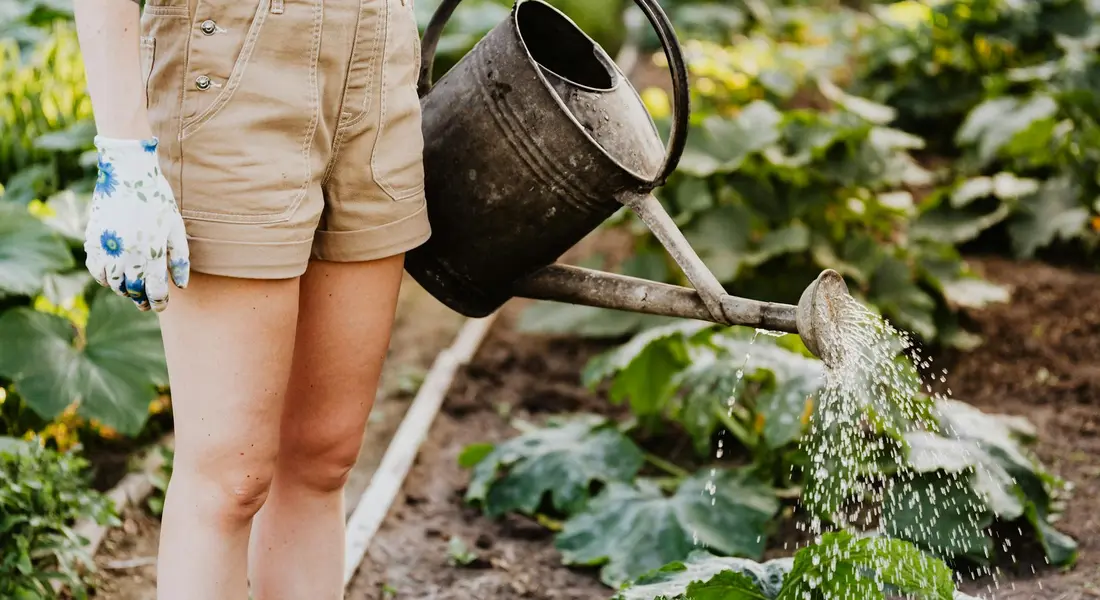
Sometimes, you have no choice. Your outdoor spigot breaks. A mainline leak shuts off your hard water supply. In a pinch, that garden hose connected to your softener is the only water you have. Using softened water for irrigation is a last resort, but with a strict plan, you can prevent immediate plant death.
The Strict Short-Term Tactic
Your goal is to minimize salt exposure and flush the soil. Do not just water as usual.
- Heavy Dilution is Non-Negotiable. Fill a large watering can or bucket one-third with softened water. Top it off the rest of the way with collected rainwater or even distilled water from the store. This dilutes the sodium concentration significantly.
- Deep Watering to Flush Soil. Apply this diluted water slowly at the base of the plant. Water until you see significant runoff. The goal is to push any accumulating salts down and away from the root zone. This is more effective for in-ground beds than for raised beds or containers.
- Time it Right. Do this in the early morning. This gives the plant the entire day to use the water and helps the soil dry somewhat, reducing the time roots sit in saline conditions.
This is a Temporary Fix, Not a Solution
Think of this like using a spare tire. It gets you off the highway, but you can’t drive on it for weeks. Even with dilution, you are introducing sodium into your soil with every watering. Sodium builds up. It destroys soil structure, making it hard and impermeable. It also interferes with a plant’s ability to take up essential nutrients like potassium and calcium. After more than a few waterings, you will see leaf burn, stunted growth, and eventually plant failure. Fix your alternative water source within a week.
Absolute “Do Not Water” Warnings
Some plants and setups cannot handle any level of emergency watering with softened water. The risk is too high.
- Seedlings and New Transplants: Their young root systems are incredibly sensitive. Salt damage will kill them fast.
- Container Plants and Pots: Salts have nowhere to go in a confined pot. They concentrate rapidly, creating a toxic environment for roots.
- Acid-Loving Plants: Rhododendrons, azaleas, blueberries, and camellias are especially vulnerable. The sodium directly conflicts with their need for acidic, low-mineral soil.
For these, you must find another source. Use bottled water for a few prized pots or set up a rain barrel for future emergencies.
Your Best Fix: Installing a Hard Water Bypass for Outdoor Faucets
Stop fighting your softener every time you need to water the garden. The permanent, professional fix is to install a hard water bypass for your outdoor faucets. This is the number one solution because it gives you dedicated, untreated water for your plants without affecting your home’s softened supply. You get soft water for your appliances and showers, and hard water for your hose, automatically. When planning this upgrade, consider water softener installation and repair considerations—such as valve placement and bypass sizing—to ensure a clean, reliable setup. This upfront planning can make future service easier and safer.
A bypass is simple plumbing. You tap into your main water line before it reaches the water softener. You run a new pipe from that point directly to your outdoor spigots. A valve on this new line lets you control it. Think of it as a dedicated lane on a highway that goes straight to your yard, bypassing the softening station entirely.
For a standard install, you’ll need these parts:
- A tee fitting to branch off your main line.
- A quarter-turn ball valve to act as the shutoff for the bypass line.
- Pipe (copper, PEX, or CPVC) long enough to reach your outdoor faucet lines.
- Appropriate fittings, couplings, and hangers to secure the new pipe.
- Pipe thread sealant or Teflon tape.
I added one to my basement line last fall. It took an afternoon, but now I never think about salt levels when I’m watering my tomatoes. Compared to constantly adjusting softener settings or mixing rainwater, a bypass is a one-time job that works forever.
DIY vs. Pro: Bypass Valve Installation Difficulty
For a homeowner who’s comfortable with basic plumbing, I rate this a 6 out of 10 on the difficulty scale. It’s very doable, but you’re working on your home’s main water supply, which demands respect and careful work.
The DIY scope is clear. If your main water line is easily accessible in a basement or crawlspace, and it’s made of copper or PEX, you can handle this. For PEX, you’ll need a crimp tool. For copper, you’ll need to solder. Simple saddle-tap valves exist for copper lines and can work for a low-pressure bypass like this, making it easier.
Call a professional plumber in these situations:
- Your main water line is buried in a concrete slab or otherwise completely inaccessible.
- You are unsure what your pipes are made of (e.g., older galvanized steel).
- Local building codes require a licensed plumber to perform this type of work.
Here’s the big code item you must know: both the International Plumbing Code (IPC) and Uniform Plumbing Code (UPC) generally require backflow prevention on any irrigation line. Your new bypass line is an irrigation line. This means you likely need to install a hose bib vacuum breaker or, for underground systems, a proper backflow preventer. A pro will know your local code amendments and get this right.
If you see a tangled mess of pipes or your main shutoff valve doesn’t work perfectly, put the wrench down and make the call. A pro will get it done fast and with the correct permits, saving you from a much bigger wet problem.
Practical Alternatives to Softened Water for Irrigation
You have a few solid options to water your plants without the salt. Here is how they stack up on cost, the work involved, and how much area they can cover.
| Alternative | Cost | Effort | Scale |
|---|---|---|---|
| Rainwater Harvesting | Low initial cost | Medium setup, easy upkeep | Best for gardens, not lawns |
| Dedicated Line or Tap | Moderate to high | High installation effort | Can supply a whole yard |
| Potassium Chloride Salt | High ongoing expense | Low to switch | Affects all household water |
Rainwater Harvesting with Barrels
This is the most natural water for your plants. You need a barrel, a downspout diverter, and a level base. A basic 50-gallon system costs under $100 if you do it yourself. The real expense comes if you need to install gutters first.
Maintenance is simple but non-negotiable. Cover the barrel inlet with a fine screen to stop leaves and mosquitoes. You must drain and scrub the barrel once a year to prevent slime and sediment. I keep a dedicated brush with my garden tools for this job.
Use harvested rain for vegetable patches, flower beds, or potted plants. Do not plan on watering an entire lawn with barrels; you would need a massive storage system to make a dent. The scale is perfect for targeted garden care.
Dedicated Well Line or Pre-Softener Tap
This method gives you a permanent source of hard water for outside use. The process is very different for well water versus city water.
If your home uses a well, the solution is straightforward. Install a tee fitting and a valve on the main water line before it enters the softener. This is one of the setup considerations when using well water for softeners. This creates a branch you can connect a hose to. You need a pipe cutter, a tee, a ball valve, and some basic soldering or compression fitting skills. It is a common Saturday project for a handy homeowner.
For homes on city water, tapping the main inlet is more involved. You must install a bypass line before the softener, which usually means cutting into the main copper or PEX line where it enters your house. This often requires a plumbing permit and is best left to a professional. The complexity and cost are higher, but you get unlimited untreated water for irrigation.
Using a Potassium Chloride Softener Salt
Switching to potassium chloride pellets is a change inside your softener, not a new water source. This is still a salt based system, but it uses potassium ions instead of sodium ions to soften the water. It is not a salt free option.
Potassium is a major plant nutrient, which sounds ideal. The problem is controlling the dose; the consistent sodium in softened water is replaced with consistent potassium. Over time, this can lead to a harmful buildup of salts in your soil, stunting plants. It is like over fertilizing with one specific nutrient.
This also answers the common search “can i use water softener salt to kill weeds.” Regular sodium chloride salt can kill weeds, but potassium chloride is different and is not an effective herbicide. The biggest drawback is cost. Potassium chloride typically costs two to three times more than standard softener salt, making it an expensive choice for whole house softening just to benefit your garden.
What to Do If You’ve Already Used Softened Water
Don’t panic. Many plants can handle a few waterings with softened water, especially if your raw water wasn’t extremely hard to begin with. The problem builds over time. If your plants are looking sad or you’ve been using soft water for a season, you need a recovery plan. This is the same advice I give to customers who discover their outdoor spigot was mistakenly connected to their softener loop.
Step-by-Step Soil Recovery Plan
Your goal is to remove the excess sodium (salt) from the soil. Sodium prevents plants from taking up water and nutrients, essentially causing drought stress even in wet soil. Follow these steps in order.
- Stop using softened water immediately. Find your main outdoor hose bib. Trace the pipe back. If it’s connected after the water softener, you need to reconfigure your plumbing to pull water from the main line before the softener. This is often a simple valve adjustment or installing a dedicated, unsoftened spigot.
- Assess your plants. Look for signs of salt burn: yellow or brown leaf edges, stunted growth, or wilting despite wet soil.
- Perform a deep soil flush (detailed below).
- Get a professional soil test (detailed below). Do not skip this. Guessing with amendments can make things worse.
- Based on the test, apply a soil amendment like gypsum if recommended.
- Going forward, only use unsoftened water, rainwater, or well water (if it’s not softened) for all garden and lawn irrigation.
How to Perform a Deep Soil Flush
Flushing requires a lot of untreated water. It’s best done in stages to avoid creating a muddy swamp that harms plant roots. The objective is to slowly soak the soil so the water dissolves the salts and carries them down below the root zone.
- Choose a day when no rain is forecast for 24 hours.
- Use only unsoftened water. Connect your hose to an outdoor faucet that is not connected to the softener.
- Water the affected area slowly and deeply. Apply about 1 to 2 inches of water. Let it soak in completely. This can take several hours.
- Repeat this process 2 to 3 times over the course of a week. You are essentially mimicking a series of heavy, soaking rains.
- This method helps leach salts away. It works well for garden beds and around trees. For lawns, normal deep watering with unsoftened water over a month will start to correct the issue.
Get a Soil Test to Check Sodium Levels
A soil test from your local county extension office or a reputable lab is your only way to know the true severity. The test you want will report Sodium Adsorption Ratio (SAR) or simply “soluble sodium.”
Tell the lab you suspect irrigation with softened water and need recommendations for reclamation. They will provide a report that tells you exactly how much sodium is present and will often give specific advice on amendments and quantities for your soil type. The small fee is worth avoiding the cost of replacing dead plants or shrubs.
Adding Gypsum (Calcium Sulfate) to Displace Sodium
Gypsum is a common recommendation from soil labs for high-sodium situations. It does not miraculously remove salt. The calcium in gypsum replaces the sodium stuck to soil particles. The freed sodium can then be washed away with your deep flushing.
- Only add gypsum if your soil test explicitly recommends it. Applying it to soil that doesn’t need it is a waste and can disrupt other nutrient balances.
- Follow the application rate on your soil test report precisely. It is usually measured in pounds per 100 square feet.
- Wear a dust mask and gloves when applying powdered gypsum. Broadcast it evenly over the soil surface.
- After applying, water it in thoroughly with unsoftened water to start the chemical reaction and leaching process. This step must be done with non-softened water.
Recovery takes patience. You might not see improvement in perennial plants or trees for a full growing season. For annual gardens, flushing the soil and switching water sources often allows for a successful new planting.
Plants That Are Most and Least Tolerant
First, a critical point. Tolerance here does not mean preference, it simply means some plants are slightly less likely to immediately die from the sodium in softened water. You are still stressing the plant, reducing its vigor, and slowly poisoning your soil. Think of it like a person tolerating a food allergy versus thriving on a proper diet.
What “Tolerant” Really Means
Plants often labeled as “tolerant” might handle occasional or diluted exposure better. They are not thriving on soft water. The primary issue is sodium buildup, which destroys soil structure and blocks roots from absorbing nutrients and water. A “tolerant” plant might just take longer to show the classic signs: yellowing leaves (chlorosis), burnt leaf edges, and stunted growth.
Generally More Tolerant Plants
These plants often have adaptations like shallow, wide root systems or high drought resistance. Even for these, using softened water is a gamble with long-term soil health.
- Some Ornamental Grasses: Many native, drought-tolerant grasses like Blue Fescue or Switchgrass can handle poorer soil conditions.
- Daylilies (Hemerocallis): Known for being tough and adaptable in various soil types.
- Junipers and Arborvitae: Some evergreen shrubs show relative tolerance to soil salinity.
- Bearded Iris: Another perennial known for hardiness in less-than-ideal conditions.
If you must use softened water, these might be your last choice to water, but they are not a safe target.
Highly Sensitive Plants to Absolutely Avoid
These plants will react quickly and poorly. They are often acid-loving or have a low tolerance for sodium and chloride.
- Azaleas & Rhododendrons: These acid-loving plants are incredibly sensitive to salt. Softened water will rapidly cause leaf scorch and root damage.
- Berries: Blueberries, raspberries, and strawberries require acidic, well-balanced soil. Sodium accumulation is a death sentence for them.
- Most Vegetable Plants: Tomatoes, peppers, beans, and leafy greens are highly sensitive. Using softened water on your vegetable garden can directly reduce your crop yield and introduce sodium into your food source.
- Maple Trees & Dogwoods: Many deciduous trees, especially younger ones, are highly susceptible to salt damage at the roots.
- Roses: While tough in some aspects, most roses perform poorly with sodium-laden water.
Your Best Move: Ask a Local Expert
The lists above are general guidelines. Your local conditions are everything. The pH and mineral content of your native soil and hard water drastically change the equation. A plant that struggles in one area might persist in another.
Walk into a local, non-big-box nursery. Tell them, “My outdoor spigots are connected to a water softener. What plants will struggle the most in our specific soil here?” They have seen the local effects of poor water quality and can give you the real-world, street-level advice you need. This is more reliable than any generic online list.
Recommended Products & System Upgrades
Your goal is simple. You need to keep sodium away from your soil and plants. The right gear makes this easy and reliable.
Outdoor Faucet Bypass Valve Kits
This is your most important upgrade. A bypass kit installs at your outdoor spigot and lets you choose between softened and hard water with a simple turn of a valve.
Look for a kit with solid brass construction to prevent leaks and corrosion over many seasons. Plastic parts can crack from sun exposure and winter freeze cycles. Installing one is a straightforward DIY job. You shut off the main water supply, drain the line, cut into the pipe feeding the outdoor faucet, and solder or thread the kit in place. The hardest part is usually accessing the pipe in your basement or crawlspace.
On my own home, I installed a brass bypass on the line feeding my garden hose. Now, in spring, I just turn the valve to the “hard water” position. My garden gets the calcium it needs, and my softener doesn’t waste salt or water on irrigation.
Rain Barrel Systems with Diverter Kits
Rainwater is the perfect free water for your garden. It’s naturally soft, slightly acidic, and has no added minerals or chlorine.
Choose a system that includes a proper diverter kit designed for your downspout type, as this keeps debris out and mosquitoes from breeding. A good diverter will also have an overflow path to handle heavy rains. Place the barrel on a solid, level base-cinder blocks work well-to create enough water pressure for a hose. Connect a standard garden hose to the spigot at the bottom of the barrel. Remember to empty and disconnect the barrel before the first hard freeze to prevent ice damage.
Soil Moisture Meters & Basic Soil Test Kits
If you’re ever unsure about your soil’s health, stop guessing. Use tools.
A basic probe-style moisture meter tells you if you’re over or under-watering, which is a bigger threat to most plants than occasional sodium. Push the probe deep into the root zone near several plants to get a true reading, not just the damp surface soil.
For a bigger picture, use a home soil test kit once a year. These kits check pH and key nutrients like nitrogen and phosphorus. If your plants are struggling and you’ve used softened water, the test might reveal a sodium buildup showing as an elevated pH. The fix is simple. Flush the soil in the affected bed with several long soaks of fresh rainwater or hard tap water from your bypass.
Water Softener Certification (NSF/ANSI 44)
Your softener itself is part of the solution. Not all units are built the same.
Always verify that a water softener carries NSF/ANSI Standard 44 certification, which confirms it reduces hardness correctly and does not add unsafe levels of chemicals to the water. To maintain water softener efficiency, schedule regular salt level checks and periodic resin bed cleaning. This simple upkeep helps ensure the unit runs at peak performance with minimal salt use during regeneration. A properly calibrated and certified softener adds a predictable, minimal amount of sodium. An old or malfunctioning unit can overdose your water with salt, which then damages your plumbing fixtures and any soil it touches. If your softener is more than 10-15 years old, its efficiency is likely dropping. Consider an upgrade to a modern, certified model that uses less salt and water during regeneration.
Common Questions
Is the “salt” in my softened water the same as table salt?
Essentially, yes. Standard water softeners use sodium chloride (NaCl). The process swaps hardness minerals for sodium, which is the part that harms soil and plants. Potassium chloride systems are different, but they still add salts and are not a good fix for irrigation.
What if I only use softened water on my lawn?
Lawns are just as vulnerable as garden plants. The sodium will accumulate in the soil, leading to compaction, poor drainage, and thin, brown grass. Your best permanent fix is to connect your sprinkler system or outdoor spigots to a hard water bypass line.
What’s the very first sign my plants are getting damaged?
Look for browning or “scorched” leaf edges, particularly on older leaves. This is often the earliest visible symptom. The plant is showing drought stress because sodium is blocking its roots from taking up water properly.
Is using a potassium-based softener salt a safe alternative?
No, it’s not a safe solution for irrigation. While potassium is a plant nutrient, the consistent, high dose from a softener leads to a harmful salt buildup in your soil. It’s also a very expensive method for watering your garden.
Can my soil ever recover if I stop using softened water?
Yes, with time and the right steps. Immediately switch to unsoftened water and perform a deep soil flush. For a true recovery plan, get a professional soil test to check sodium levels and see if an amendment like gypsum is needed.
Water Your Garden Without Worry
Skip the softened water for your plants to prevent sodium buildup in the soil. Connect your outdoor spigot to a hard water bypass or use collected rainwater for safe, simple irrigation.
Bob McArthur
Bob is a an HVAC and plumbing industry veteran. He has professionally helped homeowners resolve issues around water softeners, heaters and all things related to water systems and plumbing around their homes. His trusted advice has helped countless of his clients save time, money and effort in home water systems maintenance and he now here to help you and give you first hand actionable advice. In his spare time, Bob also reviews home water systems such as tankless heaters, water softeners etc and helps home owners make the best choice for their dwelling. He lives around the Detroit area and occasionally consults on residential and commercial projects. Feel free to reach out to him via the contact us form.