
Home Water Tanks: A Straight Talk Guide to Types and Uses
You need the right tank for your water system, or you’ll deal with low pressure, constant cycling, and repairs.
We will cover pressure tanks for well systems, large storage tanks for backup water, and specialized tanks for filtration, including how each one works and where it goes.
I’ve swapped out dozens of these in basements and crawl spaces. Match the tank to your pump’s output, or you’ll burn it out fast.
Your Home’s Water Tanks: More Than Just Storage
Think of your home’s water tanks like different tools in a toolbox. You wouldn’t use a sledgehammer to hang a picture frame. Each tank has a specific job, whether it’s holding water for later, keeping your shower pressure strong, or protecting your appliances from damage. Knowing which is which is your first step to fixing problems and planning upgrades.
Most home water tanks work on a simple principle: they use air pressure. A rubber bladder or an air cushion inside the tank gets squeezed as water fills it. This pressurized air is what pushes the water out to your faucets when you turn them on. The tank itself is just the container; the air inside does the real work.
Identifying your tanks correctly saves you time, money, and a lot of frustration when something goes wrong.
Potable Water Storage Tanks: Your Clean Water Reserve
“Potable” is just the technical term for water that’s safe to drink, cook with, and bathe in. If you get your water from a well, spring, or a cistern, you likely have a potable storage tank. These are your clean water banks.
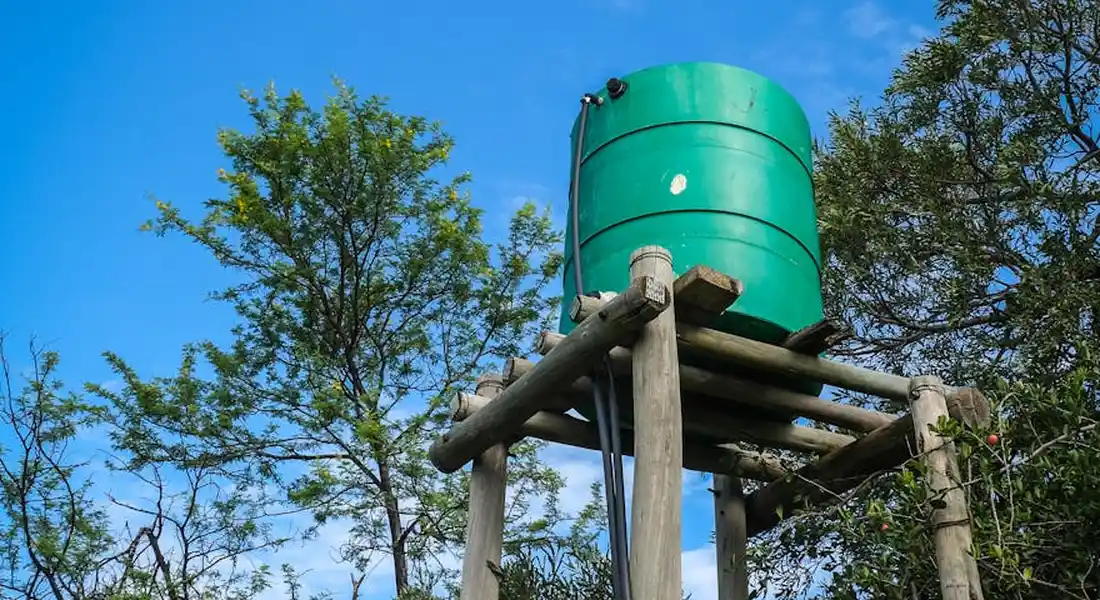
The two most common types are atmospheric storage tanks and well pressure tanks. An atmospheric tank is a simple, large tank that stores water without pressure, usually up in a loft or on a stand. Gravity then feeds that water down to your home. A well pressure tank is what you’ll find right next to your well pump. It stores water under pressure so your pump doesn’t have to kick on every time you flush a toilet.
If your water is for drinking, the tank that holds it must be designed specifically for that purpose.
The Water Science Snippet: TDS and Safe Storage
Total Dissolved Solids (TDS) sounds complicated, but it’s simple. It’s a measure of all the tiny dissolved stuff in your water-mostly minerals like calcium and magnesium. You can think of it like the “mineral content” of your water. A little is normal and often tastes good, but high levels can cause scaling and affect taste.
Your tank’s material matters for TDS. A lined steel or quality polyethylene tank won’t add anything to your water. A corroded or unlined metal tank can. The real key is what goes into the tank. Storing already-filtered water is best. A good whole-house water filtration system before the tank removes sediments and organics that could sit and stagnate. Clean water in means clean, stable water out, keeping your TDS in check and your water fresh.
Code & Compliance for Drinking Water
This isn’t just a suggestion; it’s the law for a reason. Any tank or component that touches your drinking water must be NSF/ANSI 61 certified. This certification means the materials are tested and proven not to leach harmful chemicals into your water. Always look for this stamp on the tank or its data plate. When choosing a filter, look for NSF certifications for water filters to ensure safety and performance. These certifications help guarantee the entire system—from filtration media to fittings—meets established standards.
Plumbing codes also mandate protective devices. An air gap is a simple, physical space between a water outlet and a drain to prevent contaminated water from being sucked back in. A backflow preventer is a one-way valve that stops water from flowing backward into your clean supply. Your local inspector will check for these. Skipping these safeguards isn’t a DIY shortcut; it’s a serious health risk for everyone in your home.
Pressure Tanks: The Heartbeat of Your Well System
Think of your pressure tank as the battery for your well pump. Without it, your pump would turn on and off every time you opened a faucet, burning itself out in weeks. Its job is to store water under pressure, so you get a steady, strong flow from every tap.
Here’s how it works with the pump. The pump fills the tank with water. This compresses the air inside, like pushing down on a syringe. When the pressure inside the tank hits a high point, usually 40 or 60 PSI, a switch tells the pump to shut off. Now you have a tank full of pressurized water ready to go. When you turn on the shower, that compressed air pushes the water out. The pressure drops until it hits a low point, like 20 or 40 PSI, and the switch kicks the pump back on to refill the tank.
This cycle gives you constant water pressure and lets your pump rest, which is the whole point of the system.
Your Tank’s Secret Weapon: The Air Bladder
Inside most modern tanks is a rubber bladder or diaphragm. Imagine a water balloon inside a metal tank. The pump pushes water into the balloon, inflating it and squeezing the air trapped in the tank around it. This separated system is key. The air never touches the water, so it can’t get absorbed or “waterlogged.”
When you use water, it’s like letting air out of the balloon-the compressed air around it pushes the water from the bladder into your pipes. If this bladder fails, the tank loses its ability to hold pressure and your pump starts short-cycling, a rapid on-off clicking that means a repair is due now.
Tools & Material Checklist for Pressure Tank Service
Before you check or replace a tank, gather your tools. For safety, always shut off the pump’s electrical power at the breaker before starting any work.
- Tire Pressure Gauge: A standard gauge checks the tank’s air pre-charge at the Schrader valve (like a tire valve) on the tank’s top or side.
- Pipe Wrenches (Two): You need two-one to hold a fitting, one to turn the connecting pipe. A 14-inch and an 18-inch cover most jobs.
- Teflon Tape: Use the thicker, pink or blue tape for water pipes, not the cheap white stuff, on all threaded connections.
- Pressure Tank Tee: This special fitting combines the pressure switch, pressure gauge, and drain valve. If you’re replacing an old tank, replace this tee too. The plastic ones crack.
- Pipe Cutters: A small tube cutter makes clean cuts on copper pipe. For PVC, a hacksaw or PVC cutter works.
Bladder Tanks vs. The Old Air-Over-Water Design
You need to know which type you have. The modern solution is the pre-charged diaphragm or bladder tank. It comes from the factory with air already in the tank casing, sealed off from the water by the rubber bladder. I have one in my own basement. They are maintenance-free aside from an annual air pressure check. You just install it and forget it until the bladder fails years later.
The older design is the air-over-water tank (also called a galvanized or plain hydro-pneumatic tank). There’s no bladder. Air and water are inside the same chamber. The air slowly dissolves into the water, causing the tank to become “waterlogged.” When that happens, you have to drain the tank completely and add more air with an air compressor.
Bladder tanks are superior because they eliminate waterlogging and the constant need to add air, making your system far more reliable. If you have an old air-over-water tank and are tired of adjusting it every few months, upgrading to a bladder tank is a straightforward weekend project that saves you future headaches.
Thermal Expansion Tanks: Protecting Your Pipes from Heat
Think of your water heater like a pot of water on a stove. When you heat it, the water expands. In an open system, that extra volume could just push back into the city main. But most homes today have a one-way check valve, usually at the water meter or in a pressure reducing valve.
This valve creates a “closed” plumbing system. The expanding hot water has nowhere to go. That built-up pressure has to escape somewhere, and it will attack the weakest link in your system, which is often the water heater’s temperature and pressure relief valve or your appliance supply lines.
A thermal expansion tank is a simple air cushion. It’s a small tank with a rubber diaphragm inside. One side is pre-charged with air. The other side connects to your home’s water lines. When hot water expands, it pushes into the tank, compressing the air instead of spiking the pressure in your pipes. This expansion happens as your home water heater heats the water. The tank buffers that rise, helping keep system pressure steady and safe. It’s a basic but brilliant safety release.
Because of the risk of pressure damage, modern plumbing codes require an expansion tank on any new water heater installation where a closed system exists. Even if your local inspector misses it, installing one is cheap insurance against a flooded basement or blown pipe fitting.
The “Red Flag” Troubleshooting Guide for Tanks
A failing expansion tank will announce itself. Listen for these warning signs.
- Your water heater’s T&P relief valve is dripping. This is the most common sign. The valve is doing its job, relieving the excess pressure caused by thermal expansion because the tank has failed. If you see a small pipe dripping near your water heater, check the expansion tank first.
- You hear loud “water hammer” banging in the pipes after a faucet shuts off. While water hammer can have other causes, a waterlogged expansion tank can’t absorb the shock wave of suddenly stopping water, leading to loud bangs.
- You notice sudden, inexplicable drops in water pressure. A completely failed, waterlogged tank can cause strange pressure fluctuations as the expanded water fills the entire tank and system.
Here is a simple test you can do. Tap on the expansion tank with a metal spoon or screwdriver. The bottom half should sound solid (like tapping on a full water bottle). The top half should sound hollow and metallic (like tapping on an empty tank). If the entire tank sounds solid and feels heavy, it’s waterlogged and needs replacement. Understanding how expansion tank components function can help explain what you hear during the test. In the next steps, we’ll explore how each component works and how to assess them.
For maintenance, check the tank’s air pressure with a standard tire gauge once a year, matching it to your home’s water pressure (typically 50-60 PSI) with the water system drained. A small loss of air charge over time is normal and an easy fix with a bike pump.
Rainwater, Well, and Cistern Tanks: Harvesting and Holding Water
These tanks are all about securing your own supply. They store water you collect or pump yourself, giving you independence from the municipal grid. Getting this right means understanding what each tank does and where it goes.
Rainwater Harvesting Tanks: Purpose and Setup
The main job of a rainwater tank is simple: catch water running off your roof. You use this water for jobs that don’t need treated drinking water. This saves you money and reduces demand on your well or city supply.
You can use harvested rainwater right away for watering your garden, washing your car, or flushing toilets. For laundry, a simple sediment filter is usually enough. To use it for showers or drinking, you need proper treatment, like a biosand filter. For a science-backed overview of different filtration methods, see our water filtration methods guide.
A basic setup has three parts. First, your roof and gutters. Second, a tank. Third, a delivery system like a hose bib or pump.
- Always use a gutter screen. This keeps leaves and debris out of your tank.
- Install a first-flush diverter. This device discards the first dirty bit of water from a rainstorm.
- Place the tank on a solid, level base. A full 1,000-gallon tank weighs over 8,300 pounds.
For making rainwater safe to drink, a biosand filter is a common choice. It’s a concrete or plastic box filled with layers of sand and gravel. Contaminated water is poured in the top. As it slowly trickles down, a biological layer on top of the sand eats harmful bacteria and pathogens. Clean water comes out the bottom. It’s low-tech but effective for basic biological treatment when maintained correctly.
Cistern vs. Well Storage Tank: What’s the Difference?
People mix these up all the time. The difference comes down to the water source.
A cistern stores water that is brought to it. This could be rainwater from your roof or water delivered by a truck. A well storage tank (or pressure tank) holds water that is pumped directly from your private well underground.
Think of it like this: a cistern is a reserve barrel you fill from a creek. A well tank is the bucket on the end of the rope you drop into the creek.
Their construction and placement are different too.
| Cistern | Well Storage Tank |
|---|---|
| Often larger (1,000 to 10,000+ gallons). | Smaller (20 to 120 gallons is common). |
| Made from polyethylene, concrete, or steel. | Typically a steel or composite pressure tank. |
| Placed above or below ground, away from the house. | Placed indoors (basement, utility room) next to the well pump. |
| Has a large fill port and an access hatch for cleaning. | Sealed, with a pressure gauge and air valve on top. |
If you have a cistern, you’ll need a separate pump, like a jet pump, to create water pressure for your house. A well tank is part of a system where the submersible pump in the well pushes water directly into it.
Backup and Emergency Water Storage: A Practical Guide
This isn’t about daily use. It’s about having water when your main system fails. A dedicated emergency tank provides water for drinking during a power outage, irrigation during a drought, or critical supply for fire protection.
Start by deciding how much water you need. A common goal is one gallon per person per day for at least two weeks. For a family of four, that’s 56 gallons just for drinking and basic sanitation. You’ll want more for any pets.
Choose the right container. Use only food-grade, BPA-free plastic barrels or tanks designed for potable water. Never use containers that held chemicals, even if you clean them.
Placement is key for longevity and access.
- Keep tanks in a cool, dark place. Sunlight and heat promote algae growth.
- Elevate them off concrete floors with wooden pallets to prevent condensation rust on metal tanks.
- Ensure the location can handle the immense weight. A 55-gallon drum full of water weighs about 460 pounds.
You must rotate your water. Stagnant water tastes bad and can grow biofilm. Treat stored water with a preservative like chlorine bleach (use plain, unscented, 6% sodium hypochlorite) according to package directions. Even with treatment, plan to drain, clean, and refill your emergency tanks every six months. Mark the date on the tank with a permanent marker.
For a simple system, use a dedicated tank with a spigot at the bottom. This lets you fill containers without siphoning. Connect it to your home’s plumbing through a manual valve for true emergency backup to key fixtures.
Tank Materials Compared: Plastic, Steel, Fiberglass, Concrete
Picking a tank material is about matching it to the job. Get it wrong, and you’re buying the same tank twice. Here’s the real-world breakdown from service calls and my own projects.
Plastic (Polyethylene)
These are the workhorses for most indoor and protected outdoor jobs. You’ll find them as well water pressure tanks, RO storage tanks, and brine tanks for softeners.
- Pros: Lightweight, inexpensive, and rust-proof. You can move a 50-gallon plastic tank by yourself. They’re inert, so they won’t affect water taste.
- Cons: They degrade in direct sunlight (UV damage) and can become brittle in freezing temps if not insulated. Not suited for high-pressure or high-temperature applications like direct hot water storage.
- Best For: Above-ground, indoor use. My own well pressure tank and water softener brine tank are polyethylene. They’ve been trouble-free for years in my basement.
Steel
Steel tanks are for pressure and strength. Think large well water pressure tanks (like the classic blue ones) and some boiler feed tanks.
- Pros: Very strong, handles high system pressure easily. Often the standard for larger residential pressure tank needs.
- Cons: Will rust from the inside out if water touches the steel. That’s why the lining discussion (below) is non-negotiable.
- Best For: High-pressure well systems where a larger drawdown volume is needed.
Fiberglass
Fiberglass is the premium corrosion-fighter. It’s common for whole-house chemical feed tanks or storing aggressive water.
- Pros: Completely impervious to rust and most chemicals. Lighter than steel but very tough.
- Cons: Higher cost. Can be damaged by impact (a stray shovel strike during installation).
- Best For: Storing acidic water, chlorine solution for disinfection, or fertilizer for irrigation systems. You use it when plastic isn’t chemically resistant enough.
Concrete
These are the underground titans for rainwater harvesting or large-volume storage.
- Pros: Incredibly durable, lasts for decades underground. Naturally cools stored water. Massive capacity.
- Cons: Extremely heavy, requires professional installation with heavy machinery. Can crack if the base isn’t perfectly prepared.
- Best For: Permanent, high-volume underground water storage. This is a “set it and forget it” installation.
Plastic vs. Concrete: The Homeowner’s Choice
This decision comes down to your budget, site, and how permanent you need the solution to be.
| Factor | Plastic Tank | Concrete Tank |
|---|---|---|
| Cost | Low upfront cost for the tank itself. DIY installation is possible. | High upfront cost for both tank and professional installation with equipment. |
| Weight & Installation | Light. Two people can often handle it. Easy to place on a simple level pad. | Extremely heavy. Requires a crane or backhoe. Needs a perfectly engineered gravel base. |
| Durability (Above-Ground) | Good if shielded from sun and freezing. Can be punctured. | Overkill and impractical for above-ground residential use. |
| Durability (Underground) | Risk of deforming (“belly-ing”) if soil shifts or water table is high. Limited lifespan. | Superior. Handles soil pressure and lasts 50+ years. The permanent solution. |
Choose plastic for a cost-effective, above-ground tank you can install yourself. Choose concrete for a lifetime, underground storage system where budget allows for a pro install.
Lined vs. Unlined Steel Tanks: Stopping Rust
This is the most critical choice with steel. An unlined steel tank holding water is a ticking time bomb.
A proper lining is a baked-on epoxy coating that seals the steel from water contact. It’s usually a thick, smooth layer you can see and feel. All reputable pressure tank manufacturers use lined steel. The lining can fail over many years, which is why you should periodically check the tank’s air charge; a waterlogged tank can mean the liner has failed and water has rusted the steel from the inside, destroying the internal bladder.
An unlined tank is just raw, galvanized steel. It will rust. This rust will flake off into your water lines, clogging faucet aerators and valves. Never use an unlined steel tank for storing potable water under pressure. It’s only for non-corrosive liquids like certain oils in industrial settings, not for home water systems. If you see rust particles in your water, a failed tank liner is a prime suspect.
Where to Put Your Tank: Placement Pros and Cons
Choosing the right spot for your water tank is more than just finding empty space. A good location prevents costly problems and makes your life easier for years. The wrong spot leads to frozen pipes, wet floors, and a huge headache when it’s time for service.
You need to weigh four key factors for every location: freezing risk, floor strength, your ability to get to it, and the noise it makes.
Basement
This is the top choice for most homes with one. A basement is a controlled environment. I keep my own water softener, pressure tank, and filtration system down there.
- Pros: Minimal freezing risk. Concrete slab floors easily support the weight (a full water tank can weigh over 1,000 lbs). Usually excellent accessibility for installation and future maintenance or repairs.
- Cons: Can be noisy if equipment is near living spaces. Risk of water damage from leaks if there’s no floor drain nearby.
Always install tanks near a floor drain or in a shallow containment pan plumbed to a drain to manage any unexpected leaks. The consistent, warmer temperature of a conditioned basement makes equipment like pressure tanks and water heaters run more efficiently, using less energy to maintain pressure and temperature.
Garage
Garages are a common fallback, especially in warmer climates. I’ve serviced hundreds of systems in garages.
- Pros: Lots of space. Easy access for delivery and service. Concrete floor handles weight well.
- Cons: High freezing risk in cold climates. Temperatures fluctuate more, which can strain equipment and reduce efficiency.
If your tank must go in the garage, insulating all pipes and the tank itself is non-negotiable. Consider a tank heater wrap if you see winter temperatures below freezing. Remember, an unheated garage is an unconditioned space, so your water heater will work harder and your pressure tank’s air charge will be affected by the cold.
Crawlspace
Only use a crawlspace if you have no other option. It’s a tough environment for you and the equipment.
- Pros: Out of the way. Keeps equipment inside the home’s thermal envelope (somewhat).
- Cons: Terrible accessibility for installation or repair. Often damp, which promotes corrosion. Can still freeze around perimeter vents. Limited height can make tank replacement a nightmare.
If you must place a tank here, ensure the area is clean, dry, and has a proper vapor barrier on the ground. You will need to plan for how to get a large, heavy tank in and out. The energy efficiency benefit is small, as crawlspaces are often poorly conditioned and hard to insulate properly.
Underground (For Well Pressure Tanks)
Some well systems use a buried, pre-pressurized tank called a “well tank in a can.” This is a specific, permanent installation.
- Pros: Saves all indoor space. No noise. Protected from freezing by earth’s warmth.
- Cons: Zero accessibility for service or inspection. Impossible to drain or maintain. When it fails, you must excavate to replace the entire unit.
I rarely recommend this. You trade every bit of convenience for space. You won’t know it’s failing until your well pump cycles constantly and burns out.
Utility Closet or Mechanical Room
This is an ideal spot for smaller tanks, like a point-of-use filter system or a small expansion tank.
- Pros: Conditioned space (no freeze risk, good for efficiency). Contained area, often with a drain. Easy to access.
- Cons: Space is very limited. Noise from pumps or valves can be noticeable if adjacent to living areas.
Measure your doorways and the available space meticulously before buying a tank for a utility closet. You need room for the tank and enough space for a technician to work on it. Keeping equipment here is great for energy efficiency as it’s fully within your home’s heated/cooled space.
Exterior (On the side of the house)
This is a last-resort option, typically only for specialized equipment or in very mild climates.
- Pros: Frees up all indoor space.
- Cons: Extreme exposure to freezing temperatures, sunlight (which degrades tanks), and weather. Security risk (vandalism, theft). Can look unsightly.
If an exterior mount is unavoidable, you need a weatherproof, insulated enclosure. Even then, in freezing climates, trace heating tape and heavy insulation on all pipes and the tank are mandatory. This is the least energy-efficient location, as the equipment constantly battles the outdoor temperature.
Before you decide, get down on the floor where the tank will sit. Can you easily reach the valves and the drain? Is there a clear path to bring it in? Your future self will thank you for choosing a location that a person can actually work in.
Keeping It All Working: Maintenance and Problem Signs
The System Maintenance Roadmap for Water Tanks
A tank fails when you forget it exists. Regular checks prevent most headaches. Use this schedule as your baseline.
| Tank Type | Key Maintenance Task | Recommended Frequency |
| Well Pressure Tank | Check and adjust air charge (pre-charge) | Annually |
| Water Heater Expansion Tank | Check for waterlogging | Annually |
| Whole-House Storage Tank | Inspect for sediment, leaks, and interior condition | Every 3-5 years |
| Potable Water Storage Tank | Inspect and disinfect | Periodically, or after contamination is suspected |
| Rainwater Cistern | Clean pre-filtration (gutters, screens) | Twice a year (spring and fall) |
Maintenance Required for Each Tank Type
Here is exactly what to do for each tank in your home.
Well Pressure Tanks
Your well pump’s lifespan depends on this tank. The air cushion inside gets absorbed by the water over time.
- Turn off the pump’s electrical power at the breaker.
- Drain all water pressure from the system by opening a faucet.
- Check the air pressure at the tank’s Schrader valve (it looks like a tire valve) using a standard tire gauge.
- The air pressure must be 2 PSI below the pump’s cut-in pressure. For a common 30/50 PSI switch, set the tank to 28 PSI.
If the tank feels completely waterlogged or the bladder is ruptured (no air charge holds), the tank needs replacement. Before replacing, you should check the bladder pressure tank to verify the air charge and overall condition. This quick check helps ensure the diagnosis is accurate.
Water Heater Expansion Tanks
This small tank protects your water heater and pipes from thermal expansion pressure. It fails silently.
- Feel the tank. It should be cool at the bottom and warm at the top where it connects to the pipe.
- Tap the tank lightly with a metal tool (like a wrench) from bottom to top.
- A solid, dull “thud” means it’s full of water and failed. A hollow ring with a solid bottom third means it’s working.
The tap test takes ten seconds and can warn you before a pressure relief valve starts leaking.
Storage Tanks (Polyethylene or Steel)
Out of sight should not be out of mind. Sediment buildup and slow leaks are the main enemies.
- Visually inspect the exterior for cracks, bulges, or moisture.
- Check the tank inlet and outlet for debris or slime.
- If possible, inspect the interior with a flashlight every few years for sediment. A layer of silt at the bottom reduces capacity and can harbor bacteria.
For large sediment buildup, you may need to drain and rinse the tank completely.
Rainwater Harvesting Cisterns
Maintenance starts before the water even enters the tank. Keep the gutters and roof washers clean.
- Clean leaf screens and gutter guards twice a year.
- Empty and clean any “first-flush” diverters that capture the initial dirty roof runoff.
- Inspect the tank cover and screen seals to keep out insects and rodents.
Clean gutters are the most effective filter for a rainwater system. Neglect them, and you’ll be cleaning the tank far more often.
Sustainability and Efficiency: Are Water Tanks a Smart Choice?
Putting a water tank at your house is about more than just having a backup. It’s a shift in how you think about your water. You become a manager of your own supply, not just a consumer on a municipal line. This change brings real benefits for your wallet and your property.
Reducing Water Use and Managing Runoff
A water tank makes you less dependent on the city main or your well. For homes on city water, using stored rainwater for your garden or to wash your car directly cuts your municipal usage. That’s less treated, drinkable water wasted on your lawn.
For managing stormwater, a tank acts like a giant buffer for your roof. During a heavy rain, it catches thousands of gallons that would otherwise rush into your gutters, downspouts, and local storm drains. This reduces the immediate surge that can cause neighborhood flooding and creek bank erosion.
Think of your property like a sponge. A tank gives the water a place to soak in slowly over time, either through controlled irrigation or slow release, instead of it all running off at once.
The Energy Efficiency of a Buffer Tank
Efficiency isn’t just about water; it’s about the equipment that moves and heats it. A properly sized tank saves energy in two key ways: reducing water heater consumption and boosting overall efficiency.
First, for well systems. Your submersible pump is the biggest energy user in your water system. Every time you open a faucet, the pump starts. If you’re drawing small amounts frequently-filling a coffee pot, flushing a toilet-the pump short-cycles. This is hard on the pump and wastes electricity.
A larger pressure tank gives you a bigger reserve of pressurized water, so the pump runs less often but for longer, more efficient cycles. This extends the pump’s life and lowers your electric bill.
Second, for efficient appliances. Modern tankless water heaters and high-efficiency washing machines need a strong, consistent flow rate to operate correctly. A storage or pressure tank ensures that flow is available instantly, preventing appliance errors and supporting their efficient operation.
From City Treatment to Your Tap: A Two-Stage Process
Understanding where your water comes from helps you see a tank’s role. A municipal water filtration plant treats source water to a safe, standardized level for the entire community. They remove pathogens, sediment, and adjust chemistry. That water travels through miles of pipe to your meter.
Once it’s on your property, you’re responsible for its final quality. This is where point-of-use filtration and storage come in. Water stored in a home tank, especially for rainwater or after long periods in plumbing, often needs final polishing. A simple sediment filter before the tank inlet and a carbon filter at the point of use (like under your kitchen sink) can make stored water perfect for drinking.
The municipal plant makes it safe for the city. Your home tank and filtration system make it ideal for your house.
Common Questions
What is the primary purpose of a rainwater harvesting tank?
Its main job is to catch and store roof runoff for non-drinking uses, reducing demand on your well or city supply. You can use it immediately for gardening, car washing, or toilet flushing. For indoor use, you’ll need additional filtration and disinfection to make it safe.
What are the common placement locations for residential water tanks?
Basements are best for climate control and access, while garages need freeze protection. Crawlspaces are difficult for service, and underground installations trade all accessibility for saved space. Always choose a location you can actually get to for maintenance.
How does an expansion tank protect my plumbing system?
It acts as a cushion for the extra volume created when your water heater warms up, preventing dangerous pressure spikes. Without it, that pressure can damage your water heater, fittings, and appliance hoses. Tap on it annually; if the whole tank sounds solid, it’s failed and needs replacing.
What are the uses for a backup or emergency water storage tank?
It provides a critical reserve for drinking during extended power outages or main supply failures. Always use food-grade, opaque containers and store them in a cool, dark place. Treat the water with a preservative and plan to drain, clean, and refill the system every six months.
What types of tanks are used for storing potable drinking water?
Only use tanks specifically certified to NSF/ANSI Standard 61 for potable water. Polyethylene and lined steel are common, reliable choices. Avoid any unlined metal tanks, as they will corrode and contaminate your water. When you’re buying or installing a hot water tank, choose certified models and proper sizing for your home. Consider professional installation to ensure compliance with local codes and safe operation.
Final Tips for Selecting Your Home’s Water Tank
Match your tank type directly to your water system’s pressure requirements and your family’s daily usage. Ignoring this fit leads to frequent problems like pump cycling or low flow, which I often fix on service calls.
Written by Bob McArthur. Bob is a an HVAC and plumbing industry veteran. He has professionally helped homeowners resolve issues around water softeners, heaters and all things related to water systems and plumbing around their homes. His trusted advice has helped countless of his clients save time, money and effort in home water systems maintenance and he now here to help you and give you first hand actionable advice. In his spare time, Bob also reviews home water systems such as tankless heaters, water softeners etc and helps home owners make the best choice for their dwelling. He lives around the Detroit area and occasionally consults on residential and commercial projects. Feel free to reach out to him via the contact us form.