How to Connect a Dehumidifier Drain Hose to a Sump Pump or Drain
Your dehumidifier is collecting water, but a bad hose connection can flood your basement. Let’s get it hooked up right.
We will cover choosing a hose, connecting to a sump pump, tying into a floor drain, and avoiding leaks.
I’ve fixed hundreds of these setups on service calls. A tight fit prevents water damage every time.
Why Bother? The Real Benefits of a Permanent Drain Connection
Dragging a full bucket of water across your basement floor is a chore. You will forget to do it. Setting up a permanent drain hose means you never have to empty a collection bucket again.
Think about leaving for a weekend or a vacation. A dehumidifier with just a bucket can overflow in less than a day. A direct hose connection to a drain or sump pump eliminates the risk of flooding and costly water damage while you’re away. I’ve been on service calls for soaked carpets and warped floors that started with an overlooked dehumidifier.
Your dehumidifier is designed to run until the humidity is right. A continuous drain line lets it operate at peak efficiency without automatic shutoffs, maintaining consistent comfort and air quality. The unit in my own utility room has run this way for years without a hiccup.
Gear Up: Your Complete Tool and Materials Checklist
Get your supplies first. This isn’t a complicated job, but having the right parts prevents leaks and do-overs. A correct connection is secure, leak-free, and has a clear path for water to flow.
- Vinyl tubing: Clear 5/8″ inner diameter is the standard for most dehumidifier pump outlets. Buy it by the foot.
- Hose clamps: Small, stainless steel worm-gear clamps. You need at least two.
- Teflon tape: The white tape for sealing pipe threads. Do not use on plastic barbed fittings.
- Utility knife: For making clean, straight cuts on the vinyl tubing.
- Tape measure: Measure the exact run from your dehumidifier to the drain point.
Your dehumidifier outlet or drain point might need an adapter. Common ones you’ll see are:
- NPT thread adapters: Often 1/2″ or 3/4″ National Pipe Thread. These screw into a floor drain or sump pump lid.
- Barbed fittings: Plastic or brass fittings with ridges that grip the inside of the tubing when clamped.
FAQ: What if my hose isn’t long enough? Use a straight coupling or a barbed union fitting designed for vinyl tubing. Secure the connection between two hose sections with a hose clamp on each side of the coupling to guarantee no leaks. You can also buy vinyl tubing in longer, bulk rolls.
Tools You Probably Already Have
- Screwdriver: A standard flat-head or Phillips to tighten hose clamps.
- Utility knife: For trimming tubing.
- Measuring tape: To avoid buying too much or too little hose.
Materials You Need to Buy
- Specific hose types: 5/8″ ID (Inner Diameter) vinyl tubing. Get a few extra feet for slack.
- Stainless steel hose clamps: The 1/2″ to 1-1/4″ size range fits most tubing.
- Pipe thread sealant: Teflon tape is perfect. For a more permanent seal on metal threads, use a paste-style thread sealant.
The Step-by-Step Connection Process (Sump Pump or Drain Pipe)
This is where you get your hands dirty. Follow these steps in order.
Step 1: Power Down and Find the Port
Unplug the dehumidifier from the wall outlet. This is non-negotiable. Water and electricity are a bad mix.
Locate the continuous drain port on the back or side of the unit. It’s a threaded outlet, usually near the bottom where the collection bucket sits. It often has a small rubber or plastic plug in it. On my basement unit, it’s a standard 1/2-inch female thread.
Your first job is to remove that plug and keep it in a safe spot in case you need to go back to using the bucket later.
Step 2: Measure, Cut, and Attach the Hose
Get a standard 1/2-inch or 5/8-inch ID (inner diameter) vinyl drain hose from any hardware store. Lay it out from the dehumidifier’s drain port to your chosen drain point.
Add a foot of extra length for routing. Cut the hose cleanly with sharp scissors or a utility knife. A jagged cut can cause leaks.
Here’s how you answer the FAQ about a leak-proof connection: it’s all about the adapter and clamp.
- Screw the correct threaded adapter (often included with the hose or unit) into the drain port. Hand-tighten it firmly, then give it a quarter-turn more with pliers. Do not overtighten.
- Slide a stainless steel hose clamp onto the cut end of the hose.
- Push the hose firmly onto the adapter’s barbed end. You should feel it seat completely.
- Tighten the hose clamp with a screwdriver until it’s snug. This clamp is what prevents slow drips from running down your basement floor.
Step 3: Route the Hose and Make the Final Connection
Run the hose to your drain. Avoid sharp bends. A kink will block the water and cause the dehumidifier to shut off or overflow.
Use duct tape or zip ties to secure the hose along a wall or floor joist. You want a gentle, downhill slope from the unit to the drain. Even a slight slope helps gravity do its job.
The final connection depends on where you’re draining: directly into a sump pit or into a dedicated drain pipe. For a drain pipe, you can often push the hose securely into the open pipe. For a sump pit, simply guide the hose over the edge. We’ll cover the details of each scenario next, especially how to drain condensate to a sump pump pit.
Step 4: The All-Important Test Run
Do not skip this. Plug the dehumidifier back in and turn it on to a high setting.
Watch the connection at the drain port for the first few minutes. Look for any drips at the hose clamp. Then, check the far end where the water is exiting. It should flow freely.
Let it run for a full 30 minutes. Listen for the pump (if your model has one) cycling on and off. This confirms water is moving through the entire hose length without blockage.
Special Scenarios: Connecting to a Sump Pit or a Floor Drain
Not every setup is the same. Here’s how to handle the two most common destinations for that hose.
Draining Directly into the Sump Pump Pit
Yes, a dehumidifier can drain into a sump pump pit. It’s a great setup because the pump handles the disposal.
The key is to secure the hose so its end is dangling over the pit, well above the water line and the pump’s float switch. You do not want the hose submerged.
If the hose end is in the water, it can create a siphon or backflow. More critically, if it’s resting on the pump’s float arm, it can prevent the pump from activating when real groundwater rises.
Use a hook or a clamp to hang the hose from the pit liner or a joist so the opening is about a foot above the spot where your pump normally kicks on. This keeps everything separate and functional.
Connecting to a Standpipe or Floor Drain
For a floor drain or a dedicated laundry standpipe, you must prevent sewer gases from coming back up the hose.
You cannot just jam the hose tightly into the drain. You need an air gap.
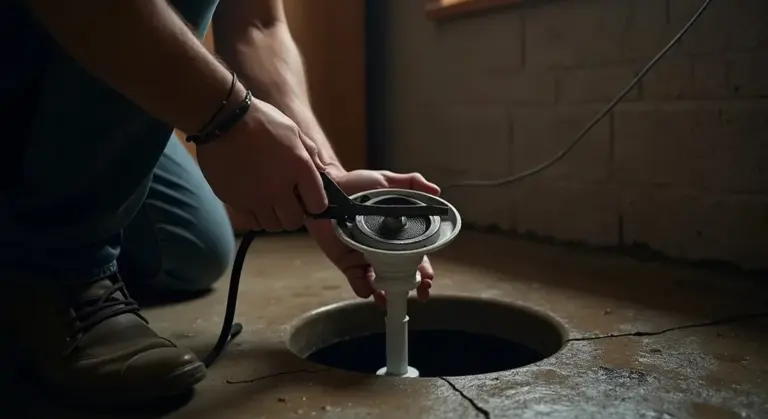
The easiest method is to use a drain funnel or a simple floor drain cover with a hole in it. Feed the hose through the hole so it points down into the drain, but the hose does not form a water-tight seal with the cover. That open space around the hose is your air gap.
Alternatively, you can set the hose loosely into the standpipe, again ensuring it’s not a tight fit. This breaks the direct connection to the sewer line while still allowing water to flow in.
Stop Problems Before They Start: Preventing Backflow and Siphoning
Think about putting a straw in a glass of water. If you suck on the straw, the water comes up. If you lift the straw high enough, gravity pulls the water back down and it stops. Your dehumidifier drain hose works the same way. If the hose end dips down into the sump water or a floor drain, it can start to act like that straw.
This is called siphoning, and it will pull dirty water from your sump or drain right back into your dehumidifier, causing a mess and ruining the unit. To prevent this, ensure the discharge is directed away from the foundation. This simple routing helps keep water away from the footing and protects your home.
The golden rule is simple. You must break that siphon. You do this by creating a high loop or an air gap in the drain hose. Never let the hose run straight down into the pit.
Here is how to do it right. Route the hose from the dehumidifier up high, at least to the top of the sump basin rim or higher, before it drops down toward the water. This creates the high loop. Secure that high point with a zip tie to a pipe or joist so it stays put. For an even safer fix, use a special drain hose fitting with a built in air gap, or simply cut the hose so it terminates an inch or two above the rim of the sump lid. That visible gap is your insurance policy. If you’re planning a vent install for a basement sump pump, plan the vent path to prevent backflow and keep it above the water line. A proper vent helps the system breathe and keeps the area dry.
Keeping It Flowing: Your Maintenance and Cleaning Schedule
A neglected drain hose will clog. A clogged hose means the dehumidifier shuts off, and your basement gets damp again. This maintenance is simple and fast.
First, answer the common question: how do you clean the hose? You flush it. For most homes, a simple vinegar and water solution does the trick to kill the slime and algae that build up inside. This method is similar to cleaning water lines for sediment and scale.
Follow this quarterly checklist to keep water moving:
- Disconnect the hose from the dehumidifier.
- Flush it with a mix of one part white vinegar to four parts warm water.
- Check the inside for visible algae or gunk (clear hoses make this easy).
- Inspect the hose clamps or connections for rust or cracks and tighten them.
- Run a gallon of clean water through to rinse.
Watch for these red flags. They tell you maintenance is overdue:
- Water drains slower than it used to.
- You see water backing up into the dehumidifier’s drain pan.
- There is a musty smell near the unit or the drain point.
- You spot green or black slime inside a clear hose.
Monthly Quick Check
Once a month, take 30 seconds. Look at the hose path. Make sure it has no kinks or sharp bends that pinch the flow. Check the connection at the dehumidifier for any drips or moisture. If it is wet, tighten the clamp or push the hose on further.
Quarterly Deep Clean
Every three months, do the full flush. Disconnect the hose at both ends if you can. Pour the vinegar solution into one end, swish it around, and let it sit for ten minutes. Then flush it out thoroughly. This prevents the biofilm that slows drainage and causes smells. I do this at my house the same weekend I check my water softener salt level, so it is easy to remember.
The DIY vs. Pro Verdict and When to Call for Help
Let’s get real about what you’re signing up for. This project’s difficulty swings wildly based on your basement’s setup.
I give it a solid 3 out of 10 if you’re simply running a hose into an open sump crock or floor drain. It’s mostly about positioning and securing the line. The difficulty jumps to a 5/10 if you need to tap into a sealed drain line, as that involves working with plumbing adhesives, proper fittings, and fall.
The line in the sand is clear. If your plan requires cutting into existing ABS or PVC drain pipes to install a tee fitting or a dedicated drain inlet, that’s your signal. Call a professional. Gluing pipes is simple in theory, but a poor seal or incorrect slope creates leaks inside your walls that you won’t see until there’s major damage.
Here’s a crucial code note you must know. The Uniform Plumbing Code (UPC) and International Plumbing Code (IPC) often require that any permanent, sealed connection to a sanitary drain system be performed by a licensed plumber. This isn’t just bureaucracy; it’s to prevent cross-contamination and ensure proper venting. Draining into a sump crock that pumps to daylight is usually fine, but directly gluing into your home’s main drain often is not a DIY task.
And for the common electrical question: can a sump pump and dehumidifier share the same circuit? Technically, yes, they often do in a basement. But you must be smart about it. A standard dehumidifier pulls 5-7 amps, and a sump pump can draw 8-10 amps on startup. On a 15-amp circuit, that’s pushing the limit if they both kick on together. My rule in my own home is to avoid sharing that circuit with any other major appliance. If the circuit is already dedicated to the sump pump, plug the dehumidifier in elsewhere. Overloading a circuit is a fast track to a tripped breaker right when you need the pump most, especially when considering the safety requirements for sump pump electrical circuits.
You Can Handle This If…
You are absolutely equipped to tackle this job yourself under one straightforward condition.
- The drain point is physically accessible and you are just running a hose to it. This means you can visually see the open sump pump pit, a floor drain, or a utility sink. Your job is logistics: getting the correct diameter hose, routing it neatly without kinks, and securing it so it stays put. No cutting, no glue, no permanent alterations.
Time to Call a Plumber If…
Recognizing when you’re out of your depth saves money and prevents disasters. Make the call for these scenarios.
- You need to drill into the basement floor slab to install a new drain line or core drill through a foundation wall. This requires masonry tools and knowledge of what’s buried in that concrete.
- You are unsure about local codes regarding draining into a septic system. This is a critical keyword search: “can a sump pump drain into a septic” system? The answer varies, and getting it wrong can hydraulically overload and ruin your septic field. A local plumber or your health department will know your area’s rules. Never guess with a septic system.
Quick Answers
How do I ensure the connection between the dehumidifier drain hose and the sump pump or drainage system is secure and leak-proof?
The secret is in the clamp and the test. Always use a stainless steel hose clamp on a barbed fitting and tighten it snugly with a screwdriver. After making the connection, run the dehumidifier and physically check for drips at both the unit and the drain point for a full 30 minutes.
Can I connect a dehumidifier drain hose directly to a floor drain, and if so, how?
Yes, you can. The critical rule is to never create a direct, sealed connection. Instead, feed the hose through a hole in a drain cover or let it rest loosely in the pipe, ensuring an air gap remains to stop sewer gases from entering your home.
How do I prevent backflow or siphoning when connecting a dehumidifier to a drainage system?
Create a high loop. Route the hose upward, securing it to a joist or pipe above the rim of the sump pit or floor drain before it descends. This loop breaks the siphon, preventing dirty water from being pulled back into your unit. It’s especially important to ensure the drain is clear, so unclog any sediment or debris from the discharge pipe.
What should I do if my dehumidifier drain hose is not long enough to reach the sump pump or drain?
Use a straight barbed coupling to join two sections of the same diameter vinyl tubing. Secure the joint with a hose clamp on each side of the coupling. Avoid adding multiple extensions, as this increases the chance of kinks and leaks.
What are common mistakes to avoid when connecting a dehumidifier drain hose?
The top three are: letting the hose end sit underwater in a sump pit, creating sharp kinks that block flow, and forgetting to test for leaks. Also, never glue or permanently seal the hose into a floor drain, as an air gap is mandatory for safety.
Keeping Your Dehumidifier Drain Working Right
Always double-check that your hose connections are snug and sealed with a clamp to stop leaks before you walk away from your sump pump connections. Make sure the entire hose path slopes steadily down toward the sump or drain so gravity can do its job and prevent clogs.