Hot Water Heaters and Your Taxes: The 2025 Guide to Credits and Rebates
Thinking about a new water heater? You might be able to get the government to help pay for it. Good tax breaks exist, but you need the right information.
This guide walks you through the current landscape. We will cover how the tax credits work, what makes a heater qualify, finding local utility rebates, and keeping the paperwork you need to file.
I’ve installed dozens of these systems and claimed the credits on my own home. The short takeaway is simple: get the right heater, save your receipts, and get money back. Done it myself, it works.
Can I Claim a Water Heater on My Taxes? The Three Ways to Save
Yes, you can often save money on a new water heater through tax breaks and rebates. You have three main paths: a tax deduction, a tax credit, or a rebate. Think of them this way.
- A tax deduction is like a storewide discount. It reduces the total amount of your income that gets taxed.
- A tax credit is like a gift card to pay your bill. It reduces your tax bill dollar for dollar.
- A rebate is instant cash back. You get a check or an upfront discount.
For a standard homeowner, a tax credit or rebate is your most likely path to savings. Tax deductions are usually reserved for rental properties or business assets. Your savings are tied directly to energy efficiency, not just buying a new unit. Replacing a broken 20-year-old heater with a basic new one won’t qualify. You need a high-efficiency model.
Tax Deductions: Usually for Landlords and Businesses
A deduction lowers your taxable income. If you install a water heater in a rental property, you may deduct its cost as a business expense. This often involves depreciation over several years or using something called the Section 179 deduction.
This answers a common question: “Are water filtration systems tax deductible?” The answer is yes, but typically only if installed in a rental property where it’s considered a business improvement.
The DIY vs. Pro Verdict: Navigating rental or business deductions is a Pro task, with a difficulty of 9 out of 10. The rules are complex. If you’re a landlord, you should consult a tax professional. Do not try to figure this out on your own.
Tax Credits: Money Off Your Tax Bill
This is the big one for homeowners. A tax credit is better than a deduction because it cuts your final tax bill directly. If you owe $2,000 in taxes and get a $600 credit, you now owe $1,400.
The primary federal credit is the Energy Efficient Home Improvement Credit (IRS Section 25C). For 2023 and beyond, this credit covers 30% of your project cost, up to a $1,200 annual limit for most items (water heaters have a separate $600 cap). Your new water heater must meet specific efficiency criteria set by the government to qualify.
Rebates: Instant Cash Back
Rebates come from utility companies or state programs, not the IRS. You might get a check in the mail after installation or an instant discount at the register. The best part? You can often stack a rebate with a federal tax credit.
A major new source is the Inflation Reduction Act’s HOMES program. This funds state-run rebates for energy-efficient upgrades. Check with your local utility and state energy office. They will have the most current offers.
Which Water Heaters Actually Qualify for the Money?
Not all water heaters are created equal in the eyes of the IRS or your utility company. ENERGY STAR® certification is the common starting point, but specific rules apply. Here’s a quick comparison.
| Heater Type | Typical Incentive Potential | Key Qualification Note |
|---|---|---|
| Heat Pump (Hybrid) Water Heater | Very High (Max Credit/Rebate) | Must be ENERGY STAR® certified, with a high UEF. |
| Solar Water Heater | High (Separate Credit) | Qualifies for the Residential Clean Energy Credit (30%). |
| High-Efficiency Gas Tank/Tankless | Moderate | Must meet strict UEF thresholds (e.g., ≥ 0.87 for gas). |
| Standard Gas or Electric Tank | Low or None | Rarely meets the high efficiency bars for credits. |
Heat Pump (Hybrid) Water Heaters: The Top Performer
These units are the most efficient you can buy. They use a heat pump to pull warmth from the air, using far less electricity than standard elements. Because they save so much energy, they often qualify for the maximum available tax credit and the juiciest utility rebates.
Water Science Snippet: Efficiency is measured by the Uniform Energy Factor (UEF). Think of it like miles per gallon for your water heater. A higher number means more hot water per dollar. A standard electric heater has a UEF around 0.9. A qualifying heat pump model needs a UEF greater than 3.0. They can be over 300% efficient. That’s at the heart of water heater consumption efficiency—how quickly the unit converts energy into hot water. In the next steps, you’ll see implicit links to tips for improving efficiency in daily use.
When shopping, look specifically for “ENERGY STAR® Certified Hybrid Electric Heat Pump Water Heaters.” This is the category that unlocks the savings. These hybrid models offer both energy efficiency and reliable performance.
Solar Water Heating Systems
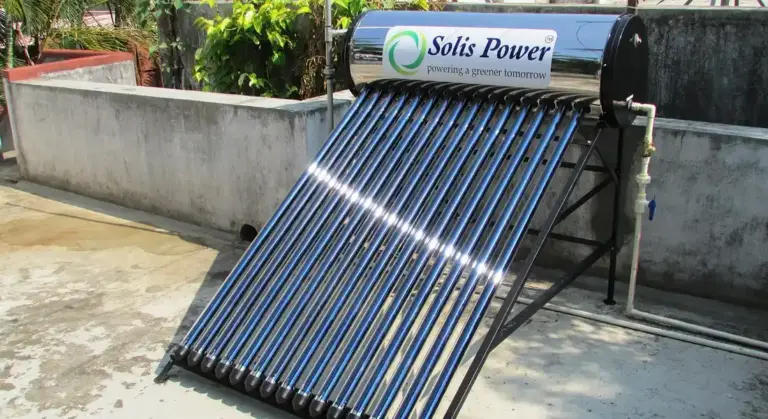
These systems are a major project. They have their own dedicated federal tax credit called the Residential Clean Energy Credit (Section 25D). This is also 30% of the cost with no annual dollar limit. The rules and qualifications are entirely separate from the standard water heater credit. For solar water heating purification systems, the same incentives often apply. They can help offset the cost of installation when combining heating with purification features. Talk to a qualified solar installer for details.
High-Efficiency Gas, Oil, and Electric Tank/Tankless
It is possible for a non-heat-pump unit to qualify, but the bar is high. A standard gas tank heater from a big-box store usually won’t make the cut. To get the credit, a gas storage water heater must have a UEF of 0.87 or higher, and many standard models sit at 0.67. You need to seek out premium, high-efficiency models.
Code & Compliance Check: Installation matters as much as the unit itself. The heater must be installed per the manufacturer’s instructions and must comply with National Fire Protection Association (NFPA) codes. Your most important paperwork is the Manufacturer’s Certification Statement. Reputable brands provide a signed document stating the model qualifies for the tax credit. Keep this with your tax records.
The Paper Trail: Documentation You Must Keep
Think of your paperwork like your water heater’s anode rod. You don’t see it working, but if it’s missing, the whole system fails. The IRS or your utility company will not take your word for it. You need proof.
If you bought a qualifying heater but didn’t keep the documents, you cannot claim the credit or rebate. It’s that simple. No receipt means no proof of purchase. No certification means no proof it qualifies. Start collecting paperwork from the moment you decide to buy.
Your Essential Filing Cabinet
Here is your tools and material checklist for paperwork. Get a folder or a dedicated spot on your computer and save these three things immediately.
- Itemized Sales Receipt: This is your bill from the store or online retailer. It must show the water heater’s model, the date you bought it, the price you paid, and that you paid for it (like a credit card last four digits). A bank statement alone is not enough.
- Manufacturer’s Certification Statement: This is a document from the company that made your water heater. It states the model meets federal energy efficiency standards for the tax credit. You can usually find this PDF on the product page online or in the box. Save this file. You cannot get the credit without it.
- Model and Serial Number Records: Write these down from the unit’s label. Take a clear photo of the label itself. This links your receipt and certification to the exact unit in your home.
Treat these documents like a maintenance schedule. Keep all records for at least 3 years after you file the tax return claiming the credit. The IRS can ask to see them during that time.
Installation Records Matter
How the heater gets into your home matters for some credits and most rebates. You need to prove it was installed correctly, not just sitting in your garage.
If you did the install yourself, you are your own contractor. Document your work. Take photos during the install showing the old unit out and the new unit connected. Keep notes on model numbers and a basic log of your steps that followed local plumbing code (like using proper venting and pressure relief valves).
If a professional installed it, their invoice is your golden ticket. The invoice must have the contractor’s name, address, and license number. It should describe the work done and list the product details installed. Some jurisdictions require a permit for a water heater install; the invoice should note permit status and the authority that approved it. That helps confirm the install meets code and avoids future issues. A generic “install water heater” invoice might not cut it, ask for one that specifies the model.
How to Claim Your Credit or Rebate: A Step-by-Step Guide
Getting your money back follows two different paths. Do not mix them up. A tax credit reduces your federal income tax bill. A rebate is a direct discount or check from another program.
Claiming a Federal Tax Credit on Form 5695
This happens when you file your yearly income taxes. It’s a line on your return.
- Gather your documentation. You need your itemized sales receipt and the Manufacturer’s Certification Statement in front of you.
- Complete IRS Form 5695, called Residential Energy Credits. You will enter the cost of your qualifying water heater and other eligible items here. The form will calculate your credit amount.
- Attach Form 5695 to your Form 1040 when you file your taxes. You transfer the credit amount from 5695 to your 1040. Most tax software will handle this if you answer its questions about energy improvements.
- Keep your documentation on file. Do not send your receipt to the IRS unless they ask. Just keep everything safe for 3 years.
Chasing Down a Rebate
Rebates are not automatic. You must apply for them, and the rules are different everywhere. The biggest mistake is buying the heater first.
- Find programs before you buy. Check the Database of State Incentives for Renewables & Efficiency (DSIRE) website. Visit your local utility company’s website. Call your state energy office. Rebate programs often have limited funds and specific model lists, so confirm your plan qualifies before you spend a dime.
- Follow their process exactly. Many programs require pre-approval. After installation, they may need a post-inspection or a copy of your contractor’s invoice. Fill out their application completely and submit it by their deadline.
- Wait for your money. Rebates rarely come fast. Expect a check in the mail or a credit on your utility bill weeks or months after your application is approved.
Red Flags: When Your Incentive Claim Can Go Wrong

Getting money back feels great. Getting a letter from the IRS does not. Avoid these expensive errors that can turn your credit into an audit.
Buying a Unit That Doesn’t Meet the UEF Threshold
The term “energy efficient” on a box is marketing. The Uniform Energy Factor (UEF) number on the specification sheet is law.
For the federal tax credit, a heat pump water heater needs a UEF of 2.2 or higher. For gas condensing models, it’s 0.87 UEF or higher and 90% thermal efficiency. A standard efficient model won’t cut it.
Always get the model’s spec sheet and confirm the exact UEF meets the current IRS requirements before you buy. I’ve seen folks in my own neighborhood buy the “eco” model only to find out it missed the mark by a few decimal points.
Poor or Uncertified Installation
The IRS and your utility company don’t just take your word for it. They want proof the job was done right.
An improper installation voids your claim. This means incorrect electrical wiring, not using the right venting for a gas unit, or failing to follow the manufacturer’s manual to the letter.
Keep every document: the installation manual, the contractor’s license and invoice listing the model number, and any local permit or inspection sign-off. If you DIY, you are the contractor and are responsible for meeting all codes.
Missing the “Principal Residence” Rule
This rule trips up many people. Federal tax credits are for improving the home you live in most of the time.
That rental property or lake cabin doesn’t qualify. Your primary home does. The IRS defines this clearly, and claiming a credit for a second home is a straightforward path to trouble.
Federal credits are for your main address only; always check the fine print on state or utility rebates as their rules can differ. Don’t assume what works for one incentive works for all.
Putting It All Together: A Real-World Example
Let’s make this concrete. Say your old electric water heater finally quits. You decide to upgrade to a heat pump model.
You do your homework and buy a qualifying 50-gallon heat pump water heater. The total cost, including the unit and some new plumbing parts, is $2,500 installed in your primary residence. Is it worth it? For many homeowners, the long-term energy savings make heat pump water heaters worth it.
You can claim 30% of that cost as a federal tax credit. That’s $750 off your tax bill when you file. Your local power company also offers a $300 rebate for installing efficient models.
Your final out-of-pocket cost drops from $2,500 to $1,450 after the rebate and tax credit. That’s a major difference that makes the upgrade make financial sense.
Tools & Material Checklist
If you were to tackle this install yourself, here’s what you’d need on hand:
- Pipe wrenches (two are better than one)
- Tubing cutter for copper or PVC saw
- Non-contact voltage tester
- Solder, flux, and torch (or PEX expansion/crimp tools)
- Teflon tape and pipe dope
- Dielectric unions to prevent corrosion
Remember, a heat pump water heater requires a dedicated 240-volt circuit, which is serious electrical work that often demands a licensed electrician. Also, check the venting and ventilation requirements for the unit to comply with local codes and ensure safe operation.
The DIY vs. Pro Verdict
This is not a simple swap. You’re dealing with heavy lifting, precise plumbing, high-voltage electrical connections, and sometimes refrigerant lines.
Difficulty Rating: 8/10. For a heat pump water heater installation, I strongly recommend hiring a licensed plumber and electrician. A botched install risks water damage, electrical hazard, and losing your entire incentive. The pro cost is worth the safety and guarantee that your claim will stand up. It’s a tricky job, but well worth it for the long term savings.
Common Questions
How do I prove my water heater qualifies if I buy it online?
Save the digital receipt and immediately download the Manufacturer’s Certification Statement from the product page. Print these or save them in a dedicated folder on your computer. The certification is your legal proof for the IRS, so don’t skip this step.
Can I combine a federal tax credit with my utility’s rebate?
Yes, in most cases you can “stack” these savings. The tax credit comes from the IRS, and the rebate comes from a separate program. Always check your specific utility rebate’s terms to confirm there are no restrictions on combining incentives.
Are there income limits that could disqualify me from these tax credits?
For the federal Energy Efficient Home Improvement Credit (Section 25C), there are no income limits. However, some state or utility rebate programs, especially those from the new HOMES program, may have income qualifications. Always verify with the rebate provider first.
What should I do if my installer won’t give me a detailed invoice?
Do not accept a vague invoice. A proper invoice listing the installed model number and the contractor’s license is required for many rebates and protects you. Politely insist on an itemized receipt; it’s proof of correct, professional installation for both your safety and your claim.
If I sell my house, can the new owner claim the credit I didn’t use?
No. Tax credits are claimed by the taxpayer who paid for and installed the improvement in their primary residence. The credit does not transfer with the house. If you qualify, you must claim it on your taxes for the year the heater was installed.
Your Roadmap to Water Heater Savings
Always confirm your new water heater’s efficiency rating against current federal and state incentive programs before you buy. Hold onto every receipt and installation document-you’ll need them to claim your credits or rebates correctly. Remember to factor in installation costs and the ongoing operating costs when evaluating options. This helps you estimate true long-term expenses, not just the upfront price.
Bob McArthur
Bob is a an HVAC and plumbing industry veteran. He has professionally helped homeowners resolve issues around water softeners, heaters and all things related to water systems and plumbing around their homes. His trusted advice has helped countless of his clients save time, money and effort in home water systems maintenance and he now here to help you and give you first hand actionable advice. In his spare time, Bob also reviews home water systems such as tankless heaters, water softeners etc and helps home owners make the best choice for their dwelling. He lives around the Detroit area and occasionally consults on residential and commercial projects. Feel free to reach out to him via the contact us form.