Gas Water Heater Shutting Off? Here’s How to Fix It
Your gas water heater keeps turning off, leaving you with cold water. That’s annoying, but usually easy to fix.
We will cover a simple safety check, testing the thermocouple, inspecting the gas supply, and clearing ventilation problems.
I’ve fixed this issue in my own home and on countless service calls. Your first move is always to check if the pilot light is lit.
Safety First: Your Pre-Troubleshooting Checklist
Gas appliances demand respect. Before you touch anything, complete this checklist. Skipping a step is not an option.
Non-Negotiable Safety Steps
- Turn the gas control valve to the “OFF” or “PILOT” position. This is usually a knob on the front of the unit.
- Shut off the gas supply line valve. This is the handle on the flexible yellow corrugated pipe or black iron pipe leading into the heater. Turn it 90 degrees so it’s perpendicular to the pipe.
- Ensure the area is well-ventilated. Open a door or window near the water heater.
- Have a class ABC fire extinguisher nearby and ensure your home’s smoke and carbon monoxide detectors have fresh batteries.
The Smell of Rotten Eggs
Natural gas is odorless. Utility companies add a chemical called mercaptan so you can smell a leak. It smells like sulfur or rotten eggs. If you smell this at any point, do not troubleshoot, do not turn on lights, and do not create a spark. Immediately leave the house and call your gas company or 911 from outside.
When NOT to Try This Yourself
Stop immediately and call a licensed plumber or gas technician if you encounter any of these red flags before or during your checks:
- A persistent smell of gas (rotten eggs).
- Visible black soot or scorch marks on the heater or vent pipe.
- Loud banging, rumbling, or popping noises from the tank.
- Water pooled around the base of the unit (this indicates a tank leak, which is a replace, not repair, situation).
Tools & Material Checklist
Gather these items. You likely have most in your garage.
- Adjustable wrench or channel-lock pliers
- A bright flashlight
- Can of compressed air (for electronics)
- A basic multimeter (for continuity checks)
- A shop vac with a dry filter (for cleaning)
How a Gas Water Heater Knows When to Shut Off
Your water heater has a simple, fail-safe brain. It doesn’t think. It just reacts to a few key signals. When it shuts off, it’s because one of these safety components gave the order. That decision hinges on the water temperature you set. The thermostat keeps the tank at the chosen working temperature, turning the heater off when it hits that target.
The Core Safety Trio
Three main parts work together to control the gas and flame.
- Thermocouple (or Pilot Generator on newer models): This is a thin copper rod that sits in the pilot flame. Its job is to prove the pilot is lit. Think of it as a security guard; if the guard (pilot flame) isn’t at his post, the main gate (gas valve) stays locked. If it fails, the gas valve shuts off all gas, thinking the pilot is out.
- Gas Control Valve: This is the main control knob. It receives the “all clear” signal from the thermocouple and opens to allow gas to the main burner when the thermostat calls for heat.
- High Limit Switch (Energy Cut Off or ECO): This is the last line of defense. It’s a switch that trips if the water temperature gets dangerously high (usually around 180°F). Once it trips, it cuts power to the gas valve, shutting everything down. A tripped ECO often indicates a sediment problem causing the burner to overwork and overheat the tank’s bottom.
What a High Temperature Shutdown Really Means
When the ECO switch trips, it’s a major symptom, not the cause. The heater got too hot. This switch is a one-time fuse on most models. If it trips, the entire gas valve usually needs replacement, which is a costly repair. More importantly, you must find out *why* it overheated to prevent it from happening again. Unlike an electric water heater tripping a breaker, this is a sign of a mechanical failure.
Water Science Snippet: The Sediment Connection
All water contains dissolved minerals, measured as Total Dissolved Solids (TDS). When you heat water, these minerals, like calcium and magnesium, solidify and fall out of solution. They settle at the bottom of your tank, forming a layer of sediment. This layer acts like a blanket between the burner flame and the water. The burner must work harder and hotter to heat the water through this insulating sludge, which can cause the tank’s lower section to overheat and trip the ECO switch. This is why flushing your tank annually is critical maintenance, especially if you have hard water.
The Red Flag Troubleshooting Guide: Start Here
Follow this list like a flowchart. Start at the top and work down until you find your specific symptom. It will point you to the right cause and solution.
- Is your pilot light completely out and won’t relight? This points to a gas supply issue or a faulty gas control valve. Check if your other gas appliances work. If they do, the valve is likely bad.
- Does the pilot light go out as soon as you release the pilot knob? A weak or dirty thermocouple is the classic culprit. It’s not generating enough voltage to tell the gas valve the pilot is lit.
- Is the pilot on, but the main burner won’t ignite at all? Your thermostat might have failed, or the gas valve’s main operator is shot. You need a pro to test it.
- What does it mean if the pilot light is on but the burner won’t stay lit? This is common. The burner ignites for a few seconds then shuts off. This usually means a blocked vent or flue. The unit can’t exhaust properly, so a safety switch kills the burner to prevent carbon monoxide backup.
- Does the burner ignite and run for a while, then the whole unit shuts down (pilot included)? Your high limit switch (ECO) has tripped. This is a safety for overheating, often caused by severe sediment buildup or a failed thermostat.
Common Fixes You Can Handle (And One You Can’t)
Overall, tackling this problem yourself is a moderate 6/10 on the difficulty scale. You need basic tools and comfort around gas appliances. Some individual tasks, however, are much simpler. Always turn off the gas at the shutoff valve before starting any work.
Cleaning a Dirty Pilot Assembly and Thermocouple
Symptoms: Pilot flame is weak, yellow, or lazy. It goes out when you release the knob.
Tools Needed: Phillips screwdriver, compressed air can, fine grit emery cloth or steel wool.
Steps:
- Turn the gas control knob to “OFF” and wait 5 minutes for gas to clear.
- Remove the access panel covering the pilot area.
- Unscrew the thermocouple and pilot tube from the gas valve. The assembly is usually held by one bracket.
- Blow compressed air through the pilot tube and orifice. Use the emery cloth to gently polish the tip of the thermocouple (the thin copper rod). Remove all soot.
- Reattach everything, turn the gas back on, and relight the pilot following the instructions on the tank’s label.
How can you clean a dirty thermocouple or pilot assembly? This is how. It’s a straightforward job. Keeping the thermocouple and pilot clean is part of regular water heater maintenance. Cleaning and maintaining the thermocouple and pilot on your water heater ensures reliable operation and longevity.
Resetting the High Limit (ECO) Switch
Symptoms: No hot water. The pilot and burner are both off. You might hear a faint click from a tripped switch. This is the first checkpoint in a water heater not heating troubleshooting guide. Follow the guide to verify power and ignition status before proceeding.
Tools Needed: Just a flashlight.
Steps:
- Find the access panel for the thermostat. It’s usually held by one or two screws.
- Look for a red button near the thermostat. That’s the high limit reset.
- Firmly press the red button. You might feel or hear a click.
- Replace the panel. The pilot should now stay lit when relit, and the burner should operate.
This switch trips because the water got too hot. Sediment at the bottom of the tank acts like insulation. The burner heat can’t escape into the water, so the metal at the bottom overheats and triggers the switch. If the ECO trips again right away, you have a recurring overheating problem. You must fix the root cause (like flushing sediment) or replace a faulty thermostat. To prevent further trips, learn about the common causes of water heater reset trips and practical solutions in the next steps.
Checking for a Blocked Vent or Flue
Symptoms: Burner lights but dies after a few seconds. You might notice a draft coming from the vent hood.
Tools Needed: A lit incense stick or a smoke pen. A shop vac with a hose attachment.
Steps:
- With the water heater off, hold the smoking incense stick near the draft hood (the opening at the top of the unit where the flue pipe connects).
- The smoke should be pulled steadily up into the vent pipe. If it wavers or gets blown back, you have a blockage or backdraft issue.
- Check the vent pipe running to the chimney or outside. Look for dents, bird nests, or leaves.
- Use a shop vac to clear any debris from the bottom of the vent pipe at the draft hood.
Flues must be intact and maintain proper clearance to combustibles, as per the International Plumbing Code (IPC). A crushed or disconnected vent is a carbon monoxide hazard and a common reason for safety shutdowns.
Flushing the Tank to Combat Sediment
Symptoms: The unit cycles on and off strangely, you hear rumbling or popping noises, or the high limit switch keeps tripping.
Tools Needed: A standard garden hose, a flathead screwdriver or a drain valve key, and a bucket.
Steps:
- Turn off the gas to the water heater.
- Connect the hose to the drain valve at the bottom of the tank. Run the other end to a floor drain or outside.
- Open a hot water faucet in the house to let air into the system.
- Open the drain valve and let the water flow until it runs completely clear. This may take several minutes if the tank is bad.
- Close the drain valve, remove the hose, turn the gas back on, and relight the pilot.
How can sediment buildup cause the heater to overheat and shut off? The layer of sand and mineral scale at the bottom creates a barrier. The fire heats the tank bottom to extreme temperatures before the water above it gets hot. This overheated metal is what trips the high limit safety switch. Regularly cleaning sediment scale is important for both electric and gas water heaters. It helps maintain efficient heat transfer and reduces the risk of overheating and nuisance shutoffs.
The One Fix You Can’t Do: Gas Supply and Valve Issues
Symptoms: The burner sputters or has a lazy, yellow flame. Multiple gas appliances in your home struggle when used together. The pilot orifice is clean but the flame is still weak.
This is not a DIY fix. Diagnosing and repairing gas supply issues requires a licensed professional.
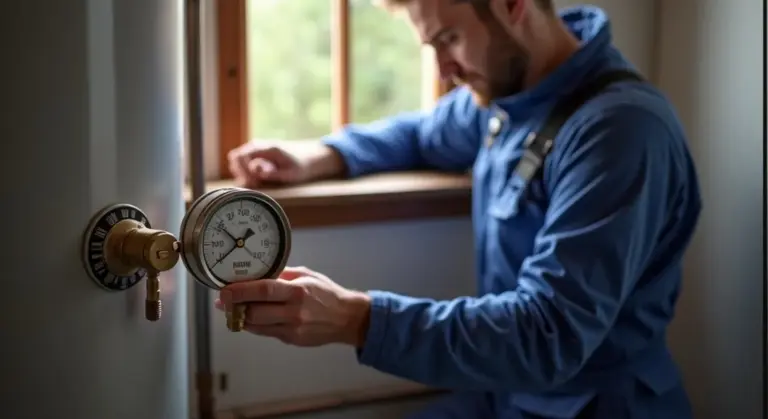
A failing gas valve or an undersized gas line can cause intermittent shutdowns. The valve may not open fully, starving the burner of fuel. An undersized line can’t deliver enough gas if your furnace and stove are running at the same time. How do you check the gas pressure and supply? You use a manometer, and you call a pro who has one and knows how to use it. Tampering with the gas valve or supply line is dangerous and often against code.
Keeping It Running: Your Maintenance Roadmap
A little care goes a long way. Neglect your water heater, and it will shut off out of protest. Follow this simple annual schedule to keep it running smoothly.
Your Annual Water Heater Checkup
Pick a date you’ll remember, like your birthday or the start of fall. Do these three things once a year.
- Check the Anode Rod: This metal rod sacrifices itself to protect your tank from corrosion. Unscrew it from the top of the tank. If it’s less than 1/2 inch thick or coated in calcium, replace it. A fresh anode rod is the cheapest insurance for a long tank life.
- Flush the Tank: Sediment is the enemy. Hook a standard garden hose to the drain valve at the bottom. Run the hose to a floor drain or outside. Turn off the cold water supply, open the drain valve, and let it flow until the water runs clear. This can take 5 to 10 minutes.
- Inspect the Vent: Go outside and look at the vent pipe (the metal chimney on your roof or wall). Make sure the cap is intact and there are no bird nests, leaves, or snow blocking it. A blocked vent will cause the heater to shut down.
What Helped Me: The Thanksgiving Flush
A few years back, my heater started acting up in early November. It would run for 15 minutes then click off. I was busy and ignored it. The week before Thanksgiving, with family coming, it died completely. The tank was so packed with sand and grit from my well that the burner overheated and tripped the safety (ECO). I had to do an emergency flush. That frantic, muddy flush on my driveway saved Thanksgiving but taught me a lesson. Now I flush my tank every October without fail. It takes 15 minutes and guarantees I’m not the reason for a cold holiday shower.
Recommended Products for Simple Maintenance
- A Standard 5/8-inch Garden Hose: Keep one dedicated for flushing. Don’t use your good yard hose.
- A Basic Sediment Filter: Install an inexpensive spin-down or cartridge filter on your cold water inlet line. This single filter can cut the sediment entering your tank by 80%, making annual flushes quicker and easier.
- A New Anode Rod: Buy the correct type (magnesium or aluminum) for your water and have it on hand. When you check the old one, you can swap it immediately.
When Maintenance Isn’t Enough: Considering an Upgrade
You can only polish a turd so much. If your 12-year-old heater needs a new thermocouple, gas valve, and anode rod, you’re throwing good money after bad. Consider an upgrade to a tankless or high-efficiency model when repair costs approach half the price of a new unit. Tankless heaters don’t store water, so they can’t collect sediment. They also last longer and free up floor space. For a household that has outgrown its 40-gallon tank, moving to a larger conventional or a tankless system isn’t a luxury, it’s a logical fix for persistent hot water shortages. To maximize reliability, follow the brand’s maintenance guidelines for your tankless model. Regular, brand-specific service—like periodic descaling and prompt part checks—helps keep it efficient and long-lasting.
When to Wave the White Flag and Call a Professional
Gas is dangerous. Water and electricity are dangerous. Know your limits. Here are the signs that mean stop, shut off the gas, and pick up the phone.
- You smell gas, even faintly, near the water heater.
- You see water leaking from or pooling around the gas control valve.
- The high-temperature cutoff (ECO) trips repeatedly, even after you’ve flushed sediment.
- You notice black, sooty residue around the burner access panel or on the vent pipe.
- The pilot light or burner flame is any color other than steady blue (yellow or orange flames are bad).
Working on the gas control valve, the thermocouple, or the gas supply line is not a DIY task. One small mistake in reassembly can cause a leak or a dangerous malfunction. Your homeowners insurance likely will not cover a disaster caused by unlicensed gas work.
Choosing a Qualified Technician
Don’t just call the first name in an online ad. A good pro is worth the wait.
- Licensed and Insured: They must hold a current state or local plumbing license and carry liability insurance. Ask for proof.
- Familiar with Local Codes: Venting requirements change by region. A technician who works in your town regularly will know what’s required to pass inspection.
- Provides Clear Estimates: They should diagnose the problem, explain your options (repair vs. replace), and give a written price before any work begins.
Final FAQ: When Should I Call a Professional Plumber?
Call a pro immediately for any gas smell, water at the gas valve, or persistent ECO trips. Call one for a consultation if you’re facing a major repair on an old unit or considering a system upgrade. A professional assessment can save you from a costly mistake, whether that’s an unnecessary repair or an undersized new installation. Your job is maintenance and simple part swaps. Their job is everything involving gas pressure, combustion safety, and complex diagnostics.
Quick Answers
Why does my water heater shut off when I use hot water?
This usually points to sediment buildup. The layer of sludge insulates the tank bottom, causing it to overheat and trip the safety switch when the burner runs to replenish hot water. A thorough tank flush is your first and best action.
What are the signs of a failing gas line or supply issue?
Watch for a weak, yellow burner flame, especially if other gas appliances struggle when running together. The burner may sputter or the unit might shut down under high demand. This requires a professional with a manometer to test gas pressure-do not attempt to adjust the gas line yourself.
What’s the immediate sign of a blocked vent or flue?
The main burner will ignite but then shut off after a few seconds. This is a critical safety shutdown to prevent carbon monoxide backup. Perform the simple incense test at the draft hood to check for proper updraft.
What does the high-temperature cutoff switch actually do?
It’s a final safety switch that cuts all power to the gas valve if the water temperature reaches a dangerous level (around 180°F). If it trips, you can often press a red reset button, but you must address the root cause-usually severe sediment-or it will trip again.
When is it absolutely time to call a professional?
Call a licensed technician immediately for any gas odor, visible soot, water at the gas valve, or if the high-limit switch trips repeatedly after a tank flush. These indicate potentially dangerous combustion or mechanical failures that are beyond safe DIY repair.
Final Steps to Keep Your Water Heater On
When your gas water heater keeps shutting off, always check the thermocouple and pilot light first, as a weak or dirty flame is the usual culprit. Make sure your gas valve is fully open and the ventilation is clear to stop the problem from coming back.
Written by Bob McArthur. Bob is a an HVAC and plumbing industry veteran. He has professionally helped homeowners resolve issues around water softeners, heaters and all things related to water systems and plumbing around their homes. His trusted advice has helped countless of his clients save time, money and effort in home water systems maintenance and he now here to help you and give you first hand actionable advice. In his spare time, Bob also reviews home water systems such as tankless heaters, water softeners etc and helps home owners make the best choice for their dwelling. He lives around the Detroit area and occasionally consults on residential and commercial projects. Feel free to reach out to him via the contact us form.