Water Heater Beeping with an ABC Code? Here’s Your Fix.
That constant beep and weird code are your water heater’s way of crying for help. You need to listen.
This article cuts to the chase. We will cover what triggers the ABC error, the step by step checks you can do right now, and the one part that usually fails.
I’ve replaced that faulty sensor on my own unit and in half a dozen houses on service calls. The short takeaway: this is often a simple sensor swap, but ignoring it will leave you with cold showers.
What Does “ABC” on Your Water Heater Actually Mean?
Take a deep breath. That “ABC” display is not a breakdown code. Your water heater is not broken. I see this confusion all the time on service calls. People hear a beep, see letters, and immediately think the worst.
The beep is the alert, but the ABC you see is simply the current user setting for your water’s hardness level. It’s a feature, not a failure. The unit beeps to get your attention, usually to remind you to check or confirm this setting is correct for your home.
Think of the ABC setting like the wash cycle selector on your dishwasher. You don’t use the “pots and pans” cycle for delicate glasses. You match the cycle to the job. For your water heater, you match the A, B, or C setting to the mineral content in your water. Setting “A” is for soft water with few minerals. Setting “C” is for very hard, mineral-rich water.
Your main job is to find the correct a b c water heater settings for your home and make sure the unit is set properly. The right a setting on water heater ensures the built-in scale control works correctly. You can find more detailed information about adjusting the thermostats in our electric water heater thermostats guide.
Water Heaters That Use the ABC Setting
This ABC system is not on every heater. You’ll typically find it on certain electric models from major brands like Rheem, Ruud, and AO Smith. These are almost always electric models that include a built-in scale control device, often called an “EZ Flex” or “SmartTech” system.
The sole purpose of the ABC setting is to manage the unit’s sacrificial anode rod, which fights limescale buildup. Here’s how it works: The setting you choose (A, B, or C) tells the water heater’s control board how quickly minerals are likely to form scale. For harder water (setting C), the control activates the anode rod more frequently to combat those heavy minerals. For softer water (setting A), it runs the rod less often.
Water Science Snippet (TDS & Hardness): The A, B, C letters correspond directly to grains per gallon (GPG), the standard measure of water hardness.
- Setting A: Soft water (approximately 0-3 GPG).
- Setting B: Moderately hard water (approximately 4-9 GPG).
- Setting C: Hard to very hard water (approximately 10+ GPG).
If you don’t know your water’s hardness, you can often get a report from your municipal water provider or use a simple test strip. Setting it wrong means the anode rod wears out too fast or doesn’t protect the tank adequately.
Step-by-Step Troubleshooting: Stopping the Beep
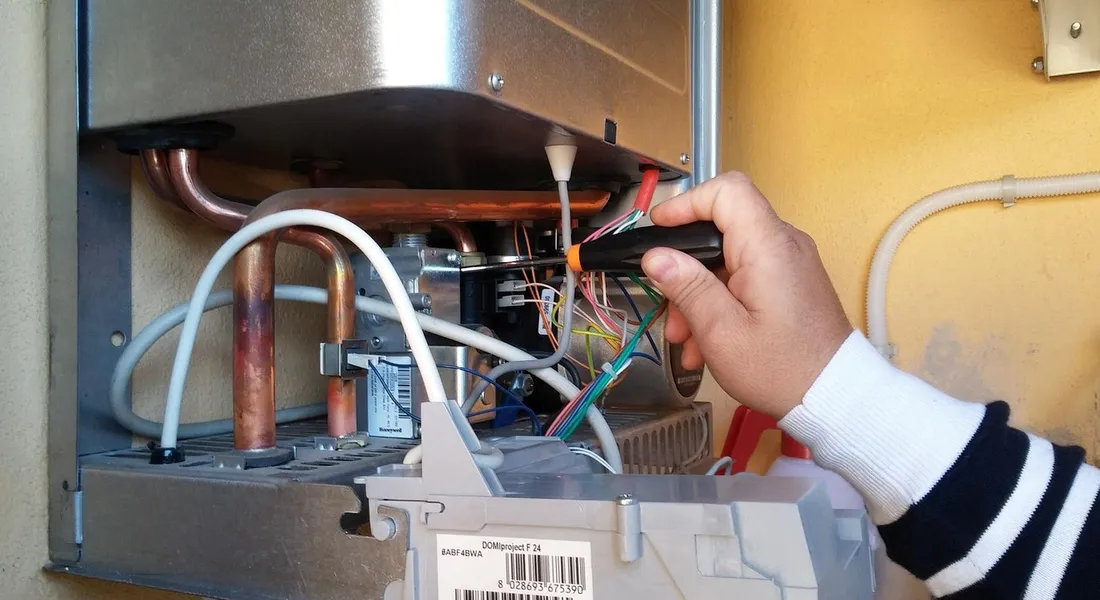
When your water heater beeps, it’s talking to you. Your job is to listen and follow a logical path. Some noises come from simple, fixable causes. We’ll cover common water heater noise causes and fixes. Start with the easiest fixes first.
Step 1: Identify the Real Problem
Before you touch a tool, stand and observe for one minute. Ask these questions.
- Is the beep constant, or does it happen only when you run hot water?
- Is the “ABC” code flashing, or is it solid?
- Look for a second code. Is there an “E” or a number like “E04” flashing next to the ABC?
This first observation tells you if you have a simple alert or a compound fault. A single beep with a hot water draw often points to a sediment issue. A constant beep with a flashing secondary code means the control board has identified a specific component failure.
Step 2: The Simple Reset
This fixes a surprising number of electronic glitches. Go to your home’s main electrical panel. Find the breaker labeled for the water heater and flip it to the OFF position. Wait a full 60 seconds. This drains all residual power from the unit’s control system. Flip the breaker back ON. If your water heater reset keeps tripping, you may need to investigate further for underlying causes.
Listen. Did the beeping stop? If it returns immediately, the problem is real and wasn’t just a memory error. If it stays off, you likely solved a temporary electronic hiccup.
Always verify power is off with a non-contact voltage tester before opening any access panels, even after flipping the breaker.
Step 3: Check the ABC Setting
The ABC code is almost always about the unit’s diagnostic mode or temperature setting. An incorrect setting can trigger alert beeps. Here’s how to check it.
- Turn off power to the heater at the breaker.
- Remove the lower access panel on the unit. It’s usually held by one or two screws.
- Inside, you’ll see the control board. Look for a small button, switch, or dial labeled “ABC,” “Diagnostic,” or with “A-B-C” markings.
- Consult your owner’s manual. The correct setting (like “B” for medium temperature) depends on your model and incoming water conditions.
- Use a small screwdriver to adjust the switch to the proper letter.
- Replace the panel, restore power, and see if the beeping clears.
I once helped a neighbor whose new heater was beeping nonstop. The installers left the ABC switch on “A” for high-temperature mode, which his unit didn’t support. Flipping it to “B” silenced it for good.
Step 4: Listen to the Beep Pattern
If the beep continues after a reset and ABC check, the pattern is your best clue. Count the beeps.
- Three Beeps (Then a Pause): This commonly indicates a problem with an upper heating element or its thermostat.
- Five Beeps (Then a Pause): This often points to a lower heating element or thermostat fault.
- Continuous Rapid Beeping: This is a general fault alert. It could mean a failed control board, a significant sensor error, or a ground fault.
Write down the pattern and any secondary codes before you call for service; it gets you help much faster.
The “Red Flag” Troubleshooting Guide
Some signs mean stop troubleshooting and call a professional immediately.
- Burnt Electrical Smell: If you smell overheating plastic or wiring near the heater, you have an active electrical fault. Shut off the breaker and do not turn it back on.
- Water Actively Leaking: A drip from the pressure relief valve pipe might be normal. A stream of water from the tank itself or the control valve area is a failure. Turn off the water supply and the power.
- Breaker Trips Instantly: If the breaker won’t stay on when you reset it, you have a direct short or a failed component drawing huge power. Do not force it.
Tools & Material Checklist
Gather these items before you start. Being prepared keeps you safe and efficient.
- Flashlight
- Non-contact voltage tester
- Phillips and flat-head screwdrivers
- Owner’s manual (search your model number online if you don’t have it)
Is a Beeping Water Heater Dangerous?
Most of the time, a beep is just an alert. It’s the heater’s way of saying, “Hey, look at me.” It’s not screaming, “Get out of the house!”
You need to know the difference between a maintenance reminder and a critical fault. A single beep when your ABC code is showing is almost always a configuration or diagnostic alert. A beep related to the ABC setting is almost never dangerous on its own. It’s a nudge to check your settings.
But a water heater beep can signal danger in specific cases. A beep caused by an overheating condition (from a stuck thermostat) or a pressure relief valve failure can be serious. These situations can lead to excessive tank pressure or dangerously hot water. That’s why the red flags matter. If your beeping comes with a burning smell, leaking water, or tripped breakers, then yes, there is immediate risk.
Think of it this way: the beep itself isn’t the danger; it’s the problem the beep is telling you about that could be. Your job is to figure out which one it is.
DIY Fix or Call a Pro? The Verdict
Let’s cut to the chase. Here’s your difficulty rating for this job.
Diagnosis and Reset: 3/10. This involves looking at a label and pressing a button.
Internal Electrical Component Work: 9/10. This means working with live voltage, testing with a multimeter, and accessing parts behind sealed panels.
The DIY vs. Pro Verdict
Your first moves should be to check and reset. You can do this.
Locate the label on your water heater with the ABC chart. Look for your current setting (often A, B, or C). Press the reset button on the thermostat access panel. Wait to see if the beeping stops and the error clears. This is basic homeowner stuff.
If the beeping comes back, you are dealing with an internal component failure, and that’s the line.
Testing thermostats and heating elements requires opening an electrical access panel, safely disconnecting power, and using a multimeter to check for continuity and proper resistance (especially when performing a water heater element continuity test). Replacing these parts involves handling 240-volt wiring connections. This is licensed electrician or plumber territory.
When NOT to Try This
Do not open the thermostat access panels if you are not 100% confident you have turned off the correct circuit breaker and verified power is dead.
If you feel any hesitation about working with electrical components, that’s your signal to call a professional.
Stop immediately if you see melted wire insulation, significant corrosion, or burn marks on any components. These are clear signs of a serious electrical fault that needs expert diagnosis.
What Causes the Beeping in the First Place?
The ABC error is a generic alarm. The control board is smart enough to know something is wrong, but not smart enough to tell you exactly what. It defaults to pointing at the ABC setting because that’s a common, user-adjustable fix. The real culprit is usually one of these internal failures.
Faulty Upper or Lower Thermostat
This is the most common cause I see on service calls. The thermostat is like the oven control for your water heater. If it fails, it can cause rapid overheating or fail to signal the heating element to turn on. The control board detects this temperature malfunction and sounds the ABC alarm. A faulty thermostat tricks the system into thinking the water is much hotter or colder than it really is.
A Failed Heating Element
Your electric water heater typically has two heating elements (upper and lower). When one burns out, it creates an imbalance. The working element tries to compensate, often leading to overheating in its zone. This triggers the high-limit switch and the subsequent ABC error beep. A single failed element will also give you lukewarm water at the tap.
Loose or Corroded Electrical Connections
Vibration and heat cycles can loosen the screw terminals where wires connect to the thermostats and elements. Corrosion from a small moisture leak can also degrade connections. This creates resistance, leading to overheating at the connection point itself. The system senses this abnormal heat and throws the code.
A Failing Control Board
Sometimes the messenger is the problem. The electronic control board that interprets all the signals can itself fail. It might misread a perfectly good thermostat or element. While less common than thermostat failure, it happens. Diagnosing a bad control board requires eliminating all other possibilities first.
Incorrect ABC Setting for Actual Conditions
This is the one trigger that isn’t a broken part. The ABC setting adjusts how hard the heater works based on your home’s electrical circuit conditions. If your home’s voltage is consistently low or high, the default setting might be wrong. The heater’s self-diagnostic can detect it’s struggling and flag the ABC code. This is why checking the setting against the label is always step one.
Keeping Your Water Heater Quiet: A Maintenance Roadmap
System Maintenance Roadmap
Think of your water heater like a car. It needs regular, simple checkups to run well for years. I follow this same schedule for my own unit.
Do these things once a year.
- Check the ABC setting. This controls the unit’s heating logic. If your home’s water hardness changes, this setting can be wrong. A bad setting makes the heater work too hard, which can trigger faults.
- Visually inspect for leaks. Look at the base of the heater and all pipe connections. A small drip today is a big puddle tomorrow.
- Listen for unusual sounds. When it runs, you should hear a steady hum. Popping, rumbling, or loud banging means sediment is building up inside.
Flushing the tank annually is the single best thing you can do to prevent sediment noise and improve efficiency. For Rheem tankless heaters, flushing sediment helps keep the heat exchanger clean and efficient. This simple step prevents mineral build-up and extends the unit’s life.
Every three to five years, call a professional.
- Have them inspect the anode rod. This rod sacrifices itself to protect your tank from corrosion. Once it’s gone, the tank starts rusting.
- Let them check the heating elements and thermostats. Testing these for proper resistance and function requires tools and know-how a typical homeowner doesn’t have.
Recommended Products
You don’t need many tools for basic monitoring. Focus on these two categories to stay informed.
First, get a reliable water hardness test kit. Don’t guess your hardness. Knowing your exact grains per gallon (GPG) is the only way to correctly set your water heater’s ABC parameter. Use a simple strip test or a liquid drop test. I keep one in my laundry room and test twice a year.
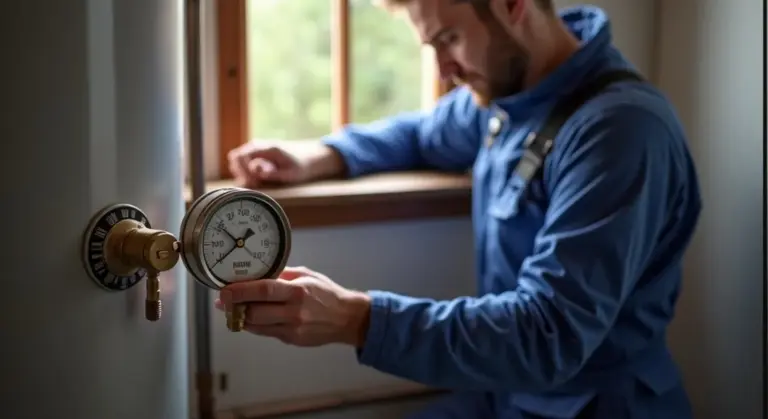
Second, buy a basic water pressure gauge. Screw it onto an outdoor spigot or your washing machine’s cold water inlet. Home water pressure should be between 40 and 80 PSI. Pressure over 80 PSI stresses all your appliances and plumbing, which can cause erratic behavior. A gauge costs less than twenty dollars and gives you a definitive answer.
Code & Compliance Check
This part is non-negotiable. Any electrical work inside the water heater’s access panels must comply with the National Electrical Code (NEC).
This includes replacing heating elements or thermostats. The wiring deals with high current (amps) in a potentially damp environment. Incorrect wiring is a fire and shock hazard. This electrical code requirement is the main reason I tell homeowners to leave element and thermostat replacement to a licensed pro.
A professional will ensure the correct breaker size, proper wire gauges, and safe connections. They also know how to refill and purge the tank of air after the repair, which is critical to prevent burning out the new elements.
Common Questions
How do I fix the ABC error code on my water heater?
Start with a simple power reset at your home’s main breaker panel. Turn the water heater’s breaker off, wait 60 seconds, and turn it back on. If the beeping returns, the issue is likely an internal component failure, not just the ABC setting.
Is the ABC error code dangerous?
The beep itself is just an alert, not a danger signal. However, the underlying problem causing the beep could be. If the beeping is accompanied by a burning smell, water leaks, or a tripped breaker, turn off the power and water supply immediately and call a pro.
Should I call a professional for an ABC error code?
Call a professional if the beeping persists after a power reset. Continuous beeping indicates a failed internal part-like a thermostat or heating element-which requires working with 240-volt wiring. This is not a DIY task for most homeowners.
Can I reset the water heater to clear the ABC error code?
Yes, a power cycle at the breaker is the first and safest reset to attempt. This clears any temporary electronic glitches. Do not attempt to “reset” anything inside the access panels unless you have verified the power is completely off with a voltage tester.
What causes the ABC error code to appear?
While the display shows “ABC,” the cause is rarely the setting itself. The beep is typically triggered by a failed component, such as a faulty thermostat, a burned-out heating element, or loose wiring. The control board uses the ABC display as a generic alert state.
Your Next Steps with the ABC Code
Always treat a beeping water heater as an urgent safety alert that demands your immediate attention. Your very first move should be to check the air intake and exhaust for any blockage, as this simple visual inspection solves the majority of these error codes. If you’re troubleshooting a gas unit, refer to our gas water heater troubleshooting guide for the next steps. Our guide walks you through common gas-specific issues and safety tips.
Written by Bob McArthur. Bob is a an HVAC and plumbing industry veteran. He has professionally helped homeowners resolve issues around water softeners, heaters and all things related to water systems and plumbing around their homes. His trusted advice has helped countless of his clients save time, money and effort in home water systems maintenance and he now here to help you and give you first hand actionable advice. In his spare time, Bob also reviews home water systems such as tankless heaters, water softeners etc and helps home owners make the best choice for their dwelling. He lives around the Detroit area and occasionally consults on residential and commercial projects. Feel free to reach out to him via the contact us form.