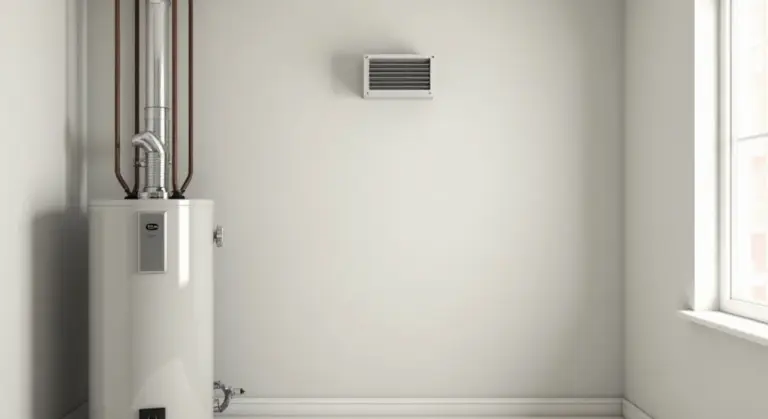
Biggest Water Heater Sizes for High-Demand Homes
Your family keeps running out of hot water. You need the largest residential units available.
We will cover the maximum gallon storage tanks, the highest output tankless models, and the real-world specs for installation.
I’ve swapped out hundreds of these units. One takeaway: the biggest tank means nothing without the right fuel line and venting.
First, What Does “High-Demand” Actually Mean for Your Home?
Forget just counting people. A high-demand home is defined by fixtures running at the same time. Picture a typical weekday morning: someone is in the shower, the washing machine is filling, and the dishwasher is running its cycle. That’s simultaneous usage, and that’s what strains your system.
You know you have a high-demand home if you experience these common issues:
- Cold showers when more than one bathroom is in use.
- Long wait times for hot water to return after a large draw, like filling a bathtub.
- Your laundry cycle always seems to use cold water, even on a hot setting.
Your water softener or whole-house filter directly impacts your heater’s performance. These systems create pressure drop, which can reduce the overall flow rate of hot water reaching your fixtures. A larger tank or a higher recovery rate helps compensate for this. Understanding how water softeners affect flow rate helps you choose settings and anticipate performance. In the next steps, we’ll dive into the specific flow rate effects on heaters and fixtures.
The Biggest Standard Tank Water Heaters You Can Buy
The most common question I get is, “What’s the absolute biggest tank I can get?” For a standard residential tank water heater you buy off the shelf, the answer is typically 100 gallons for both electric and gas models. Beyond that, large water tanks bring bigger price tags and different dimensions. If you’re evaluating options, it’s wise to compare prices against the footprint and capacity.
These units are massive. You are not just buying more hot water, you are bringing a giant appliance into your home. This is particularly significant when managing hot water for large families.
- Height: They can stand over 70 inches tall, not including the piping on top.
- Diameter: Expect a diameter of 30 inches or more.
- Weight: Empty, they weigh around 350 pounds. Filled with water, you’re looking at over 1,200 pounds.
Before you even think about buying a 100-gallon tank, you must do a physical space check. This isn’t a suggestion, it’s a requirement. Measure everything twice.
- Floor Strength: Can your floor support over 1,200 pounds in one spot, often for decades? Concrete basement slabs are usually fine. Wood floors over a crawlspace may not be.
- Door Widths & Hallways: The tank must fit through your exterior door, interior doors, and down hallways to its final location. Measure the narrowest point.
- Ceiling Height & Clearance: You need space above the tank to connect and disconnect the pipes and for proper venting on gas models. Low basement ceilings can be a deal-breaker.
Tank size in gallons is only half the story. You need to understand the “First-Hour Rating” or FHR. This number tells you how many gallons of hot water the heater can deliver in one hour, starting with a full tank. A heater with a high FHR can recover faster, which is often more valuable for back-to-back usage than a slightly larger, slower tank. Think of FHR as the heater’s “recovery speed.” A large family running multiple showers will drain a tank quickly, so a high FHR is critical. For a large-family home, the size of the water heater matters as much as the FHR. This means you want enough gallons plus a fast recovery to keep up with back-to-back usage.
When a Big Tank Isn’t the Answer: Exploring Tankless Systems
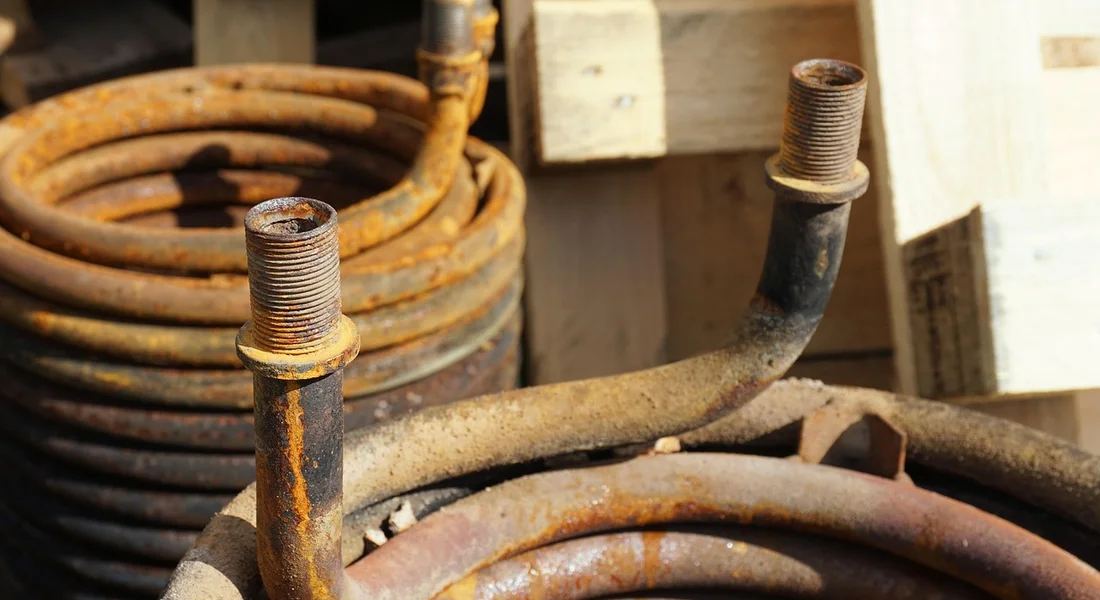
People ask me all the time if a tankless water heater is better than a tank model. The answer isn’t a simple yes or no. It’s about what fits your home’s hot water habits. A tankless system ditches the storage tank completely. It heats water directly as it flows through the unit, providing a continuous supply.
The entire sizing logic changes from storing gallons to delivering a flow rate, measured in Gallons Per Minute (GPM). You don’t pick a 50 or 80-gallon tank. You pick a unit that can deliver enough hot GPM to handle your peak demand, like two showers and a dishwasher running at once.
The largest residential tankless units are powerful. A high-end natural gas condensing model can deliver over 11 GPM. That’s enough to theoretically run three high-flow showers simultaneously. Electric units top out lower, around 8-9 GPM for whole-house models, and often require multiple units or a heavy electrical service upgrade.
The real-world pros and cons are clear. I installed a gas tankless in my own home to free up basement space.
- Pros: Endless hot water for back-to-back showers. Saves significant floor space. Often higher efficiency (especially condensing models).
- Cons: Much higher upfront cost for the unit and installation. May require upgrading your gas line to a larger diameter or your electrical panel. Can struggle if groundwater is very cold, as it reduces the max GPM output.
Boosting Supply with a Dedicated Hot Water Storage Tank
What are the largest residential water heater storage tank sizes available? If we’re talking about a standard tank water heater, 100 gallons is about the max. But for high-demand homes, we often use a dedicated, unheated storage tank paired with a separate heat source. Understanding the water storage tank capacity volume helps you gauge how much usable water you’ll have between refills. This perspective can guide your choice when sizing storage for peak demand.
These are just heavily insulated tanks. They don’t have their own burner or heating elements. You can find standalone stainless steel or glass-lined storage tanks well over 120 gallons. I’ve installed 119-gallon tanks as part of a boiler system for large homes with multiple bathrooms.
This setup is called an indirect-fired system. Here’s how it typically works: a high-efficiency boiler heats water, which circulates through a coil inside the storage tank. This heats the tank’s water like a giant kettle. The boiler can also heat your home. It’s a robust solution for families that routinely drain a standard 80-gallon tank.
Sizing It Right: How to Calculate What You Truly Need
Don’t guess. A simple calculation prevents buying a unit that’s too small or wasting money on one that’s too large. Start by listing all the hot water fixtures you could use at the same time, then calculate the right size and capacity.
Follow these steps for a basic estimate:
- Add up the GPM of all fixtures you’d run concurrently (e.g., two showers at 2.5 GPM each and a sink at 0.75 GPM = 5.75 GPM total).
- For Tank Systems: Your tank’s First Hour Rating (FHR) must meet this peak hour demand in gallons. Also, know its recovery rate (how many gallons it reheats per hour). A big family needs a high FHR and fast recovery.
- For Tankless Systems: The unit’s max GPM (at your incoming groundwater temperature) must exceed your calculated total GPM from step one. This “temperature rise” is critical. Colder incoming water reduces the available GPM.
For any complex home with high-end fixtures, a spa tub, or multiple bathrooms, get a professional load calculation. They factor in everything, including pipe sizes and exact temperatures, to specify the right system.
Tank vs. Tankless for Big Homes: An Honest Side-by-Side
Choosing between a giant tank and a powerful tankless system is the first big decision. You need to know how they perform under real pressure.
| Feature | High-Capacity Tank (e.g., 80-100 gal) | High-GPM Tankless (e.g., 11+ GPM) |
| Capacity | Finite. It’s a large reservoir of hot water. When it’s gone, you wait for a full reheat. | Virtually unlimited hot water, but limited by flow rate. It can heat as much as you use, but only up to its gallons-per-minute max. |
| Efficiency (Energy Use) | Lower. Standby heat loss is real. You’re paying to keep 80 gallons hot 24/7, even on vacation. | Higher. It only heats water on demand. No standby loss. Are tankless water heaters more efficient than tank water heaters? For high-demand use, almost always yes. |
| Space | Huge footprint. A 100-gallon tank is over 6 feet tall and needs significant clearance. | Compact. Mounts on a wall, freeing up floor space. But it needs proper venting access. |
| Upfront Cost | Lower for the unit itself. Installation is usually simpler if replacing a similar tank. | Higher for the unit. Installation can be complex and expensive if upgrades are needed. |
Look beyond the sticker price. Lifecycle costs tell the real story.
A tankless system uses less energy month-to-month, which can save money over 10+ years. Understanding how energy use differs between tankless and traditional heaters can guide your decision. But you must factor in the higher installation cost and mandatory annual maintenance. A large tank has a lower buy-in cost but higher ongoing energy bills, and it will inevitably need replacement sooner.
For a family of 6 with three bathrooms, I typically recommend a high-GPM tankless system or a well-planned pair of tankless units. The consistent hot water for back-to-back showers is worth the investment. If your gas line or electrical panel can’t support it, a large 80-gallon hybrid heat pump tank is a smart, efficient alternative.
The High-Capacity Buyer’s Guide: Cost, Installation, and Upkeep
Buying the unit is just the start. Here’s what you’re really signing up for.
The Realistic Total Cost Breakdown
Budget for the whole project, not just the box from the store.
- Unit Price: Large tanks (80-100 gal): $1,200 – $2,500+. High-flow tankless (11+ GPM): $1,500 – $3,000+.
- Necessary Upgrades: This is where budgets blow up.
- Ventilation: Tankless units need specific, costly stainless steel venting, often run long distances.
- Gas Piping: A high-GPM tankless may need a 1-inch gas line. Your existing 1/2-inch line won’t cut it.
- Electrical: Large electric tanks need a dedicated 240V circuit. Whole-house electric tankless systems need massive, costly electrical upgrades (like a 400-amp service).
- Water Piping: You may need to upsize pipes for proper flow to the unit.
- Labor: A straightforward tank swap might be $800-$1,500. A complex tankless install with upgrades can easily hit $3,000-$5,000.
The final bill is often double the price of the unit. Always get a detailed quote that includes all potential upgrades.
Installation Complexities
Know what you’re getting into.
Giant Tanks: The challenge is physical. Moving a 400-pound, 6-foot-tall tank into a basement requires a path and muscle. You must verify floor strength and ensure it meets current code for drain pans, pressure relief valve piping, and strapping in earthquake zones.
High-GPM Tankless Units: The challenge is technical. Proper sizing of gas and vent lines is critical. If the unit is undersupplied with gas, it will fail to heat properly. Indoor units need direct outside venting, which can mean cutting new holes through your siding.
The Mandatory Maintenance Schedule
Neglect this, and your expensive system will die early.
Tank Units:
- Annual Anode Rod Check: Pull the rod yearly. If it’s more than 50% corroded, replace it. This sacrificial rod is what prevents your tank from rusting out.
- Sediment Flush: Drain a few gallons from the tank every 6 months. In areas with hard water, do this quarterly to prevent sediment buildup that kills efficiency and wrecks the tank.
Tankless Units:
- Annual Descaling: This is not optional. You must flush the heat exchanger with a vinegar or citric acid solution to remove scale. In hard water areas, this is the single most important thing you do to protect your investment. Kits are available to do it yourself in about an hour.
Storage Tanks (for well systems or as expansion):
- Annual Inspection: Check the exterior for corrosion, especially at welds and fittings. Ensure the air charge in the bladder tank is correct using a tire gauge. Listen for heavy sediment movement when the pump cycles.
Common Questions
My basement is cramped. Is there an alternative to a massive 100-gallon tank?
Absolutely. For space-constrained homes, a high-GPM tankless system mounted on a wall is the standard solution. You can also explore installing two smaller, high-recovery tanks in tandem, which can be easier to maneuver and fit through doorways. Always consult a pro to design a system that fits your physical space and hot water needs.
Can I combine a tankless heater with a storage tank for the best of both?
Yes, this is a professional-grade setup called a “combo” or hybrid system. A tankless heater feeds a dedicated, unheated storage tank, providing both high flow rates and a large reserve for peak events. This is excellent for homes with very high, simultaneous demand, but requires expert design and installation.
Do these high-capacity systems need more maintenance?
They don’t necessarily need *more* maintenance, but consistent upkeep is far more critical. A neglected 100-gallon tank wastes huge amounts of energy, and a scaled-up tankless unit will fail. Mark your calendar for the annual anode rod check or descaling flush-it’s non-negotiable for protecting your investment.
I want a high-GPM gas tankless. Will my existing gas line work?
Probably not. These units require a substantial gas volume; your current 1/2-inch line likely can’t deliver it. A technician must calculate the total demand and often upsizes the main line to 1-inch or larger. Never install one without this professional assessment-an undersized line is a safety and performance hazard.
Is the higher upfront cost of a large system worth it long-term?
For a true high-demand home, yes. You’re paying for consistent comfort and eliminating the frustration of cold showers. While a large tank has lower buy-in cost, a properly sized, efficient tankless or indirect system will save on energy bills for years, often justifying the initial premium over its longer lifespan.
Making Your Decision on a Large Water Heater
First, size your system based on real peak usage, not guesswork, to see if you truly need the largest 100-gallon tanks or commercial-grade tankless units. Then, get a professional assessment of your home’s physical space, gas line, or electrical capacity before you buy or install anything.
Written by Bob McArthur. Bob is a an HVAC and plumbing industry veteran. He has professionally helped homeowners resolve issues around water softeners, heaters and all things related to water systems and plumbing around their homes. His trusted advice has helped countless of his clients save time, money and effort in home water systems maintenance and he now here to help you and give you first hand actionable advice. In his spare time, Bob also reviews home water systems such as tankless heaters, water softeners etc and helps home owners make the best choice for their dwelling. He lives around the Detroit area and occasionally consults on residential and commercial projects. Feel free to reach out to him via the contact us form.