Solar Hot Water Explained: How Home Systems Heat and Clean
Solar systems look complicated, but they’re just smart plumbing that uses free sunlight. You can understand how yours works.
We will cover how solar collectors trap heat, the two main types of systems, how they can purify water, and what to expect for cost and maintenance.
I’ve installed and serviced these on roofs and in basements. The big takeaway: they’re simpler than your water softener.
The Simple Idea: Using Sunlight for Your Water
Think of your water heater and water filter as appliances that need power. One uses gas or electricity to make water hot. The other might use electricity to push water through a membrane or media. A solar system cuts out that billable power source and uses sunlight instead. The concept is that simple.
It’s critical to understand these are two different tools for two different jobs. A solar water heating system is designed to raise the temperature of your water. A solar purification system, often using ultraviolet (UV) light from a solar-powered panel, is designed to disinfect and clean your water. They are not the same thing, though they can sometimes work together on an off-grid property, especially when you want UV-purified water for drinking.
The main benefit is getting the job done without tapping into your utility meter, which lowers your bills and gives you a backup if the power goes out.
How a Solar Water Heater Warms Your Shower
Here’s how a solar water heating system works. Picture a car radiator sitting on your roof, but working in reverse. Instead of cooling hot engine fluid with air, it’s using sunlight to heat a special fluid. That hot fluid then travels down to your basement or utility room, where it passes through a coil inside your water tank-this is the heat exchanger. The heat moves from the solar fluid into your household water, warming it up for your shower. The cooled solar fluid then gets pumped back to the roof to be heated again.
The basic loop is always: collector heats fluid, fluid travels to heat exchanger, heat exchanger warms your tap water.
The Main Parts of a Solar Water Heater
Every system is built from a few key components. If one part fails, you’ll know what you’re looking at.
The Solar Collector: Where the Magic Happens
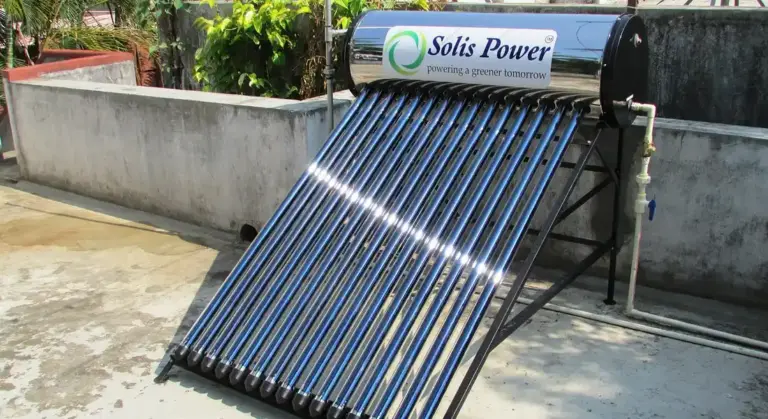
A flat plate solar collector is used to heat water in the vast majority of residential setups. It’s a weatherproof, insulated box with a dark absorber plate inside and a glass or plastic cover on top. Sunlight passes through the glass, hits the dark plate, and the energy turns into heat. Pipes attached to the plate carry the heat away in the form of hot fluid. It’s less about high-tech and more about smart, simple physics.
The Storage Tank: Your Hot Water Battery
This is just an insulated water tank, but it usually has one or two heat exchanger coils inside it. Your sun-heated fluid runs through this coil, transferring its heat to the water in the tank without the two liquids ever mixing. Think of your standard electric water heater tank, but instead of an electric element at the bottom, it gets pre-warmed by a sun-powered coil. Many systems use your existing tank as a backup, with the solar tank feeding it warm water first.
The Pump and Controller: The System’s Brain
The pump is a small, circulating pump that moves the solar fluid through the collectors and heat exchanger. The controller is the logic center. It compares the temperature at the collector to the temperature in the tank. When the collector is hotter (meaning the sun is out), it turns the pump on to move heat into the tank. When it’s not, or when the tank is hot enough, it shuts the pump off. This prevents the system from losing heat at night or on cloudy days.
Direct vs. Indirect: Two Ways to Move Heat
You have two main choices for system design, and climate decides which one you need.
- Direct Circulation: Pumps household water directly up through the roof collectors and into the tank. It’s simpler. It is only suitable for climates where temperatures never freeze. If the water in those roof pipes freezes, it will burst them.
- Indirect Circulation (Closed Loop): Uses a separate loop filled with a water-antifreeze mixture. This antifreeze loop goes up to the collector, gets heated, comes down to the heat exchanger in the tank, and transfers its heat. Your household water never leaves the tank. This is the standard for any home that sees freezing temperatures.
If you see frost outside, you need an indirect system with antifreeze-no exceptions. Repairing frozen pipes in a roof-mounted collector is a nightmare.
The DIY vs. Pro Verdict for Solar Water Heaters
Difficulty Rating: 8/10 (Leave it to a pro).
Mounting heavy collectors on your roof, securing the racking, and running the proper plumbing and electrical lines for the pump is serious work. A slip can damage your roof or injure you. Getting the plumbing for the heat exchanger wrong can mix antifreeze with your drinking water or cause leaks inside your home. For safety, warranty, and building code compliance, this part needs a licensed solar or plumbing contractor.
The one possible DIY task for a very experienced homeowner is connecting the pre-piped solar storage tank to your existing water heater and household lines, if the roof work and critical loop are already done by a pro. Even then, you’re dealing with sweat-soldering or threading pipe, pressure testing, and possible electrical connections for the controller.
How Solar Purification Makes Water Safe to Drink
How do solar water purification systems work? They use the sun’s heat to turn dirty water into steam and then collect the clean condensation. This is a method for survival situations or remote cabins, not for filtering all the water in your house. You won’t be hooking one of these to your main water line. If you’re looking at portable solutions, you might be curious about how water purification tablets work.
The Science of Solar Distillation
Think of it like the water cycle in a box. You put contaminated water into a black basin. The sun heats the basin, warming the water until it evaporates. The water vapor (steam) rises, leaving behind salts, minerals, bacteria, and metals. The vapor hits a cool, clear surface like glass or plastic, condenses back into liquid water, and drips into a clean collection cup.
Because the contaminants are left behind in the original basin, this process removes nearly all dissolved solids and pathogens, giving you very pure water.
Understanding TDS in Purification
Water Science Snippet: TDS stands for Total Dissolved Solids. It’s a measure of all the invisible stuff dissolved in your water, like calcium, magnesium, sodium, and chlorides. You measure it in parts per million (PPM).
City water might have a TDS of 200-400 PPM. Hard well water can be over 500 PPM. A solar still aims for a TDS near zero, just like the distilled water you buy in jugs at the store.
Tools & Materials for a Basic Solar Still
You can build a small one in a pinch. Here is a simple checklist. Remember, this is for emergency water needs only.
- A black plastic or metal basin (black absorbs the most heat)
- A clean, smaller cup or container for the purified water
- A large, clear sheet of plastic or glass
- A small rock or weight
- Food-grade silicone sealant or duct tape (for a more permanent seal)
You place the small cup in the center of the basin, fill the basin with dirty water (but not into the cup), and seal the clear sheet over the top. The rock goes in the center of the sheet so condensation drips right into your collection cup. This setup is slow and makes small amounts, but it can literally save your life if you have no other options.
Connecting to Your Home: Plumbing and Codes
Can you use solar collectors with your existing plumbing? Absolutely. This is where solar gets practical for daily home use, but it’s for heating water, not purifying it.
Integrating with Your Current Water Heater
Residential solar thermal systems don’t replace your water heater. They act as a pre-heater. The solar panels on your roof heat a fluid that then travels to a heat exchanger, warming the cold water coming into your house before it even reaches your traditional tank.
Your gas or electric heater then only needs to boost the temperature a little, if at all, saving you money. The necessary plumbing involves running insulated pipes from the roof to a solar storage tank or heat exchanger, and then tying that into your main cold water line. This almost always requires a professional plumber who knows solar thermal systems.
Code & Compliance Check for Installation
This isn’t a DIY project. You must follow local plumbing codes (like the IPC or UPC). Inspectors will check several key things.
- Roof Mounting: The rack holding the collectors must be structurally sound for your roof and properly flashed to prevent leaks.
- Pressure and Temperature Relief: Systems need dedicated valves to safely release pressure if the fluid gets too hot.
- Backflow Prevention: Devices must be installed to keep the solar system fluid from contaminating your home’s drinking water.
Hire a certified professional. Using a certified installer is often required to get local rebates, state incentives, or federal tax credits for a solar thermal system. They handle the permits and ensure it’s done right, protecting your home and your investment.
Keeping the Sun Working for You: Maintenance & Troubleshooting
A system that uses free energy still needs a little care. Think of it like a car. Ignore it, and you will have a big repair bill. Pay attention, and it will run for decades.
This guide covers the simple checks for both solar heaters and stills.
System Maintenance Roadmap
You do not need to be on the roof every weekend. Follow this simple schedule to catch small issues before they become expensive.
For solar water heaters, your main job is monitoring the sealed loop.
- Every Year: Check the pressure gauge on the closed-loop system. If it is low, the fluid level or the expansion tank may need attention. Listen for the pump to cycle on and off normally on a sunny day.
- Every 2-3 Years: Visually inspect the collector seals and the roof penetrations for any cracks or gaps. Look for staining on the roof below the collectors, which is a sign of a slow leak.
- If You Have a Direct System: Flush the heat exchanger annually to prevent mineral scale, especially if you have hard water. This is a key difference from the sealed, indirect systems most homes use.
For a homemade solar still, maintenance is immediate but simple. After each use, you must clean the glass cover and the collection basin. Any residue left inside will breed bacteria and contaminate your next batch of clean water. Let everything dry completely before storing it.
Red Flag Troubleshooting Guide
Your system will tell you when something is wrong. Do not ignore these five signs.
- No hot water on a sunny day. This almost always points to a circulation problem. The pump may have failed, or the electronic controller that tells the pump when to run could be faulty. Check for power to the unit first.
- Fluid leaking from the roof collectors. This is an urgent issue. The heat-transfer fluid can stain roofs and is often glycol-based. A leak means the sealed loop is broken and the system will not work. Shut it down and call a pro.
- Strange noises from the pump. Grinding or screeching sounds mean bearings are failing. A pump that is much louder than usual is working too hard, possibly from a blockage. Address this quickly to avoid a full pump seizure.
- Cloudy condensate from a solar still. The purified water should be crystal clear. Cloudiness means the seal around your glass or plastic cover has failed. Contaminated moist air is getting in and re-mixing with your clean water. Reseal it completely.
- A sudden, severe drop in system pressure. On your pressure gauge, this indicates a major leak in the closed loop. The system will stop circulating to protect itself. Do not try to just repressurize it. You need to find and fix the leak.
What to Know Before You Buy: Costs and Realities
Solar sounds perfect, but you need clear expectations. The numbers and performance are very different for heating your whole house versus purifying a few gallons.
Upfront Cost vs. Long-Term Savings
The investment story for these two technologies could not be more different.
A professionally installed solar water heating system for a typical home has a high upfront cost, often between $5,000 and $10,000. The payoff is in your utility bill. A well-sized system can slash 50% to 80% off your water heating costs every year, for 20 years or more.
Contrast that with a DIY solar still. You can build one from a plastic sheet, a bowl, and a rock for almost no money. The trade-off is output. It makes water very slowly, often just enough for drinking survival in an emergency. It will not replace your DIY water filtration system.
How Well Do They Really Work? Efficiency Explained
“Efficiency” means how much of the sun’s energy you actually get to use. For solar thermal, your local weather is the boss.
In sunny climates like Arizona or Florida, a solar water heater will perform brilliantly for most of the year. In cloudier regions, its output will drop on overcast days. Because of this, a backup is non-negotiable. Your solar tank will almost always have a standard electric or gas backup heater element to guarantee you never run out of hot water. Some homeowners also compare a solar tank setup with a tankless heat pump solar option to weigh efficiency and space needs. This quick comparison helps you decide which path to explore next.
Now, for hard water areas. Can you use a solar water heater with calcium-heavy water? Yes, but you must choose the right type.
A direct system, where your home’s water runs through the roof panels, will scale up with mineral deposits just like a traditional water heater. An indirect system keeps your hard home water separate, running a sealed antifreeze loop through the panels instead. In hard water areas, an indirect system is the only sensible choice to avoid destroying the expensive panels with scale.
Incentives and Professional Help
Here is some good financial news. In the United States, a federal solar investment tax credit often applies to the cost of a professionally installed solar water heating system. This can take a big bite out of that upfront cost. Check the current IRS guidelines for details.
Knowing when to call a professional protects your wallet and your safety.
- Any work involving the roof (installation, leak inspection, seal repair).
- Major plumbing changes to connect the system to your existing water heater.
- Electrical connections for the pump and controller.
- Filling and pressurizing the sealed antifreeze loop.
Getting a professional installation is also usually required to qualify for those federal tax credits and any local incentives. This is one project where DIY can end up costing you more money, not less.
What Helped Me: A Final Tip from the Trenches
When I installed a solar pre-heat loop for my workshop water heater, the biggest lesson was planning for freeze protection. I looked at a simple drainback system first. It seemed cheaper and easier. But I live where winter nights can dip below freezing for weeks. The risk of a burst pipe on my roof wasn’t worth the savings.
I went with an indirect glycol system. It cost more upfront for the heat exchanger and the food-grade propylene glycol fluid, but I’ve never worried about a burst pipe on the roof. The glycol mixture circulates through the solar collectors, gets hot, and then transfers that heat to the clean water in a separate loop. For any solar thermal project, your first design question must be ‘what happens when it freezes?’ Answer that before you buy a single part.
For purification, I keep a DIY still kit in my emergency supplies. It’s a simple pot, coil, and collection jar. It’s slow, but it works. I tested it once by boiling tap water and collecting the steam. The process left everything behind-minerals, chemicals, everything. The water tasted flat, but it was pure. A simple distillation kit is the most foolproof backup purification method you can own, because it doesn’t rely on filters or chemicals that expire. You just need a heat source and patience.
Quick Answers
How long do these systems last before needing major work?
With proper maintenance, the collectors and tanks in a solar water heater can last over 20 years. The pump and controller may need replacement sooner, typically around 10 years. Schedule an annual professional check to catch issues early and maximize lifespan.
Can I add a solar purifier to my existing whole-house water system?
No, typical residential solar stills are for emergency or point-of-use purification, not whole-house treatment. For whole-house disinfection, a standard UV filter powered by a solar-electric (PV) panel is a more practical, on-demand solution that can tie into your main line. Unlike point-of-use filters, these systems are designed to handle the volume and continuous flow of water for an entire household.
What’s the most important safety check I can do myself?
Monthly, visually inspect the pressure relief valve on your solar storage tank and the pressure gauge on the closed-loop. Ensure there’s no leaking or continuous dripping. If you see either, shut the system down and call a technician immediately to prevent over-pressurization.
Will a solar water heater work with my very hard well water?
Yes, but you must use an indirect (closed-loop) system. Your hard water stays inside your home’s pipes, while a separate, sealed loop with antifreeze cycles through the rooftop collectors. This prevents scale from destroying the expensive collector internals.
How much water can a homemade solar still actually produce?
Realistically, only about 1 to 4 cups of purified water per sunny day for a small, improvised still. This is why it’s critical to view them strictly as an emergency backup for drinking water, not a solution for your household’s daily water needs.
Getting the Most from Your Solar Water System
Your system will only perform as well as you maintain its key components, especially the solar collectors and circulation pump. Treat your annual system checkup with the same importance as changing your furnace filter. For the best long term results, hire a certified installer who specializes in solar thermal systems, not just general plumbing. Their expertise directly impacts your system’s efficiency and durability from day one.
Bob is a an HVAC and plumbing industry veteran. He has professionally helped homeowners resolve issues around water softeners, heaters and all things related to water systems and plumbing around their homes. His trusted advice has helped countless of his clients save time, money and effort in home water systems maintenance and he now here to help you and give you first hand actionable advice. In his spare time, Bob also reviews home water systems such as tankless heaters, water softeners etc and helps home owners make the best choice for their dwelling. He lives around the Detroit area and occasionally consults on residential and commercial projects. Feel free to reach out to him via the contact us form.