Water Heater Lifespan: How Long Gas, Electric, and Tankless Models Really Last
Is your water heater on its last legs? Let’s cut through the guesswork and get straight to how long these units actually last.
This article gives you the straight facts. We will cover average lifespans for gas, electric, and tankless models, the main factors that kill them, and clear signs you need a replacement.
I’ve ripped out and installed more of these than I can count. Here’s your first takeaway: sediment buildup is a silent killer, so drain your tank once a year.
The Straight Answer on Water Heater Lifespan
Here are the numbers you want. A standard tank-style water heater, whether gas or electric, typically lasts 8 to 12 years. A tankless model (gas or electric) usually lasts 15 to 20 years or more.
These are averages, not promises. I have pulled out gas heaters that rusted through at 6 years. I have also serviced electric models from the early 2000s that are still chugging along. The brand on the label matters less than what happens to the unit in your home.
Can a gas water heater last 20 years? Yes, but it is not the standard expectation. Hitting 20 years requires near-perfect water conditions and consistent maintenance. Can a water heater last 30 years? For a standard tank model, 30 years is very rare and usually indicates extremely soft water and light use. Some tankless units may approach this mark with excellent care.
What Really Decides How Long Your Heater Lasts
Think of your water heater like a car. You can buy a reliable model, but if you never change the oil and only drive on salt-covered roads, it will fail early. The brand you choose is less important than the maintenance and conditions you provide.
Water Quality (The #1 Enemy)
Your water’s makeup is the biggest factor in tank heater lifespan. Hard water, full of minerals like calcium and magnesium, is the main culprit. These minerals settle and form scale. Scale acts like insulation on the heating elements or burner, forcing them to work harder and overheat. It also settles at the bottom of the tank, trapping heat against the steel and accelerating corrosion.
Sediment is another tank killer. Sand, silt, and other debris settle in the bottom. This creates a hot spot that can warp the tank floor and cause premature failure. If you hear rumbling or popping sounds from your heater, that’s sediment getting superheated and exploding into steam.
The single best thing you can do for a tank heater’s longevity is to install a whole-house water softener if you have hard water. For sediment, a simple sediment filter ahead of the heater can add years to its life.
Usage & Installation
How you use and install the heater plays a major role. A large family that runs multiple showers, the dishwasher, and laundry back-to-back puts more thermal stress on the tank than a single person. That constant heating and cooling cycle fatigues the metal over time.
Poor installation is a silent killer. An unlicensed handyman might forget the T&P valve, use the wrong venting material on a gas unit, or not secure the pressure relief pipe. An electric heater must be wired correctly to avoid damaging the controls. A gas heater needs proper combustion air and venting to operate efficiently and safely.
A correctly sized heater for your home’s demand will last longer than one that is constantly struggling to keep up. Always hire a licensed professional for installation. The extra cost upfront saves you from a flooded basement and a premature replacement later.
The Maintenance Factor
Neglect shortens lifespan. Simple annual tasks make a huge difference. For tank heaters, this means flushing the tank to remove sediment. It’s a straightforward process:
- Turn off the power (circuit breaker) or gas supply (shut-off valve).
- Connect a garden hose to the drain valve and run it to a floor drain or outside.
- Open the drain valve and a hot water faucet in the house to break the vacuum.
- Let it drain until the water runs clear.
Also, test the Temperature & Pressure (T&P) Relief Valve by lifting its lever. You should see a burst of water into the drain pipe. If not, the valve may be stuck and needs replacement.
For tankless heaters, maintenance is different but just as critical. You must descale the heat exchanger annually, especially in hard water areas. This involves flushing a descaling solution (like white vinegar or a commercial product) through the unit with a small submersible pump. Regular cleaning and descaling help prevent mineral buildup and keep the unit running efficiently. A proper cleaning and descaling routine is essential for long-term reliability. Skipping annual descaling is the fastest way to ruin an expensive tankless heater.
Gas Water Heater Lifespan: What to Expect

For a standard gas water heater, the typical lifespan range is 8 to 12 years. This is slightly shorter than the average for an electric tank model. The main reason comes down to the combustion process.
A gas burner creates intense, focused heat at the bottom of the tank. This puts more thermal stress on the tank’s interior lining and the steel itself over time. Think of it like a pan on high flame versus a pan on a warming plate. The high flame gets the job done fast, but it also wears out the pan quicker. Electric heating elements are gentler by comparison.
Specific Wear Points on a Gas Water Heater
Knowing where these units commonly fail can help you maintain yours. The main wear points are the burner assembly, the thermocouple, and the flue.
The burner assembly is where the gas ignites to create your hot water. Over years of cycles, the burner ports can get clogged with dust, spider webs, or corrosion. A dirty burner doesn’t burn efficiently, which wastes gas and strains the system. You should visually inspect the burner once a year (with the gas supply OFF) and clean any debris with a soft brush or compressed air.
The thermocouple is a small safety device that senses the pilot light’s flame. If it doesn’t detect heat, it shuts the gas valve off to prevent a leak. These can simply wear out or get coated in soot, causing your pilot light to keep going out. Replacing a thermocouple is a common and straightforward fix.
The flue, or vent pipe, is critically important. It channels the dangerous exhaust gases (like carbon monoxide) out of your home. Corrosion or a blockage in the flue is a serious safety hazard and will cause your heater to shut down. Check that the flue pipe is securely connected and has a clear path to the outdoors. Any signs of rust, moisture, or discoloration mean you need a professional inspection immediately.
Can a Gas Water Heater Last 20 Years?
It is possible, but it is not the norm. Hitting the 20-year mark requires two perfect conditions: exceptionally soft, non-corrosive water and flawless, rigorous maintenance.
You would need to drain and flush the tank every six months without fail to prevent sediment from baking onto the tank floor. The anode rod would need to be checked and replaced annually. The burner, thermocouple, and flue would need impeccable care. Even a small amount of hard water scale drastically accelerates corrosion inside the tank. While you might hear a story about a 20-year-old unit, you should plan your budget around that 8-12 year average. If yours makes it past 15, consider it a bonus.
Electric Water Heater Lifespan: The Low-Maintenance Workhorse
An electric water heater typically lasts 8 to 12 years. Some can push 15 with great care. They often outlive gas models for one simple reason: fewer complex parts. There’s no gas burner, pilot light, or flue to clog or fail.
Their simpler design makes electric heaters a reliable, if sometimes slower, choice for many homes.
Your Lifespan is Tied to One Part: The Anode Rod
The metal tank is the weak point. Water wants to corrode it. The anode rod is a sacrificial metal stick that attracts this corrosion instead. It’s the only thing keeping your tank from rusting through.
The fight against corrosion is the entire battle for an electric water heater’s life. Once that anode rod is completely eaten up, the tank walls are next. Check it every 3-5 years. If it’s less than 1/2″ thick or the wire core is visible, replace it. I just did this on the unit in my own rental property. It’s a 30-minute job that can add years. While you’re at it, replacing the water heater anode rod is a natural next step. It’s a quick preventive move that can extend the life even further.
When the Heating Elements Fail
You’ll get no hot water or only a little. This isn’t a death sentence. Minerals in your water (hardness) build up on the elements, insulating them until they overheat and burn out.
A failed heating element is a repairable issue, not a sign you need a whole new heater. First, confirm the problem. Turn off the power at the breaker. Use a multimeter to test for continuity on the elements. No continuity means it’s dead. Replacing one is straightforward: drain some water, swap the old for the new, refill, and restore power. Keep a spare on hand.
Tankless Water Heater Lifespan: Do They Really Last Longer?
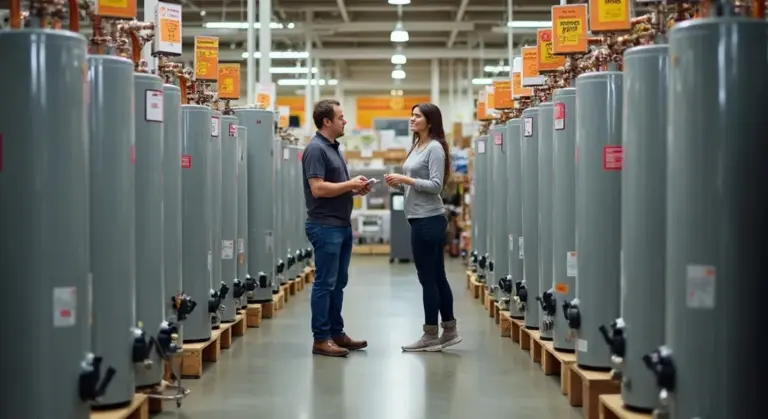
The short answer is yes. A well-maintained tankless water heater typically lasts 15 to 20 years, with many units reaching 25 years. That’s about double the lifespan of a standard tank heater.
This longevity comes down to one simple design difference: there is no storage tank full of water waiting to rust.
Why Tankless Units Outlast Tank Heaters
Think of a traditional tank heater like it’s treading water 24 hours a day. It’s constantly heating, cooling, and reheating 40 to 80 gallons of water. That water is actively trying to corrode the steel tank from the inside out, and the heating cycle stresses the metal with constant expansion and contraction.
A tankless unit is more like a sprinter. It sits idle until you open a hot water tap. Then it activates, heats the water as it flows through a copper or stainless steel heat exchanger, and shuts off when you’re done. No standing water. No giant tank to fail.
Gas vs. Electric Tankless Heaters
Both types benefit from the tankless design, but their inner workings differ.
- Gas Tankless: Uses a burner to heat the water. They have more parts (burner, fan, gas valve) that can wear. They also require proper venting.
- Electric Tankless: Uses electric heating elements. They have fewer mechanical parts but demand a significant electrical supply (often requiring a panel upgrade).
In my experience, a quality electric tankless can be incredibly reliable due to its simplicity. The gas units I’ve serviced are robust, but that burner assembly does require occasional inspection.
The Non-Negotiable: Annual Maintenance
A tankless heater’s potential lifespan is a promise, not a guarantee. That promise hinges on maintenance, specifically descaling.
Hard water minerals (scale) build up inside the small waterways of the heat exchanger. This is the single biggest killer of tankless units. It causes overheating, inefficiency, and failure.
You must flush the system with a descaling solution like white vinegar or a commercial cleaner every single year if you have hard water. It’s a 30-minute task you can do yourself with a small submersible pump, two hoses, and a bucket.
I descale my home’s gas tankless every fall. I skip it, I know I’m stealing years off its life. Beyond descaling, check the inlet water filter screen occasionally and have a pro inspect the burner and vents every few years for gas models.
Signs Your Water Heater Is Nearing the End
Your water heater will tell you when it’s done. You just need to know what to listen and look for. Ignoring these signs is how you end up with a flooded basement.
Clear, Unmistakable Symptoms
Watch for these four main warnings. If you see one, start planning. If you see two or more, your heater is actively calling for a replacement.
- Rusty Water: Brown or reddish water only from your hot side taps means corrosion inside the tank. The glass lining has failed.
- Rumbling or Popping Noises: This is the sound of boiling water trapped under a thick layer of hardened sediment (scale) at the tank’s bottom. It’s like a kettle screaming it’s about to burn out.
- Leaking from the Tank Itself: Water pooling from the tank body, not from a pipe or valve connection, is a terminal sign. The steel tank is corroded through.
- Inconsistent Temperature: You’re out of hot water faster than usual, or it’s never really that hot. The tank can’t hold heat or the buildup is insulating the water from the burner or element.
Failed vs. Failing: Know the Difference
This decides between an emergency replacement and having a little time to shop.
A failed water heater has one symptom: a leaking tank. This is not repairable. The tank is perforated. When you confirm the leak is from the tank shell (check above the pressure relief valve and all pipe connections first), your only job is to turn off the water and power and call for a replacement. It will not get better. Learning about the common leak causes helps you understand what went wrong. It also points you to what to check next.
A failing water heater shows the other symptoms: rusty water, noise, poor performance. You might have weeks or even a few months left. A failing heater can sometimes be patched up (like replacing a bad anode rod to slow corrosion or flushing severe sediment), but these are last-ditch efforts on an old unit. Use this time wisely to research new models and installers.
| Symptom | Likely Cause | Your Move |
| Leaking Tank | Corroded tank wall | Immediate replacement required. |
| Rusty Hot Water | Failed interior lining | Plan for replacement soon. |
| Loud Rumbling | Heavy sediment overheat | Drain and flush if possible; replacement is near. |
| No Hot Water | Failed element or burner | Repair if unit is young; consider age for replacement. |
The Classic “Oh No” Moments
I found my last tank’s leak the way most people do. A small, persistent puddle on the basement floor that always came back after I wiped it up. It wasn’t a gusher, just a slow weep from a pin-hole rust spot on the bottom. That’s the “slow drip puddle” discovery. You hope it’s condensation, but you know it’s not.
The sound is even more telling. A heater with a heavy sediment load doesn’t hum. It groans and rumbles like distant thunder when it fires up. In my own house, I let the flushing slide one year too many. That “kettle boil” sound was my warning. I got it flushed, but the damage was done. The efficiency was gone, and it was only a matter of time. Listen to those noises. They’re expensive to ignore.
Your Action Plan: Extending Your Water Heater’s Life
The Maintenance Roadmap
Think of this as a simple schedule for your most important appliance. Sticking to it is the single biggest factor for hitting (or exceeding) that average lifespan.
- Every 6 Months: Flush the tank to remove sediment.
- Every Year: Manually test the temperature and pressure relief (TPR) valve. Inspect the anode rod for the first time at year 3, then every year after.
- As Needed (Every 3-5 Years): Replace the anode rod when it’s more than 50% corroded.
Task #1: The Anode Rod
This is the most important maintenance you can do. Inside your tank’s steel shell is a metal rod, usually made of magnesium or aluminum. This rod acts like a sacrificial battery, attracting all the corrosive elements in your water so they eat the rod instead of your tank. Once the rod is gone, the tank liner is next. Replacing a $50 rod saves you a $1500 heater.
Check it after the first three years. Shut off the power and water supply. Use a 1 1/16″ socket (usually) on a long breaker bar to unscrew it from the top of the tank. If it’s less than 1/2″ thick or has large sections of wire core exposed, replace it. In my own home with moderately hard water, I replace the rod every 4 years like clockwork.
Task #2: Flushing the Tank
Minerals and debris settle at the bottom of the tank, creating an insulating layer. This makes your heater work harder and can lead to overheating and failure. Flushing removes this gunk.
- Turn off the power (breaker for electric, gas valve for gas).
- Connect a garden hose to the tank’s drain valve and run it to a floor drain or outside.
- Open a hot water faucet in the house to prevent a vacuum.
- Open the tank’s drain valve and let it run until the water runs clear (usually 3-5 gallons).
DIY vs. Pro Verdict
Tank Flushing (Difficulty: Easy): Most homeowners can handle this. The main risk is a stuck or leaky drain valve. If it’s old, you might need a pro to replace the valve first.
Anode Rod Replacement (Difficulty: Medium): This takes some muscle and the right tools. The rod can be seized in place, and if you break the threads on the tank, you’ve got a major leak. If you’re not comfortable with a big breaker bar and significant force, call a technician. Also, the replacement frequency for the anode rod depends on your water quality and usage—typically every 1–3 years.
Tools & Material Checklist for Anode Rod Replacement
- 1 1/16″ deep socket (confirm size for your model)
- Breaker bar or long ratchet (at least 24″)
- Replacement anode rod (aluminum/zinc blend is a good all-around choice)
- Pipe thread sealant tape (Teflon tape)
- A garden hose and bucket (for potential water spillage when removing the rod)
- Work gloves and safety glasses
When Replacement Is the Only Fix Left
The Tank Leak: A Death Sentence
You’ll know the final failure when you see it. A puddle of water under the tank. Drips down the side. Moisture seeping from the bottom. This is a tank leak. The steel tank liner has corroded through. This is not a fixable problem.
You cannot patch or weld a water heater tank. The internal pressure and constant heating will burst any seal. The corrosion that caused the pin-hole leak has weakened the entire tank wall. A leaking tank is a systemic failure, and the entire unit must be replaced. Your only job now is to turn off the power or gas and the water supply to prevent a flood.
The Math of Money and Hassle
Before a tank springs a leak, it often gives warnings. The heating element fails. The thermostat glitches. The dip tube disintegrates. You can fix these parts. But you have to ask if you should.
Fixing a 12-year-old electric heater might cost $200 in parts and an afternoon. A new unit is $800-$1200. The math seems clear. But that repair won’t stop the anode rod from being gone or the sediment from building up. Another part will fail soon.
Paying for multiple repairs on an old unit often costs half the price of a new, more efficient model. New heaters heat faster and waste less energy. You stop the cycle of constant fixes and start a new 10+ year lifespan. Investing in new is almost always cheaper than resurrecting the old.
DIY vs. Pro Verdict: Full Replacement
Difficulty Rating: High. For most homeowners, this is a job for a licensed plumber.
Swapping a like-for-like electric heater is the only scenario a very skilled DIYer should attempt. It involves heavy lifting, draining, high-voltage electrical connections, and pressure testing new plumbing. One mistake causes major water damage. Even installing and adjusting an electric water heater can be complicated for beginners.
You must hire a licensed professional for:
- Any gas water heater work. This includes disconnecting and reconnecting gas lines. A small leak can be catastrophic.
- Venting work. Proper draft for gas units is non-negotiable for safety. Tankless models often require complex new venting runs.
- Permit requirements. Most localities require a permit for water heater replacement. A pro will pull it and ensure the installation meets code.
- Any change in fuel type (electric to gas or vice versa) or location.
In my own home, I install my own electric units. For gas, I always call my licensed plumber. The risk is too high, and the code requirements are too specific to guess at.
Common Questions
Is there a simple way to check my water heater’s health annually?
Yes. Once a year, test the Temperature & Pressure (T&P) Relief Valve by lifting its lever to ensure it releases water, and drain a few gallons from the tank to check for sediment. This quick check can reveal early problems and is your best routine defense. Always turn off the power or gas supply before you start.
My water heater is within the average lifespan but acting up. Repair or replace?
Consider the cost and age. For a unit over 10 years old, investing in multiple repairs often costs half the price of a new, more efficient model. If the tank itself is leaking, replacement is the only safe and permanent fix.
What’s the single most important thing I can do for a tankless water heater?
Annual descaling is non-negotiable. Hard water minerals will clog the heat exchanger, causing overheating and failure. Flush the system with a descaling solution like white vinegar every year to protect your investment.
Besides age, what is the clearest sign I need a new water heater immediately?
Water leaking from the tank body itself, not from a pipe connection. This indicates the steel tank has corroded through and is a systemic failure. Your immediate action is to shut off the water and power/gas to prevent flooding.
I’m handy. Can I safely replace my own anode rod?
It requires specific tools and force, and the rod can be seized. If you’re comfortable using a long breaker bar, you can do it. However, if you break the tank’s threads, you’ll cause a major leak, so many homeowners wisely opt for a professional.
Making Your Investment Last
Your water heater’s lifespan depends more on your water quality and maintenance habits than its brand. Flush sediment from your tank yearly and test the temperature-pressure relief valve to keep it running smoothly.
Bob McArthur
Bob is a an HVAC and plumbing industry veteran. He has professionally helped homeowners resolve issues around water softeners, heaters and all things related to water systems and plumbing around their homes. His trusted advice has helped countless of his clients save time, money and effort in home water systems maintenance and he now here to help you and give you first hand actionable advice. In his spare time, Bob also reviews home water systems such as tankless heaters, water softeners etc and helps home owners make the best choice for their dwelling. He lives around the Detroit area and occasionally consults on residential and commercial projects. Feel free to reach out to him via the contact us form.