How to Size a Tankless Water Heater and Calculate GPM for Your Whole House
Worried your new tankless water heater will leave you with cold showers? Getting the size wrong is the fastest way to waste money.
We will cover how to find your home’s peak hot water demand, calculate the exact flow rate you need, and choose a unit that won’t let you down.
I’ve sized these systems for hundreds of homes. Skip the guesswork and measure your flow first.
What Exactly Does a Tankless Water Heater Do in Your Home?
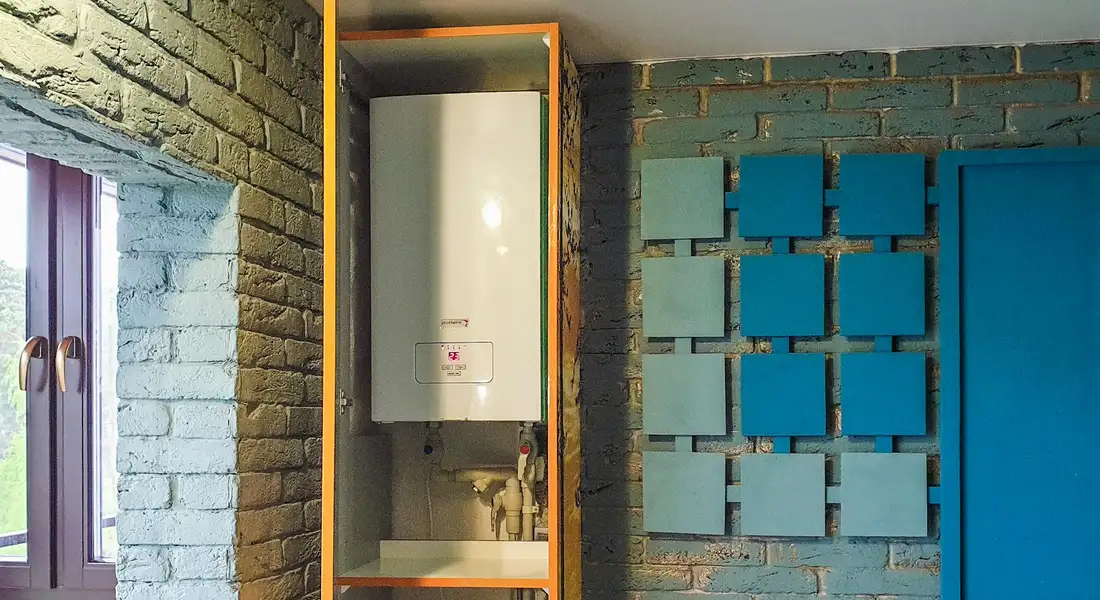
Think of it as a tiny, powerful furnace mounted on your wall. When you turn on a hot water tap, cold water races through a coiled pipe inside the unit. A gas burner or an electric element instantly heats that water as it passes through. The hot water comes out the other side and travels to your faucet or shower.
The key is that it only heats water the moment you ask for it, eliminating the standby energy loss of a traditional tank.
This is nothing like the big metal drum in your basement. A tank heater works like a giant thermos. It constantly keeps 40, 50, or 80 gallons of water hot and ready to go, 24 hours a day. It reheats that water even when you’re at work or asleep. A tankless unit takes up about as much space as a small suitcase and only consumes energy when you’re actively using hot water. Energy use is where the trade-off really shows up. A quick look at energy efficiency reveals why many homes switch to tankless models.
The sizing challenge is all about matching the heater’s live output to your life. A tank heater has a stored reserve you can drain. A tankless heater must create all the hot water in real time. If your heater can’t heat water fast enough for your family’s habits, someone gets a cold shower. That’s why it’s crucial to choose the right size tankless water heater for your needs.
The Tankless Sizing Formula: It’s Not Just About GPM
You’ll hear a lot about flow rate, measured in Gallons Per Minute (GPM). This is how much hot water the heater can produce at once. But GPM alone is a useless number without its partner: Temperature Rise.
Temperature Rise is the difference between the temperature of your incoming groundwater and the hot water temperature you want at your tap. If your groundwater is 50°F and you want a 105°F shower, you need a heater capable of a 55°F rise.
Why are both non-negotiable? Every tankless heater has a performance chart. It will tell you the maximum GPM it can deliver at a specific temperature rise. A unit might handle 5 GPM at a 45°F rise, but only 3.5 GPM at a 60°F rise. If you only look at the big GPM number on the box, you’ll buy a heater that can’t keep up in winter when your groundwater is colder—affecting its efficiency and consumption.
Here is the step-by-step process you need to follow. First, you must calculate your home’s peak hot water demand in GPM. Second, you must determine the required temperature rise for your location and desired comfort. Only then can you match those two numbers to a heater’s performance specifications.
Step 1: Tally Your Fixtures and Find Their Real Flow Rates
Grab a notepad. Walk through your house and write down every single spot that uses hot water. This includes showers, bathtubs, kitchen faucets, bathroom faucets, dishwashers, washing machines, and any outdoor hose bibs that are connected to the hot water line.
Do not guess. Your old tank heater hid poor flow for years. A tankless unit won’t. You need real numbers.
The Fixture Flow Rate Cheat Sheet
This table gives you a starting point. These are maximum flow rates for standard fixtures; your actual ones are likely lower, which is good for sizing water supply lines to fixtures.
Your showerhead might say 1.8 GPM right on the faceplate. Check. My bathroom faucet is a modern low-flow model that uses just 0.8 GPM. Finding this info saves you from buying a bigger, more expensive heater than you need.
If you can’t find a label, measure it. Get a bucket you know the volume of (a one-gallon jug is perfect). Run only the hot water full blast into the bucket for exactly 6 seconds. Multiply the amount of water you collected by 10. That’s your faucet’s approximate GPM. Do this for a few key fixtures.
How Many Fixtures Run at the Same Time?
Think about your home’s busy times. At 7 AM, is someone showering while another runs the kitchen sink and the dishwasher starts its cycle? That’s your peak demand. On a Tuesday night, with one person doing laundry, your demand is low.
You size the heater for the worst-case, simultaneous use scenario, not the average day. For most families, peak use is two showers running at once, plus one more fixture like a kitchen faucet. Write down your peak scenario.
Add Up the Total GPM Demand
This is the answer to “how many GPM for a whole house tankless water heater.” Take your peak scenario and add the GPM for each fixture you expect to run at the same time.
Here’s an example for a family of four:
- Shower 1 (low-flow head): 1.8 GPM
- Shower 2 (standard head): 2.2 GPM
- Kitchen Faucet (running hot): 1.5 GPM
Total Simultaneous GPM Demand: 5.5 GPM. This means your tankless water heater must be able to heat at least 5.5 gallons per minute during your family’s morning rush.
Step 2: Calculate Your Home’s Temperature Rise
Temperature rise is everything. It’s the number of degrees your heater must boost the incoming groundwater to reach your desired hot water temperature. A unit’s GPM rating plummets as the required temperature rise increases.
Finding Your Groundwater’s Starting Temperature
Inlet water temperature varies wildly. In southern Florida, it might be 70°F year-round. In Minnesota, it can dip below 40°F in winter. You must use the coldest expected temperature for sizing.
You can look up average groundwater temps for your area. The surefire method is to test it yourself in winter. Run a cold-only faucet (like your laundry tub) for a minute, fill a glass, and use a cooking thermometer. That’s your critical number. In my Michigan home, I know my inlet water is 48°F in January.
Your Desired Hot Water Temperature
For safe delivery to faucets and showers, 120°F is standard. It prevents scalding and saves energy. However, some newer dishwashers with built-in heaters require 120°F inlet water, while older models may need 130°F or more. Check your appliance manual and ensure the water heater temperature safety settings are properly configured.
Set your desired temperature based on the highest need in your house, which is often the dishwasher. If your dishwasher needs 130°F, that becomes your target.
Do the Math: The Simple Temperature Rise Formula
The calculation is straightforward.
Desired Hot Water Temperature MINUS Groundwater Inlet Temperature EQUALS Required Temperature Rise.
Using my numbers as an example:
- Desired Temp (for dishwasher): 130°F
- Inlet Temp (winter): 48°F
- Temperature Rise: 130°F – 48°F = 82°F Rise
This 82°F rise is a heavy load. A heater that delivers 5.5 GPM at a 70°F rise might only deliver 3.8 GPM at an 82°F rise. This is why both your GPM demand and your temperature rise are non-negotiable figures.
Step 3: Match Your Numbers to a Heater’s Spec Sheet
You have your GPM flow rate and your required temperature rise. Now you need to find a heater that can deliver that. Never look at just the maximum GPM rating on the box; that’s for a small temperature rise and is mostly marketing. The real answer is in the performance chart, usually found in the manual or on the manufacturer’s website.
Find the chart. Look for the column or line that matches your groundwater temperature. Now find your required temperature rise. Follow that row or column over to see the actual GPM the unit can produce at that rise. For example, a unit rated for 9 GPM might only deliver 4.5 GPM when heating water 60°F. Think of it like a car: it has a top speed on flat ground, but going up a steep hill, that speed drops significantly.
Your total simultaneous GPM demand must be equal to or less than the GPM output shown on the chart for your temperature rise. If your math says you need 5.2 GPM at a 55°F rise, find a unit that can do at least that.
The “Red Flag” Troubleshooting Guide (Before You Buy)
Choosing the wrong size leads to immediate headaches. Here’s how to spot a bad match before you install it.
Signs You’ve Undersized the Unit:
- The shower goes cold or lukewarm when someone runs the kitchen sink or flushes a toilet.
- The unit turns on and off rapidly (cycles) during a single shower or while filling a tub.
- It displays error codes for overloading or excessive flow.
- You can never get truly hot water from two fixtures at the same time.
Signs You’ve Massively Oversized the Unit:
- It short cycles during low-flow use, like handwashing, turning on for a few seconds and then off.
- This constant on-off cycling wastes energy and can wear out components faster.
- You paid several hundred dollars more for capacity you will literally never use.
Water Science Snippet: How Hard Water and pH Affect Your Heater
Water chemistry isn’t just for pools. It directly attacks your tankless heater’s heart: the heat exchanger. Minerals in hard water, measured as high TDS (Total Dissolved Solids), bake onto the internal coils like lime scale in a kettle. This insulating layer makes the heater work harder, reduces flow, and can cause overheating failures. Understanding how tankless water heaters work can help you appreciate why water quality matters so much.
Acidic water (low pH) is even sneakier, corroding the metal components from the inside out. If your home has hard or acidic water, you have two smart choices. First, install a whole-house water softener and/or a pH neutralizer upstream of the heater. Second, if you won’t treat the water, choose a unit with a built-in or easily accessible descaling port and commit to flushing it with vinegar every 6-12 months. Sizing for hard water areas sometimes means budgeting for treatment first. Understanding your water’s pH and alkalinity helps you tailor the right home water solution—whether a softener, a pH adjuster, or both. This keeps your pipes and appliances safer and your water chemistry predictable.
Common Sizing Traps and How to Avoid Them

Forgetting About Future Fixtures or Guests
You’re sizing for your home today. What about next year? If you plan to add a bathroom, a laundry sink, or an outdoor shower, factor it in now. A simple rule is to add a 0.5 to 1.0 GPM buffer to your final calculated GPM for future needs or frequent guests. It’s cheaper to buy slightly more capacity now than to replace an undersized unit in two years. My own house gained a guest suite, and that buffer I included saved me a full system redo.
Ignoring Your Gas Line or Electrical Service
This is the most common and dangerous oversight. A tankless heater is a power-hungry appliance.
- Gas Models: They need a specific gas pressure and pipe diameter. That 1/2-inch line feeding your old tank heater will likely starve a powerful new tankless unit. This requires a professional to evaluate and possibly upgrade your gas line from the meter.
- Electric Models: A whole-house electric unit can require 100-150 amps at 240 volts. That’s a huge draw. Your main electrical panel must have enough spare capacity, and new dedicated breakers and heavy-gauge wire must be run.
Evaluating your home’s gas and electrical capacity is the critical point where DIY planning must turn into professional consultation.
Code & Compliance Check: What the Rules Say
This isn’t optional. A proper installation follows code for your safety and your home’s insurance.
- Plumbing Code (IPC or UPC): Governs the venting, piping, pressure relief, and condensate disposal. The unit’s manual will specify clearances and requirements.
- Certifications: The unit itself should have certification labels from bodies like UL (Underwriters Laboratories) for electrical safety or NSF for material safety.
- Permits & Inspections: Most municipalities require a permit to install a fuel-burning (gas/propane) appliance. An inspector will verify the venting and gas connections are safe. Skipping this can void your homeowner’s insurance if a problem occurs.
Your installer should handle permits. If you’re DIY-ing, call your local building department first. They will tell you exactly what’s required.
The DIY vs. Pro Verdict: Sizing, Buying, and Installing
Difficulty Rating: Sizing = 4/10, Installation = 8/10.
Figuring out the correct size and flow rate for your tankless water heater is your job as a homeowner. You live there. You know if three showers happen at 7 a.m. or if you love filling a deep soaking tub. A contractor making a quick guess can get this wrong, leading to years of lukewarm water and frustration. Your firsthand knowledge of your home’s water habits is the single most important factor for correct sizing. For tips on how to choose the right size and capacity for a water heater, consider consulting detailed guides and resources.
Once you have your target flow rate and temperature rise numbers, you can absolutely pick out the unit and buy it yourself. This is the research phase. You will compare specs from different brands, read reviews from other homeowners, and find the best model for your budget. I spent weeks comparing units before upgrading my own home’s system. Selecting the specific unit is a task well within a prepared homeowner’s skill set.
Where You Must Draw the Line: Installation
This is not a suggestion. Installing the unit, particularly a gas model, is almost always licensed professional work. The risks are too high.
- Gas Models: This involves gas line work, venting, and combustion air. A mistake can lead to gas leaks, carbon monoxide poisoning, or fire.
- Electrical Models: Large electric tankless heaters often require a heavy-duty electrical upgrade-new breakers, new wiring, sometimes a new service panel. This is not basic wiring.
- Warranty & Code: Most manufacturers will void the warranty if the unit is not installed by a licensed professional according to local code. Your city or county requires permits for this work.
I’ve been on service calls to fix DIY installations where homeowners crossed these lines. The repair cost always exceeded what a professional install would have been.
Doing your sizing homework upfront makes the entire process smoother and cheaper. You walk up to a qualified plumber with the correct specifications in hand. This prevents them from selling you an oversized or undersized unit and ensures they quote you for installing exactly what you need. You control the most critical part-the planning-and leave the complex, risky work to the certified expert. This is the smart way to upgrade.
Common Questions
What if my home has old, restrictive plumbing?
This is a common hidden issue. Your calculated GPM assumes fixtures can deliver their full flow, but old, clogged pipes may restrict it. This means your heater might be sized correctly, but the water can’t get to it fast enough. Consider a professional plumbing inspection if you suspect significant buildup.
How does very hard water affect the size I need?
Hard water doesn’t change your GPM calculation, but it critically impacts the heater’s long-term performance. Mineral scale will build up inside the heat exchanger, reducing its efficiency and flow capacity over time. Over time, that scale acts like insulation, causing the heater to work harder and waste energy. In short, hard water buildup harms heater efficiency and can raise operating costs. You must either install a water softener before the heater or commit to aggressive, frequent descaling.
When is sizing definitely a job for a professional?
You should bring in a pro for two specific reasons: to verify your home’s gas line capacity for a gas unit or your electrical service for an electric unit. Undersized supply lines are a major safety hazard and the most common installation failure. A technician can also do a final review of your GPM and temperature rise math.
Does the choice between gas and electric change the sizing process?
The core process is identical-you still need your peak GPM and temperature rise. The difference is in your home’s capacity to fuel the unit. Electric models often require a massive electrical service upgrade (100+ amps), which can be cost-prohibitive, making a properly sized gas model the more feasible choice for many whole-house applications.
Should I add extra capacity for occasional house guests?
Yes, building in a buffer is smart. If your calculation lands at, say, 5.2 GPM, round up to a unit that can handle 6.0 GPM at your required temperature rise. Adding this 0.5-1.0 GPM cushion accommodates future low-flow fixture replacements or occasional simultaneous use by guests without pushing the system to its limit.
Seal the Deal on Your Tankless Heater Size
Grab a calculator and add up the flow rates from every shower, faucet, and appliance that could run at the same time to find your peak GPM need. Your tankless water heater must meet or exceed this GPM number at your inlet water temperature, or it will never keep up with your house.
Bob is a an HVAC and plumbing industry veteran. He has professionally helped homeowners resolve issues around water softeners, heaters and all things related to water systems and plumbing around their homes. His trusted advice has helped countless of his clients save time, money and effort in home water systems maintenance and he now here to help you and give you first hand actionable advice. In his spare time, Bob also reviews home water systems such as tankless heaters, water softeners etc and helps home owners make the best choice for their dwelling. He lives around the Detroit area and occasionally consults on residential and commercial projects. Feel free to reach out to him via the contact us form.