Well Pump Service: Who to Call and Who Pays the Bill
Your well pump stopped working. You need the right person to fix it fast, and you need to know if it’s your problem or your landlord’s.
This article walks you through the steps. We will cover how to pick a qualified well pump technician, what a standard service call looks like, and how to handle repair responsibilities with a landlord.
I’ve serviced hundreds of well systems. Here is your first move: check your electrical panel for a tripped breaker before you call anyone.
Is It Your Well Pump, or Something Else? How to Diagnose First.
Before you panic and call a pro, spend five minutes checking a few things. A lot of “well pump failures” are actually simple fixes, such as a stuck pump.
Here are the red flags that mean your well system needs attention:
- No water at all from any faucet.
- Water pressure is consistently low.
- Faucets sputter and spit air when you turn them on.
- You hear strange “knocking” or “water hammer” noises from the pressure tank.
- The pump motor is running constantly and won’t shut off.
Your first stop is the pressure switch and gauge near your pressure tank. The switch (a small rectangular box with wires) turns the pump on and off. The gauge shows your system’s pressure in PSI. If your pump is running but the gauge reads zero, you have a major issue. If the gauge shows pressure but you have no water, the problem is likely in your home’s plumbing.
Use this quick difficulty rating to decide what to tackle yourself.
- Checking the circuit breaker: 1/10. Flip it off and back on. Check any GFCI outlets near the pressure switch.
- Inspecting the pressure switch: 3/10. You can look for obvious corrosion or burnt wires. Listen for a faint click when pressure drops; no click might mean a bad switch.
- Replacing a pressure switch: 6/10. Requires turning off power, labeling wires, and matching the new switch’s pressure settings. Doable with care.
- Anything inside the well casing: 10/10. This is for professionals only.
Always rule out a tripped breaker or a blown fuse before you assume the pump is dead. I’ve been on dozens of “emergency” calls that were solved by resetting a breaker the homeowner missed.
Who to Call to Fix Your Well Pump: Finding the Right Pro.
You need a specialized “well pump contractor” or “well driller.” A general plumber often doesn’t have the right equipment or license for well work.
A true well service company has the heavy-duty rig to pull hundreds of feet of pipe from your well, the diagnostic tools for deep submersible pumps, and the licensing your local code requires. Sometimes the problem isn’t a simple switch—it’s a repair or rebuild of a submersible well pump. A licensed pro can evaluate and perform that service safely. A handyman might try to swap a pressure switch, but they can’t legally pull and replace a deep well pump. Using the wrong pro can void warranties and lead to more expensive repairs.
When you call, ask these questions:
- Are you licensed and insured for well drilling and pump work in this county?
- Do you service my specific pump brand (like Grundfos, Franklin, Goulds)?
- What is your emergency service response time and what are your after-hours rates?
- Can you provide a firm, written estimate before starting work?
There’s a trade-off between local and big companies. The local guy with one truck might get to you faster and offer more personalized service. The larger regional provider might have more available technicians and guaranteed parts inventory. I’ve had great experiences with both; the key is verifying their credentials focus on wells.
When your well pump goes out, call a licensed well pump contractor, give them your symptoms, and be ready to share your pump’s make and model if you know it. If it’s a true no-water emergency, lead with that. They will triage the call.
Common Well Pump Repairs and What They Involve
Most service calls fall into a few categories. Knowing what’s involved helps you understand the estimate.
Pressure Switch Replacement: The switch wears out. You’ll hear rapid clicking or no clicking. The pump may short cycle (turn on and off quickly). Difficulty: 6/10 for a homeowner. You must get the wiring and pressure settings correct. Consider checking the pressure switch settings as part of the replacement to ensure proper cut-in and cut-out pressures. We’ll cover how to adjust those settings in the next steps.
Pressure Tank Problems (Waterlogged): The tank’s internal bladder fails. The pump short cycles every minute because there’s no air cushion. You can test this by tapping the tank; it will sound solid top to bottom if it’s full of water. Difficulty: 4/10 to replace the entire tank if you’re comfortable with plumbing connections. Draining and recharging the air in a standard tank is a 3/10.
Pump Motor Failure: The motor burns out. You’ll have no water and the breaker may trip. Sometimes you’ll smell burnt wiring. Difficulty: 10/10. This requires pulling the pump from the well, a job for a pro with a well rig.
Drop Pipe or Well Seal Leaks: A leak in the pipe inside the well or at the seal causes loss of prime (for shallow wells) or sand in your water. Your pump runs but delivers low pressure. These leaks are a leading cause of well pump pressure loss. Fixing them is the typical next step in the well pump pressure loss causes fix. Difficulty: 10/10. Another rig-only job to pull everything up and inspect it.
Sediment, iron, or sand can clog the pump intake or the pipe. If you have recurring issues with dirty water, a whole-house sediment filter installed after the pressure tank is a wise investment to protect your plumbing. It won’t fix a broken pump, but it can prevent future clogs.
The Landlord-Tenant Well Pump Guide: Who Fixes It and Who Pays.
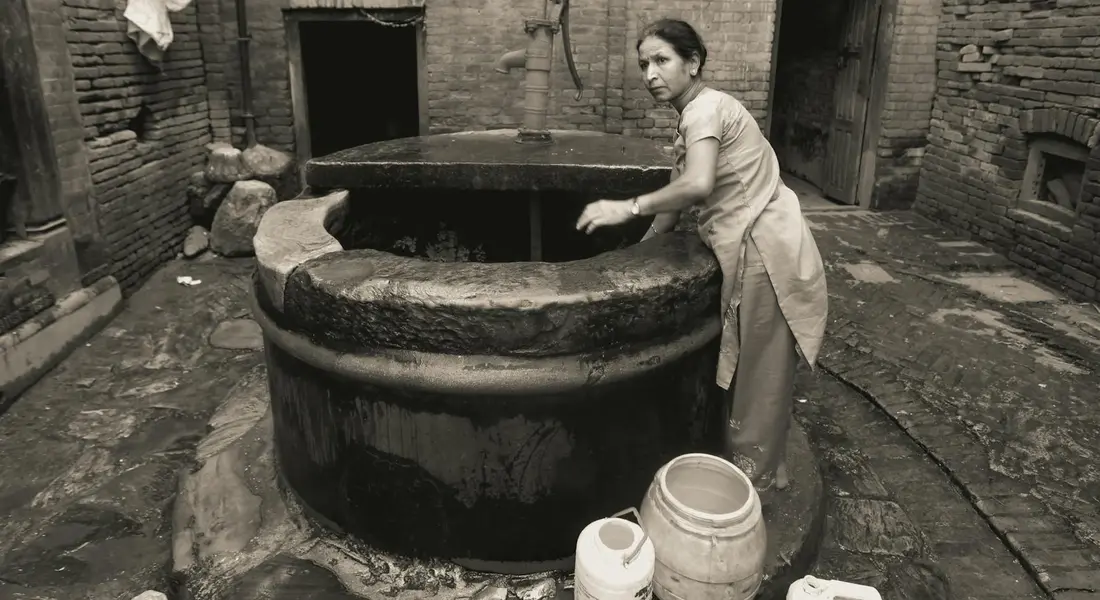
Let’s get this straight. The landlord is responsible for fixing the well pump, period. A working water supply is a basic requirement for a habitable home. In nearly every jurisdiction, this makes it the landlord’s legal duty to maintain and repair it.
Tenants do not own the infrastructure. You rent the use of it. A well pump and pressure system are permanent parts of the property, just like the roof or foundation. The cost and responsibility for its upkeep fall on the property owner.
What the Tenant Must Do
Your job is straightforward but critical.
- Report problems immediately. Don’t wait for a small issue like strange noises or low pressure to become “no water at all.” Call or text your landlord or property manager the same day you notice it.
- Allow access for repair. Once a technician is scheduled, you must provide access to the wellhead, pressure tank, and electrical controls. Rescheduling because a tenant isn’t home delays everything and can turn a simple fix into an emergency.
- Do not attempt repairs yourself. This isn’t a clogged drain. Well pump systems involve high pressure and electrical components. A DIY mistake can cause thousands in damage and could void any existing warranties. Report it, then step aside.
What to Do If Your Landlord Won’t Fix It
If your landlord is unresponsive, you need a plan. Follow these steps in order.
- Send a written notice. Email or certified mail is best. Keep a copy. State the problem clearly and the date you first reported it. “On October 26th, I reported no water pressure from the well. As of today, November 1st, no technician has been scheduled. This is a habitability issue requiring immediate repair.” Give a reasonable deadline, like 48 hours for no water.
- Contact local code enforcement or health department. If written notice fails, this is your next move. A home without running water is a serious code and health violation. These agencies have the power to cite the landlord and force repairs.
- Know your local tenant rights. Some areas allow you to pay for repairs and deduct the cost from rent, but the rules are strict. You usually must follow the exact legal process, or you risk eviction for non-payment of rent.
The key is creating a paper trail and escalating to authorities who can enforce the rules. Arguing on the phone gets you nowhere.
The Property Manager’s Role
A property manager is just the landlord’s hired point of contact. They are not the owner, but they should act on the owner’s behalf. Your communication and repair requests go through them. If they are slow, your written notice goes to both the manager and the landlord if you have their address. The manager’s failure is ultimately the landlord’s responsibility.
Emergency vs. Non-Emergency Repairs
The response time expected depends on the problem.
- Emergency (Landlord must act within 24 hours): Complete loss of water. A burst pipe from the pressure tank. Any situation where there is zero running water in the home.
- Non-Emergency Maintenance (Days to a week or two is often reasonable): Slight pressure drop. A leaking tank bladder (you’ll see water coming from the air valve). Short cycling where the pump turns on and off more than normal but still delivers water.
Call it an emergency only when it truly is. Crying wolf damages your credibility. But if your taps are dry, that is a legitimate crisis requiring immediate action.
Keeping Your Well Pump Healthy: A Simple Maintenance Roadmap.
Whether you’re a landlord or homeowner, basic maintenance prevents big bills. This is the stuff I do at my own house every year.
Your Annual Maintenance Schedule
Put these tasks on your calendar for early fall, before freezing weather hits.
- Visual Inspection: Check the pressure tank, pressure switch, and wiring for signs of rust, leaks, or corrosion. Look for moisture on the floor around the equipment.
- Test Water Quality: Use a simple test strip for pH, hardness, and iron. Sudden changes can indicate a failing well seal or other issues that stress the pump.
- Check Pressure Tank Air Charge:
- Turn off the pump’s circuit breaker.
- Open a faucet to drain all water pressure from the system.
- Use a standard tire gauge on the tank’s Schrader valve (it looks like a tire valve).
- The air pressure should be 2 psi below the pump’s “cut-on” pressure. For a common 30/50 psi switch, that’s 28 psi.
- If low, use a bicycle pump or small compressor to add air.
- Listen and Observe a Cycle: With water pressure restored, listen as the pump runs. It should start smoothly, run until pressure is reached, and shut off. Short, frantic cycles (click…hum…click off in under a minute) mean the tank’s bladder is waterlogged or the pressure switch needs adjusting.
Basic Homeowner Tools & Material Checklist
You don’t need a truck full of gear. These three items handle 90% of basic checks:
- Tire Pressure Gauge: For checking the pressure tank’s air charge.
- Basic Multimeter: To safely check if power is reaching the pressure switch (after turning off the breaker!).
- Garden Hose: Useful for draining the pressure tank or directing water away during an inspection.
When to Call a Professional
Schedule a full well system inspection by a licensed contractor every 3 to 5 years. They will check things you can’t, like the pump’s actual amperage draw, well yield, and integrity of the pitless adapter. This $200-$400 inspection can spot a $2,000 pump failure years in advance. It’s the cheapest insurance you can buy for your water supply. Include a quick review of the well pump’s shut-off valve and related check valves to ensure proper operation and leak-free seals, as part of the maintenance plan. Valve maintenance now can prevent backflow or pressure issues later.
What Really Determines Pump Lifespan
Pumps don’t just wear out from age. They fail from stress. Manage these factors:
- Water Quality (Sand & Sediment): Sand is abrasive. A good sediment filter before the pressure tank protects the pump’s impellers and seals. If your water is sandy, pump life will be shorter.
- Cycling: Every time the pump starts, it takes a surge of current. A properly sized pressure tank minimizes cycles. A waterlogged tank causing short cycling will burn out a pump motor in a year or two.
- Proper Sizing: A pump that’s too small runs constantly. A pump that’s too large cycles on and off too quickly. Both kill pumps prematurely. A professional can verify your pump is correctly matched to your well’s capacity and home’s demand.
A well-maintained submersible pump in good water can last 15 years. One that’s stressed by sand and short cycling might fail in 5. Your maintenance habits directly control which outcome you get. Regular cleaning and routine maintenance are essential to protect submersible well pump longevity and keep performance steady.
Well Pump Service Costs and What to Expect During the Visit.

Knowing what a service call might cost helps you budget and avoid surprises. The final price depends heavily on what’s wrong and how deep your well is.
Break Down Potential Cost Ranges
Think of costs in tiers, from a simple fix at the tank to the major job of pulling the pump.
Minor Repairs at the Pressure Tank are the least expensive. This covers work done inside your house or at the wellhead.
- Replacing a failed pressure switch.
- Fixing a leak in the fittings or pipe at the tank.
- Replacing a waterlogged or ruptured pressure tank.
For these, you’re mainly paying for the service call, an hour or two of labor, and a reasonably priced part.
Major Repairs Involving the Pump Itself cost significantly more. This is when the technician must pull the pump and drop pipe from your well.
- Replacing a submersible pump motor or impellers.
- Fixing a broken section of drop pipe.
- Replacing the entire pump and pipe system.
The price jumps here because of the specialized equipment needed and the labor intensity. Depth is the biggest factor. Pulling 100 feet of pipe is far less work than pulling 400 feet.
Explain What a Professional Will Do
A good technician doesn’t just guess. They diagnose. When I arrive for a no-water call, I follow a logical sequence.
First, I check for power at the control box. Then, I listen. Is the pump trying to run? I use an amp probe on the wires going down the well. This tool tells me if the pump is drawing current, which means it’s getting power and trying to work. A zero reading points to a wiring or pump motor problem. A normal reading means the pump is likely running but not building pressure.
Next, I check the system pressure with a gauge. If the pump is running but pressure won’t climb, it could be a massive leak, a broken pipe, or worn-out pump internals. If the pressure switches on and off too fast, that points to a waterlogged tank or a bad switch.
If the electrical and pressure tests point to a problem down the well, pulling the pump is the only way to see it. We use a truck-mounted winch or a portable puller to carefully bring up the pump, section by section.
Advise Getting Detailed Written Estimates
Never agree to a major repair based on a verbal guess. A reputable company will provide a detailed, written estimate after the initial diagnosis.
Make sure this estimate clearly separates parts and labor and includes any warranties offered. The warranty is key. A one-year parts-and-labor warranty is standard for new pumps. Ask what is covered if the repair doesn’t solve the problem. Get everything in writing before work begins.
Compare Repair vs. Replacement for an Older Pump
This is a classic homeowner decision. If your pump is 15+ years old and fails, replacement is often the smarter financial choice.
Repairing an ancient pump is like replacing the transmission in a car with 200,000 miles. You might fix one worn part, but another is likely to fail soon. You’ll pay the full labor cost to pull the pump twice in a short period.
Investing in a new, modern pump gives you a fresh start with a full warranty and improved efficiency. When I had to replace my own deep well pump, I chose a new one. The peace of mind knowing everything from the wiring to the pipe was new was worth more than a temporary fix on tired equipment.
Quick Answers
How can I be sure a contractor is qualified to work on my well?
Always ask for their state well driller/pump installer license number and proof of insurance. A legitimate pro will provide this immediately. This step protects you from liability and subpar work.
My water just stopped. What’s my first move as a tenant?
Immediately call your landlord or property manager. Then, check if neighbors on the same well have water and verify your home’s main water valve is open. This information helps the technician diagnose faster.
My landlord says I’m responsible for the pump. Is that true?
No. The well pump is part of the property’s infrastructure, making it the landlord’s responsibility to repair or replace. Tenants are only responsible for minor maintenance like changing a whole-house filter, if that’s in the lease.
The landlord sent a general handyman, not a well tech. Should I be concerned?
Yes. Well pump systems involve high-pressure and deep electrical work requiring specific licensing. Politely ask your landlord to send a licensed well contractor to ensure the repair is safe, legal, and won’t cause further damage.
What’s the biggest red flag when getting a repair estimate?
Avoid any contractor who refuses to give a detailed, written estimate before starting work, especially for a pump pull. A trustworthy technician will diagnose the issue and provide a clear breakdown of parts, labor, and warranty in writing.
Taking Charge of Well Pump Repairs
First, figure out if you own the well or rent the property. Call a certified well pump technician for any service if you’re the homeowner, and notify your landlord right away if you’re a tenant.
Bob McArthur
Bob is a an HVAC and plumbing industry veteran. He has professionally helped homeowners resolve issues around water softeners, heaters and all things related to water systems and plumbing around their homes. His trusted advice has helped countless of his clients save time, money and effort in home water systems maintenance and he now here to help you and give you first hand actionable advice. In his spare time, Bob also reviews home water systems such as tankless heaters, water softeners etc and helps home owners make the best choice for their dwelling. He lives around the Detroit area and occasionally consults on residential and commercial projects. Feel free to reach out to him via the contact us form.